

CORALS
Coral reefs are among the most beautiful and diverse ecosystems on Earth. Their extraordinary shapes and colors make them look like underwater gardens, but corals are neither plants nor rocks. They are living animals.
What looks like a single coral is often a colony of hundreds or even thousands of tiny animals working together.
Tiny Animals, Enormous Structures
Each individual coral animal is called a polyp. A polyp has a small, soft body, a mouth and a ring of tentacles used to capture food.
Most reef-building corals live in colonies, with many genetically identical polyps connected to one another. Over time, they build the remarkable structures we recognize as coral reefs.
Hard Corals and Soft Corals
Hard corals produce a skeleton of calcium carbonate, the same mineral found in limestone. As generations of coral grow, their skeletons gradually form the massive structures of a coral reef.
Soft corals do not build the same massive, rigid skeletons. Many have flexible branches that sway gently with the currents. Sea fans, sea rods and sea plumes are familiar examples of these flexible coral relatives.
An Extraordinary Partnership
Many reef-building corals live in partnership with microscopic algae inside their tissues.
These algae use sunlight to produce energy through photosynthesis and share much of it with their coral hosts. In return, the corals provide the algae with shelter and nutrients.
This partnership allows coral reefs to thrive even in tropical waters that contain relatively few nutrients.
Tiny Predators
Despite receiving energy from their algae, corals are also predators.
Their tentacles contain specialized stinging cells that help them capture plankton and other tiny organisms drifting through the water.
Some corals, such as the beautiful Orange Cup Coral, do not rely on symbiotic algae at all and obtain their food by capturing prey.
The Architects of the Reef
Over hundreds and thousands of years, reef-building corals create complex underwater structures that provide shelter, feeding grounds and breeding places for countless marine species.
Fish, crabs, shrimp, worms, mollusks and many other animals depend on these habitats.
Without corals, much of the extraordinary biodiversity of tropical reefs would disappear.
Beautiful but Vulnerable
Corals may look strong, but they are surprisingly sensitive to changes in their environment.
Rising sea temperatures can cause coral bleaching, when corals lose much of their symbiotic algae. If stressful conditions continue, the corals may starve and die.
Pollution, disease, sedimentation and physical damage also threaten coral reefs around the world.
Protecting corals means protecting the entire underwater community that depends on them.
A Living World Beneath the Surface
The next time you snorkel or dive over a coral reef, take a closer look. What appears to be a colorful underwater landscape is actually made up of countless tiny animals, each playing a part in one of nature's most remarkable ecosystems.
A coral reef is not simply a place where marine life lives. It is a living structure built by marine life itself.
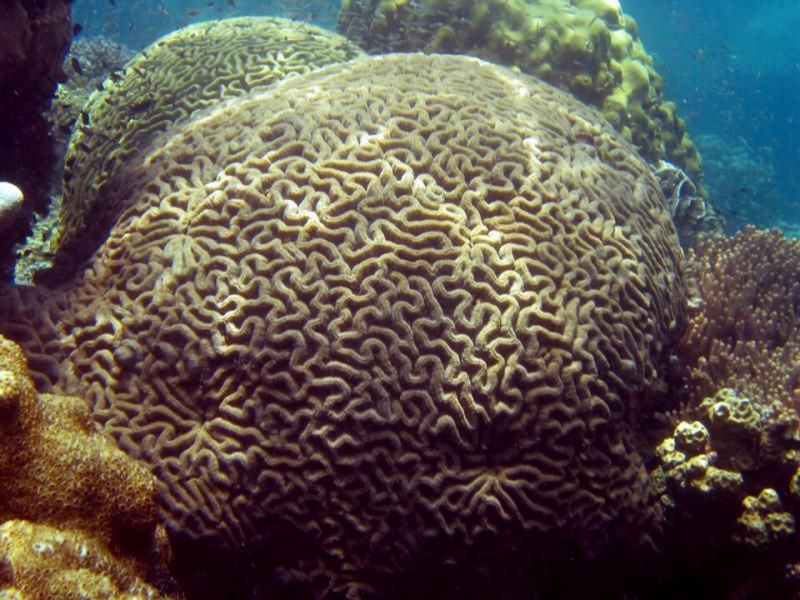
Brain coral
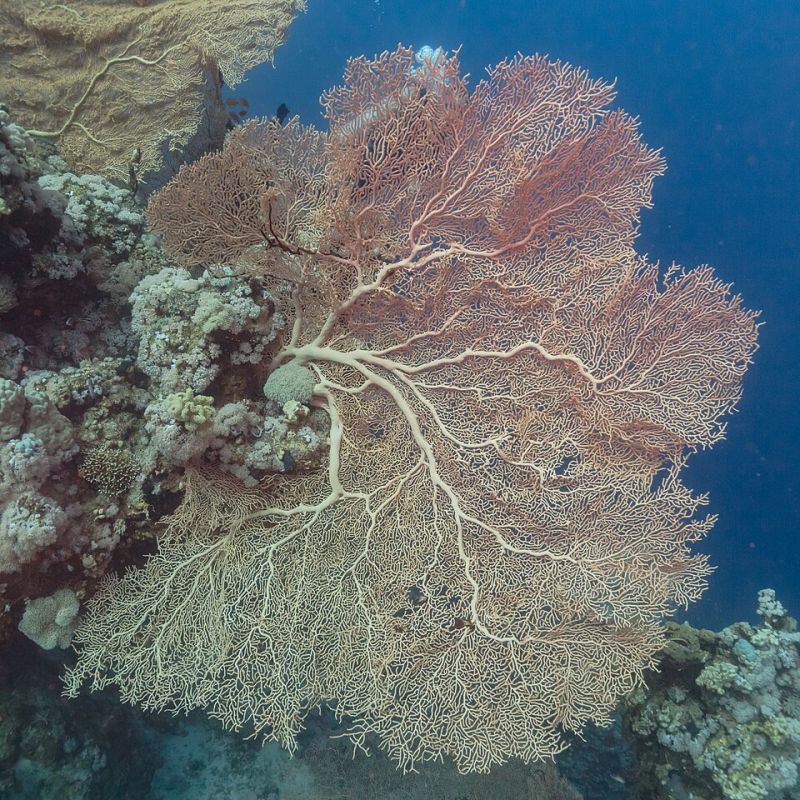
Sea Fan
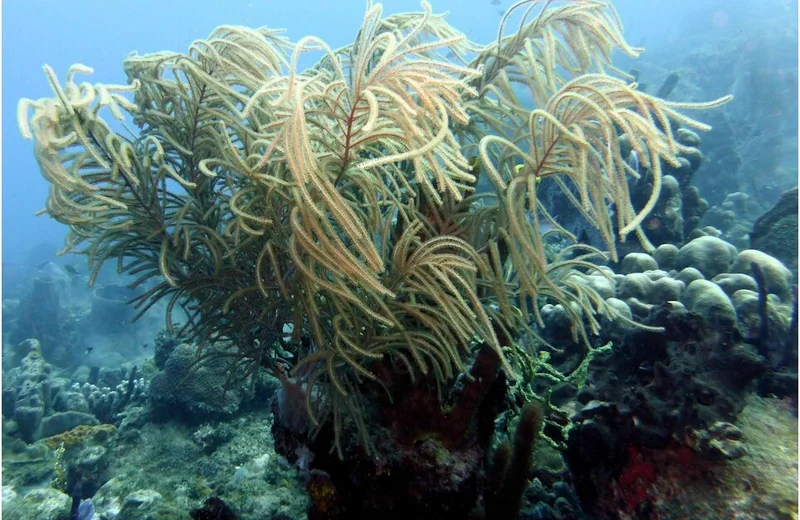
Sea Plume

Elkhorn Coral (Acropora palmata)
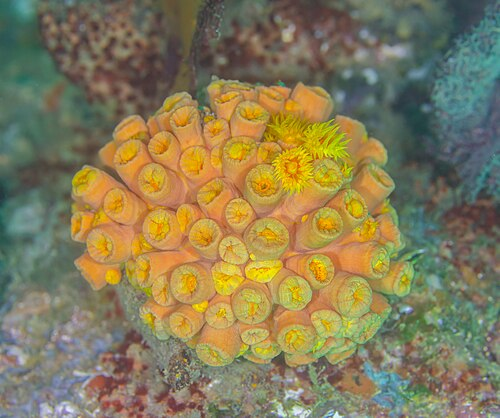

Orange Cup Coral
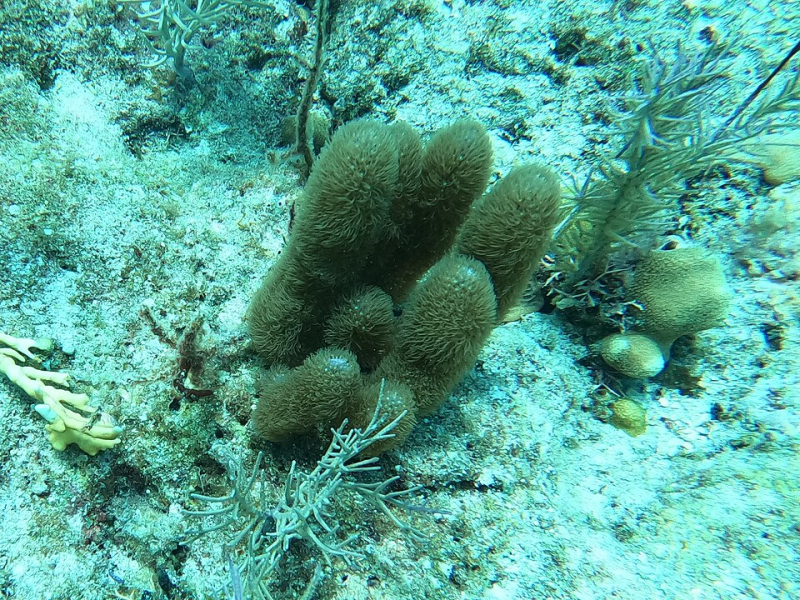
Club Finger Coral
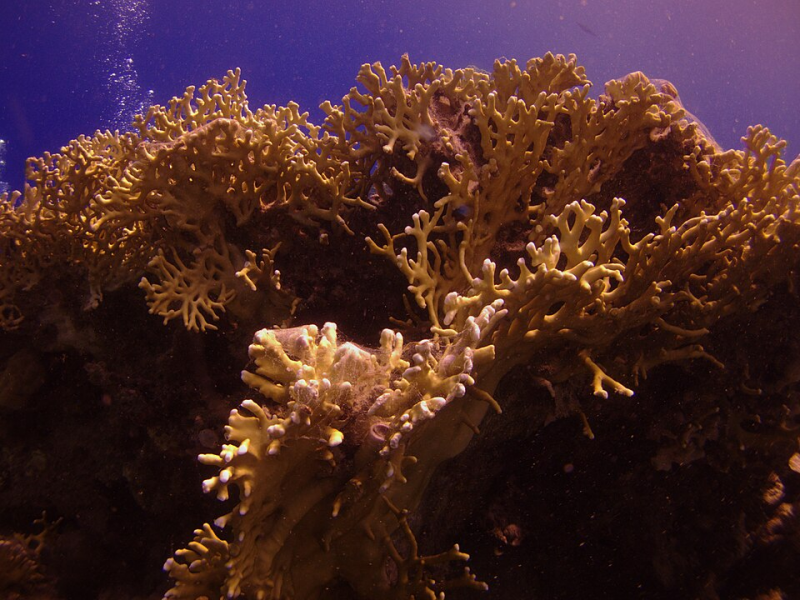
Photo:Tim Sheerman-Chase