

SHRIMPS
Cleaner shrimps
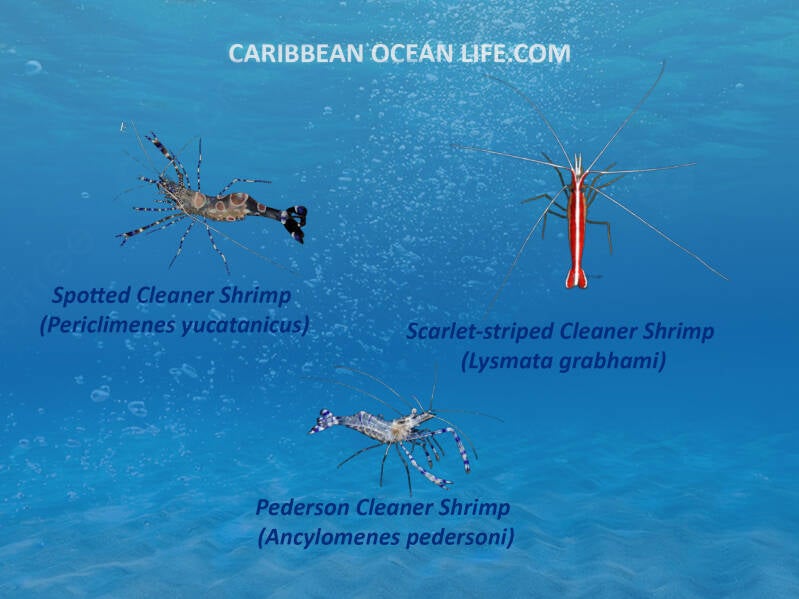
Cleaner Shrimps at a Glance
👀 How common: Fairly common, but easy to overlook
🔬 Species: Pederson Cleaner Shrimp, Spotted Cleaner Shrimp, Scarlet-striped Cleaner Shrimp
📏 Size: About 2–6 cm (0.8–2.4 in) body length, depending on species
🌊 Habitat: Coral reefs, rocky reefs, anemones and crevices
⬇️ Depth: Usually shallow reefs to about 30 m (100 ft)
🍤 Diet: Parasites, dead skin and small food particles
🐠 Behaviour: Often remain in one area where fish come to be cleaned
🧹 Special feature: Remove parasites and dead tissue from visiting fish
📡 Communication: Long antennae and body movements help advertise their cleaning service
🤝 Cleaning stations: Some species establish regular spots where fish gather to be cleaned
♻️ Ecological role: Help remove external parasites from reef fish
🏝️ Curaçao, Bonaire & Aruba: Pederson, Spotted and Scarlet-striped Cleaner Shrimps can be found around the ABC islands
What Makes them Special?
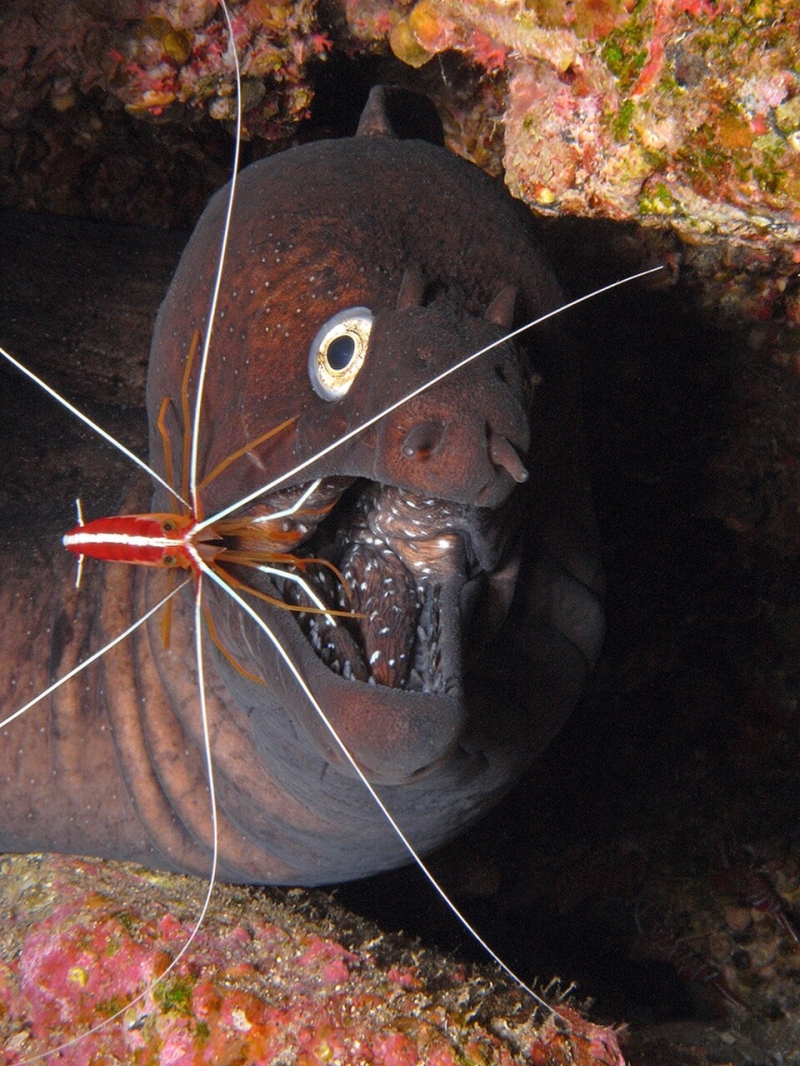
Scarlet-striped Cleaner Shrimp cleaning the mouth of a Moray Eel
Trust Between Predator and Prey
One of the most remarkable aspects of cleaning stations is that predators and prey may visit the same shrimp without conflict. A large grouper could easily eat a cleaner shrimp, yet during cleaning both animals benefit and the shrimp is usually left unharmed.
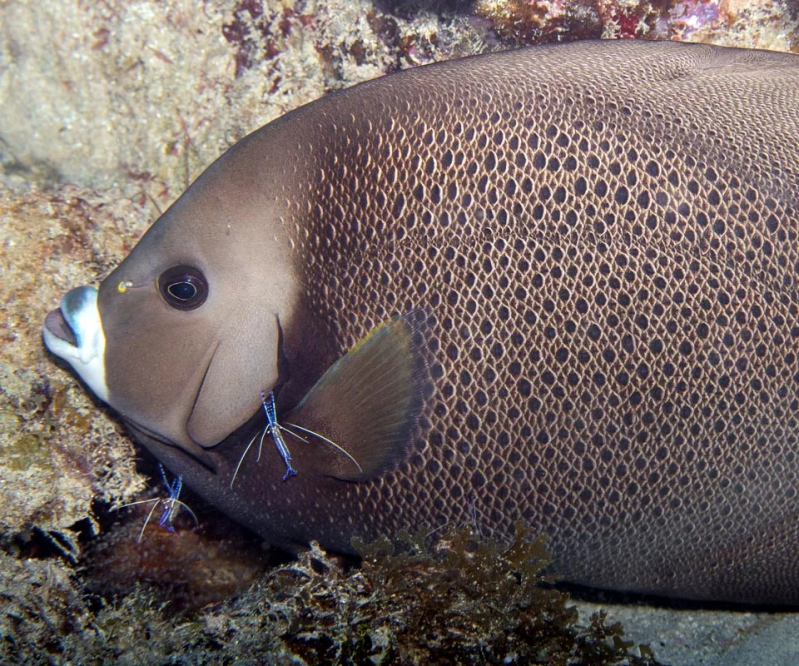
Grey angelfish getting cleaned by Pederson Cleaner Shrimp
Tiny Shrimp, Big Reputation
Cleaner shrimps may be small, but they perform one of the most important jobs on the reef. They remove parasites, dead skin and other unwanted material from fish, helping to keep their clients healthy.
Running a Cleaning Station
Many cleaner shrimps operate from a fixed location known as a cleaning station. Fish actively visit these stations and often wait their turn to be cleaned. Some even open their mouths and gill covers to allow the shrimp access to places they cannot reach themselves.
Advertising Their Services
Cleaner shrimps don't hide when a fish approaches. Instead, they wave their long white antennae and perform characteristic movements to signal that they are cleaners rather than prey.

Spotted cleaner shrimp
A Cleaning Station with Protection
Some cleaner shrimps live in close association with sea anemones. The stinging tentacles provide a relatively safe home, while the anemone also makes the cleaning station easy for visiting fish to find. From their protected position, the shrimps wave their long antennae to advertise their cleaning service.
BANDED CORAL SHRIMP
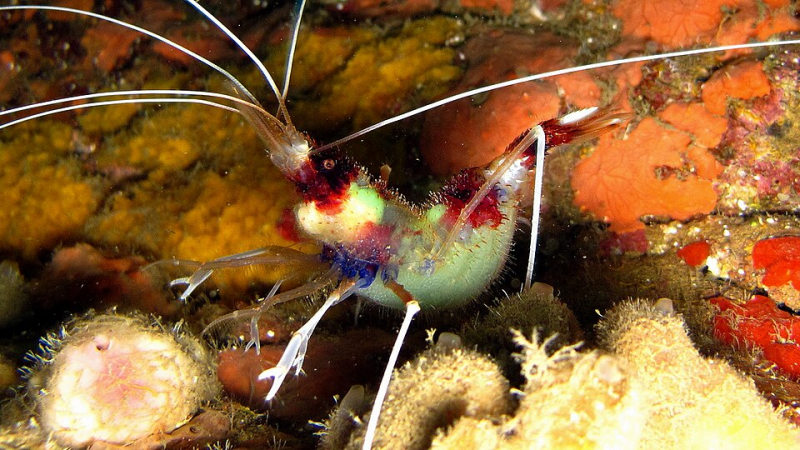
Carrying a Cluster of Eggs
Female Banded Coral Shrimps carry their eggs attached to tiny swimming legs beneath the abdomen until they hatch. A female carrying eggs is sometimes called “berried”, because the cluster of eggs looks like a bunch of tiny berries.
Banded Coral Shrimp at a Glance
👀 How common: Fairly common, but often hidden during the day
🔬 Scientific name: Stenopus hispidus
📏 Size: Usually about 4–6 cm (1.6–2.4 in) body length, much larger with claws and antennae included
🌊 Habitat: Coral and rocky reefs, caves, crevices and overhangs
⬇️ Depth: From shallow reefs to deeper water
🍴 Diet: Small invertebrates, parasites, dead tissue and food scraps
🌙 Activity: Mostly active at night
🐠 Behaviour: Often found in pairs, usually remaining close to a sheltered crevice
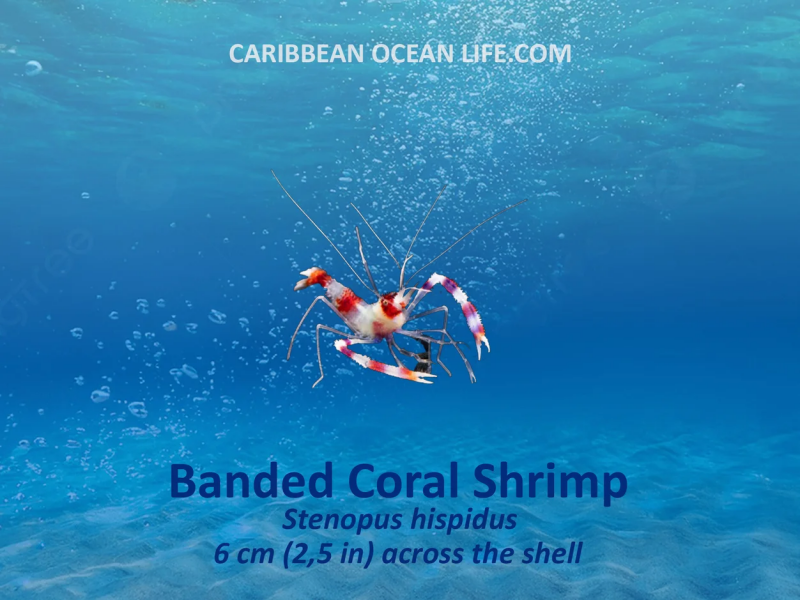
🎨 Colour: Distinctive red and white bands, with extremely long white antennae
🧹 Cleaning: May remove parasites and dead tissue from visiting fish
🦞 Special feature: Very long antennae and large clawed front legs make it easy to recognize
💕 Pairing: Males and females often form long-term pairs and share the same shelter
🥚 Reproduction: The female carries her eggs beneath her abdomen until they hatch
🏝️ Curaçao, Bonaire & Aruba: Found on reefs around all three ABC islands
What Makes them Special?
Easy to Recognize
With their striking red and white bands, large claws and extremely long white antennae, Banded Coral Shrimps are among the most distinctive shrimps on the reef.
Together for Life
Banded Coral Shrimps are often found living as male and female pairs. Once paired, they may remain together for long periods, sharing and defending the same small territory.
A Shrimp with a Cleaning Service
They sometimes act as cleaners, picking parasites and dead tissue from visiting fish. Their long white antennae may help signal their presence to potential clients.
Don't Come Too Close
They may look elegant, but they can be surprisingly territorial. Banded Coral Shrimps defend their shelter against other members of their own species, while tolerating their partner.
Growing a New Suit
Like all crustaceans, they must shed their hard outer shell in order to grow. After moulting, their new shell is soft for a while, making them particularly vulnerable until it hardens again.
