

TRUMPETFISH

Trumpetfish at a Glance
👀 How common: Common — Trumpetfish are regularly seen by snorkellers and divers around Curaçao, Bonaire & Aruba, although their excellent camouflage can make them surprisingly easy to miss
🔬 Scientific name: Aulostomus maculatus
🔬 Family: Aulostomidae
📏 Size: Usually 40–70 cm (16–28 in), reaching up to about 100 cm (39 in)
🌊 Habitat: Coral and rocky reefs, reef slopes and areas with gorgonians and other upright reef structures
⬇️ Depth: From shallow water to around 25 m (82 ft), occasionally deeper
🐟 Diet: Mainly small fish and crustaceans
🌎 Distribution: Tropical western Atlantic, including the Caribbean
🐠 Behaviour: Usually solitary; often hovers almost motionless in a vertical or head-down position while hunting
🥚 Reproduction: Eggs and sperm are released into the water column
🎺 Special feature: An extremely long, narrow body and tube-shaped snout ending in a small mouth that can rapidly expand to suck in prey
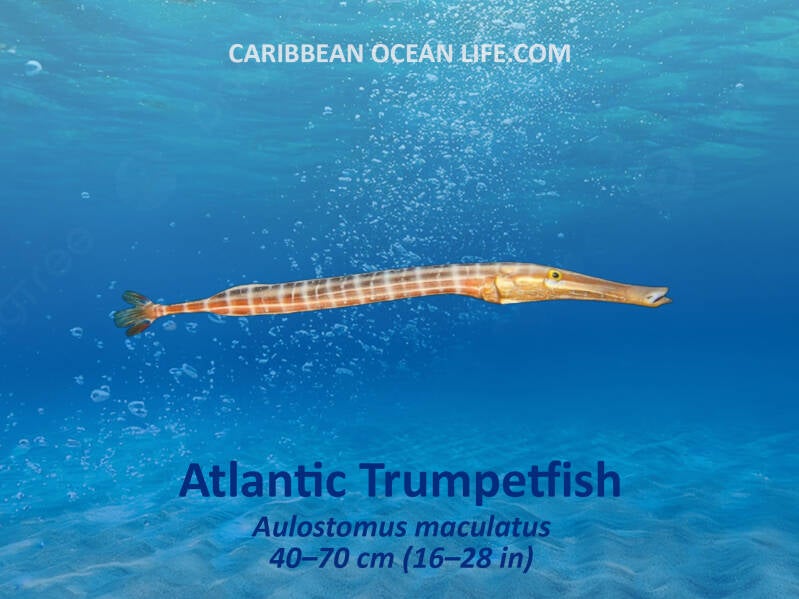
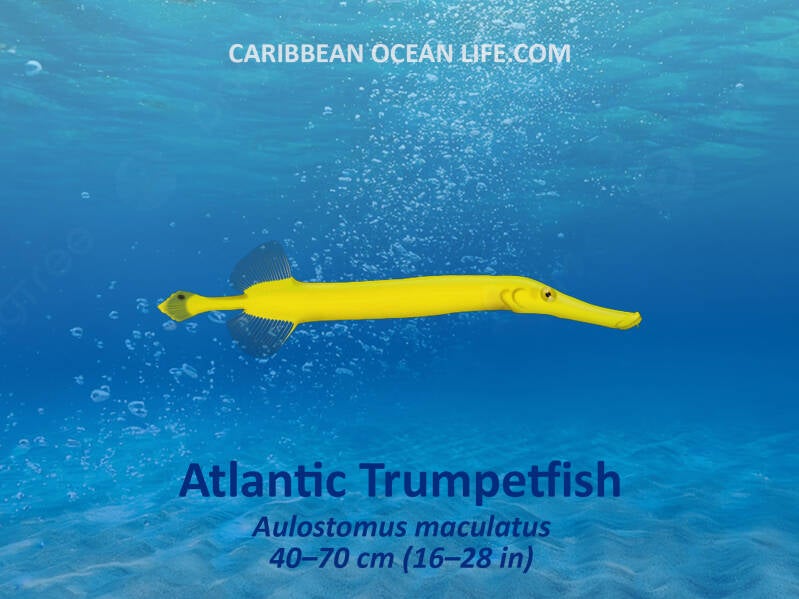
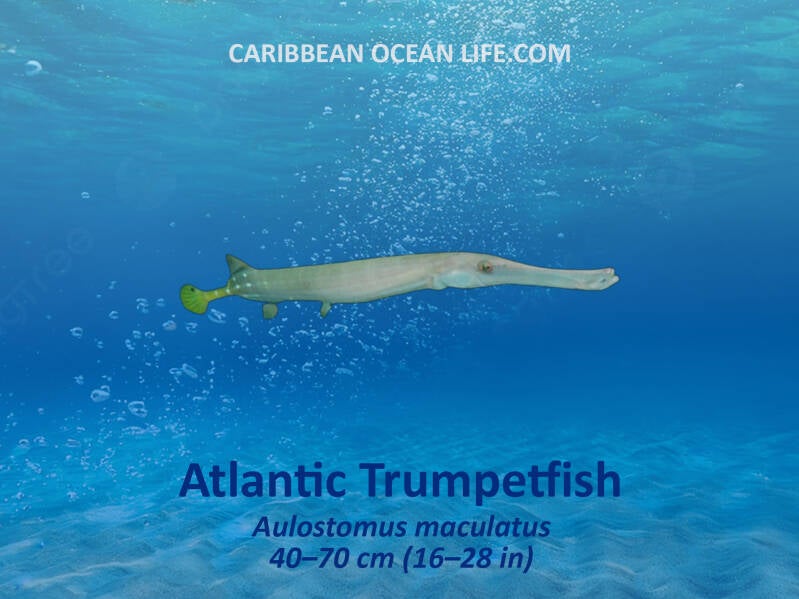
🎨 Colour: Highly variable — individuals may be brown, reddish, grey, yellow or patterned and can change colour to improve camouflage
🐣 Juveniles: Slender miniature versions of the adults, often found among reef structures where their shape provides camouflage
🥷 Hunting strategy: May hide beside larger fish and use them as moving cover to approach unsuspecting prey
♻️ Ecological role: A specialised predator of small reef fish and crustaceans
🏝️ Curaçao, Bonaire & Aruba: The Atlantic Trumpetfish (Aulostomus maculatus) is the trumpetfish species commonly encountered around all three islands.
What Makes Trumpetfish Special?
Trumpetfish can change their colour and pattern to improve their camouflage. They occur in several colour forms, including yellow, brown and blue-grey, but it is unclear how freely an individual can switch between these distinct colour morphs.
A Surprisingly Big Mouth
The Trumpetfish may appear to have a tiny mouth at the end of its long snout, but appearances are deceptive. When it strikes, the mouth can expand extremely quickly, creating suction that pulls the prey inside.
Even more surprising, a Trumpetfish can swallow fish that seem far too large for its narrow body. Its jaws and throat are highly expandable, so that elegant little tube is actually a remarkably efficient hunting machine.
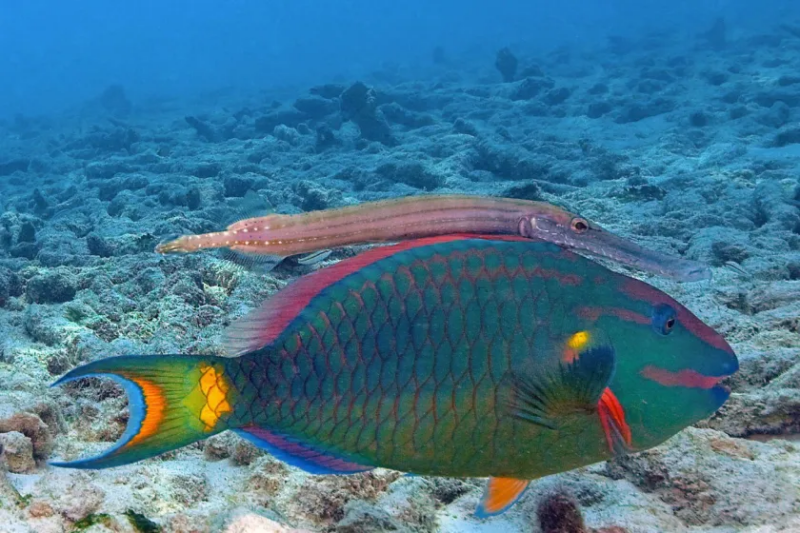
One of their cleverest hunting tricks is called shadow feeding. A Trumpetfish may swim closely alongside a larger, harmless fish, using it as moving camouflage to sneak up on smaller prey. Once close enough, it suddenly strikes, rapidly expanding its mouth and sucking the prey in like a tiny vacuum cleaner.
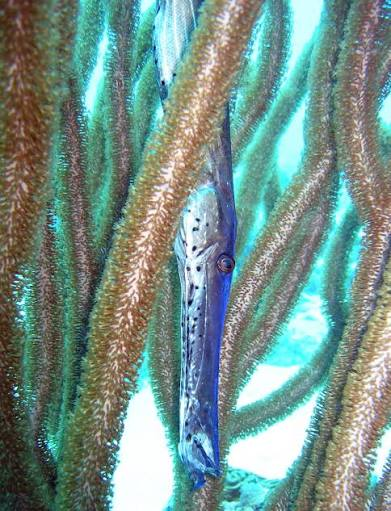
A Trumpet fish often hovers almost motionless in a vertical or head-down position while hunting