

GRUNTS

👀 How common: Very common — grunts are among the most frequently seen reef fish around Curaçao, Bonaire & Aruba, often gathering in large schools during the day
🔬 Scientific family: Haemulidae
📏 Size: Most Caribbean species are about 15–45 cm (6–18 in), depending on the species
🌊 Habitat: Coral and rocky reefs, sandy areas, seagrass beds and mangroves
⬇️ Depth: From very shallow coastal waters to deeper reef areas
🦐 Diet: Mainly crustaceans, worms, molluscs and other small bottom-dwelling animals
🌎 Distribution: Tropical and subtropical waters, with many species occurring in the Caribbean
🐠 Behaviour: Often form large schools around reefs during the day and spread out to feed after dark
🥚 Reproduction: Most are broadcast spawners, releasing eggs and sperm into open water
🔊 Special feature: They can produce grunting sounds by grinding specialised teeth in their throat; the swim bladder amplifies the sound
🌙 Nightlife: Many species rest around the reef during the day and move over sandy areas or seagrass beds to feed at night
🐣 Juveniles: Often use shallow reefs, seagrass beds and mangroves as nursery habitats
♻️ Ecological role: By feeding in one habitat at night and resting around reefs during the day, grunts help transfer nutrients between different parts of the marine ecosystem
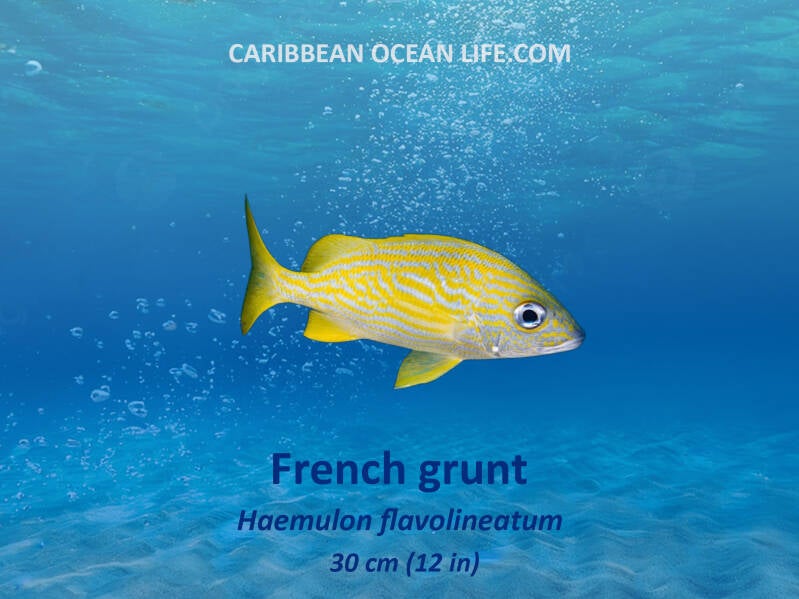
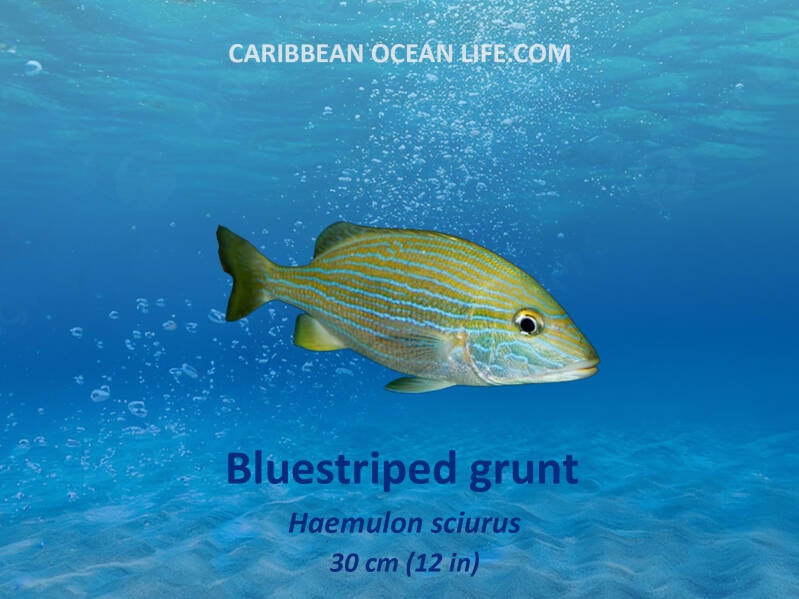
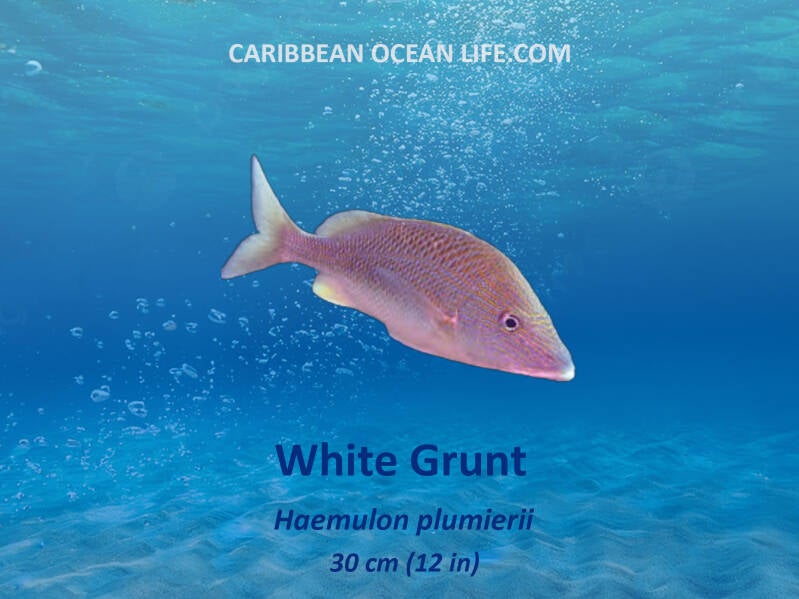
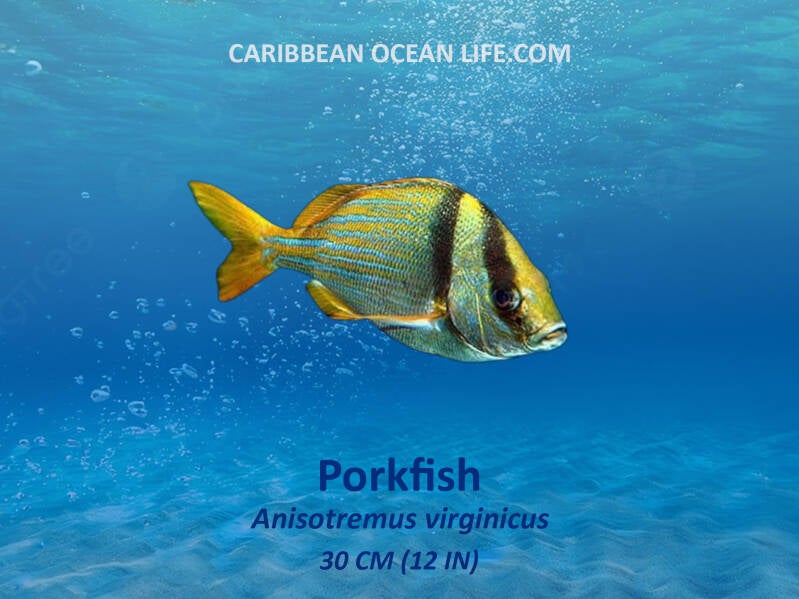
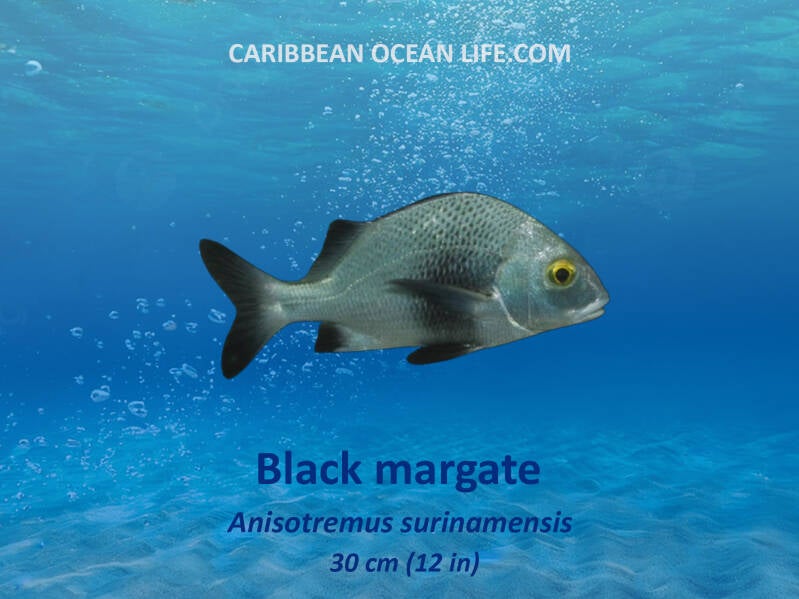
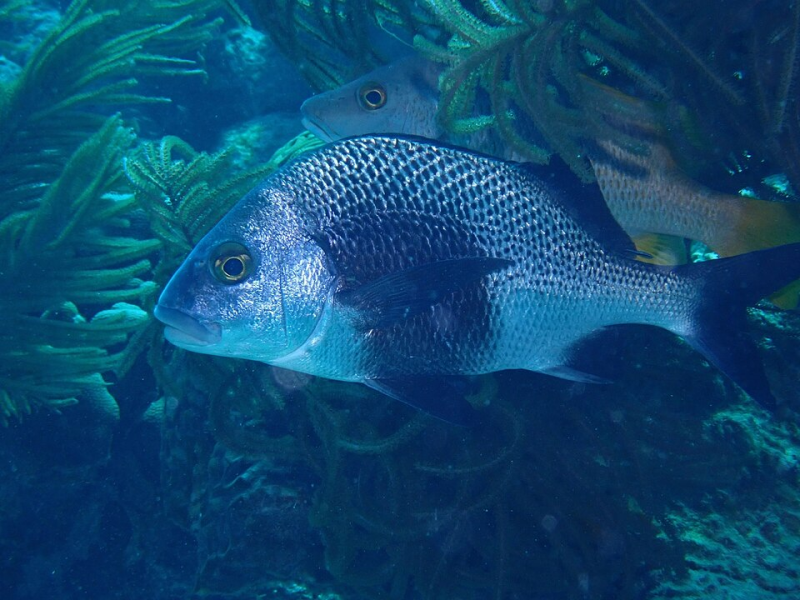
🏝️ Curaçao, Bonaire & Aruba: Common species include the French Grunt, Bluestriped Grunt, White Grunt, Porkfish and Black margate..
What Makes them Special?
Can You Hear Them Grunt?
Grunts get their name from the grunting sounds they can produce. They grind specialised teeth deep in their throat, while the swim bladder helps amplify the sound. These sounds are thought to play a role in communication.
A Double Life
During the day, many grunts gather in large, peaceful schools around the reef, sometimes appearing almost motionless. After sunset, everything changes. They leave the reef and spread out over sandy bottoms and seagrass beds to search for food.
The Nightly Commute
Every evening, grunts travel between their daytime resting places and nighttime feeding grounds. This regular journey can connect different marine habitats.
Helping to Feed the Reef
By feeding in seagrass beds and sandy areas and later returning to the reef, grunts help move nutrients from one habitat to another, making them an important link in the reef ecosystem.

(top),_French_Grunts_(Haemulon_flavolineatum)(below)_and_one_Porkfish_(Anisotremus_virginicus)_(21563211109).jpg)
Different species of grunts often school together
Look closely at what first appears to be a group of identical yellow-and-silver fish and you may discover several different species mixed together.