

FROGFISH AND BATFISH
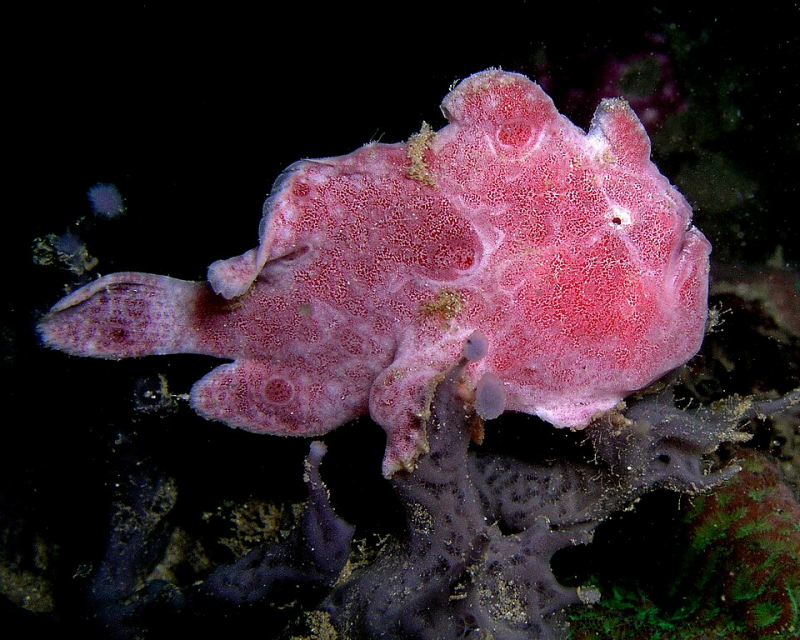
Frogfish at a Glance
👀 How common: Uncommon and extremely easy to overlook
🔬 Family: Antennariidae
📏 Size: Usually about 5–20 cm (2–8 in), depending on species
🌊 Habitat: Coral reefs, rocky areas, sponges and other structures with plenty of cover
⬇️ Depth: From shallow reefs to about 50 m (165 ft), depending on species
🐟 Diet: Small fish and crustaceans
🐠 Behaviour: Solitary and usually almost completely motionless
🎣 Special feature: A modified dorsal spine acts like a fishing rod, complete with a lure to attract prey
🎨 Camouflage: Can closely resemble sponges, algae, coral or rocks, and some can gradually change colour
🦶 Movement: Often “walks” across the reef using its modified pectoral fins rather than swimming
⚡ Hunting: An extremely fast ambush predator that can swallow prey almost as large as itself
🥚 Reproduction: Females release thousands of eggs in a floating gelatinous mass that drifts in open water
♻️ Ecological role: Small but highly specialized reef predator
🏝️ Curaçao, Bonaire & Aruba: Several frogfish species occur around the ABC islands, including the Longlure Frogfish and Ocellated Frogfish
What Makes Frogfish Special?
Faster Than You Can See
They may look slow and clumsy, but their attack is incredibly fast. A frogfish suddenly opens its enormous mouth, creating suction that pulls the prey inside in just milliseconds.
Walking Instead of Swimming
Frogfish are not enthusiastic swimmers. They often move across the reef using their modified pectoral fins almost like little legs, giving them their characteristic frog-like appearance.

Fishing for Their Dinner
Frogfish carry their own fishing rod. A modified spine on top of the head ends in a small lure that they wiggle like prey. When a curious fish comes close enough, the frogfish strikes.
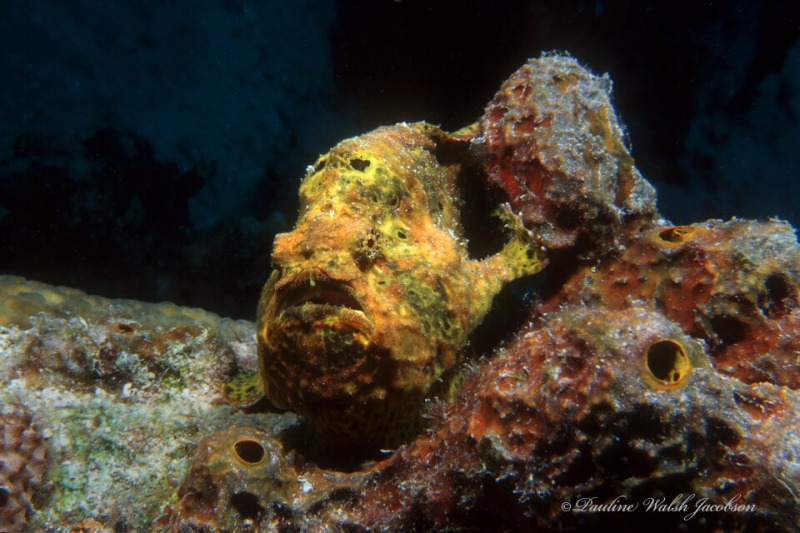
Can You Find the Fish?
Their camouflage is extraordinary. Frogfish can resemble sponges, algae, rocks and coral, and some species can gradually change colour to better match their surroundings. Even when you know exactly where one is hiding, it can be remarkably difficult to see.
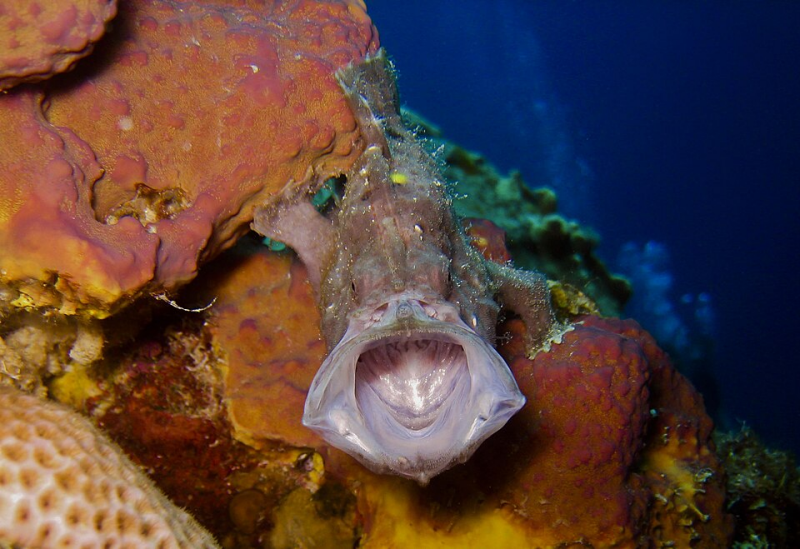
A Mouth Bigger Than Expected
A frogfish can expand its mouth and stomach dramatically, allowing it to swallow surprisingly large prey, sometimes almost as large as itself.
BAT FISH
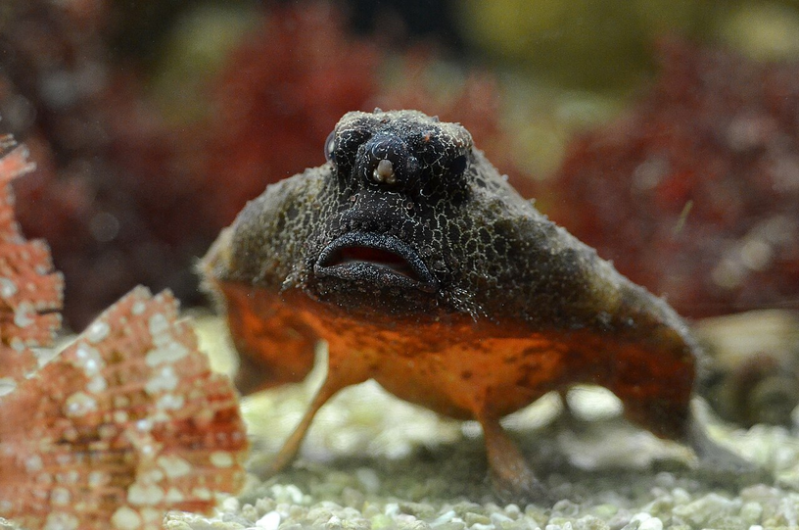
Batfish at a Glance
👀 How common: Uncommon and easily overlooked because of its excellent camouflage
🔬 Scientific name: Ogcocephalus nasutus, the Shortnose Batfish, a characteristic Caribbean species
📏 Size: Usually up to about 30 cm (12 in) long
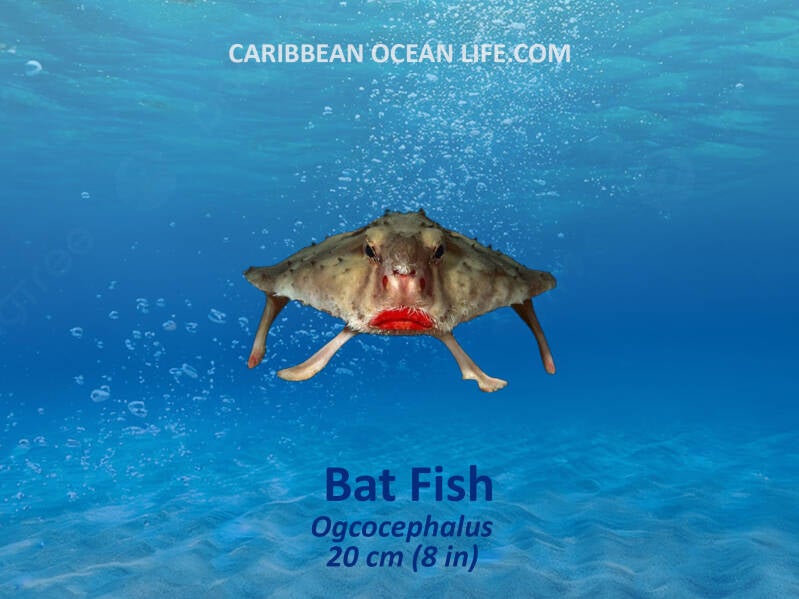
🎨 Appearance: Flattened, triangular body with a broad head, mottled brown or reddish coloration and distinctive fleshy lips
🏝️ Habitat: Sandy and rubble bottoms, seagrass areas and open spaces near coral reefs
🍴 Diet: Carnivorous, feeding on small crustaceans, mollusks, worms and small fish
🚶 Movement: A poor swimmer that usually “walks” across the seafloor using its modified pectoral and pelvic fins
🎣 Special feature: Has a small retractable lure on its head that can be used to attract curious prey
👄 Distinctive face: Its broad head and prominent lips give it one of the strangest faces on the Caribbean seafloor
🫥 Camouflage: Its mottled coloration helps it blend almost perfectly with sand, rubble and broken coral
🌊 Depth: Found from shallow water to considerably deeper reef and offshore habitats
♻️ Ecological role: A bottom dwelling predator of small animals living in and on the seafloor
🏝️ Curaçao, Bonaire & Aruba: Batfish can be found around the ABC islands, particularly on sandy and rubble bottoms near reefs
What Makes them Special?
They Carry Their Own Fishing Rod
Batfish are relatives of anglerfish and have a modified dorsal spine called an illicium. It can be extended in front of the head like a tiny fishing rod. At its tip is a fleshy lure, the esca, which helps attract small prey within striking distance.
They Walk Instead of Swim
Batfish are not very good swimmers. Instead, they spend much of their time “walking” across the seafloor using their modified pectoral and pelvic fins. Their strange waddling movement makes them unlike almost any other fish on the reef.
Difficult to notice
Their flattened body and mottled colors blend beautifully with sand, rubble and broken coral. A batfish can sit almost motionless on the bottom and be surprisingly difficult to notice.
A Very Unusual Body
Their broad, flattened head, arm like fins and peculiar mouth give batfish one of the strangest appearances among Caribbean fish. Their body is perfectly adapted to a life spent close to the seafloor.
Ambush Hunters
Rather than chasing prey, batfish rely on patience. They search the bottom for small crustaceans, mollusks and worms, and can use their lure to bring potential prey closer.
Related to Frogfish
Despite looking completely different, batfish and frogfish belong to the same order, Lophiiformes, the anglerfishes. Both have evolved the remarkable trick of using part of the dorsal fin as fishing equipment.


The batfish extends its illicium to attract prey.
When not in use, the illicium is tucked away close to the head.