

BLENNIES
Blennies at a Glance
👀 How common: Very common on Caribbean reefs, but many are so small and well hidden that they are easily overlooked
🔬 Family: Blennies belong to several closely related families, including Blenniidae, Chaenopsidae and Labrisomidae
📏 Size: Most Caribbean reef blennies are small, usually around 2–12 cm (0.8–4.7 in)
🎨 Appearance: Extremely varied, often with large eyes, expressive faces and small projections called cirri above the eyes or on the head
🪸 Habitat: Shallow coral reefs, rocky shores, rubble, reef crevices and tiny holes in coral or rock
🍴 Diet: Varies by species, including algae, plankton and tiny crustaceans
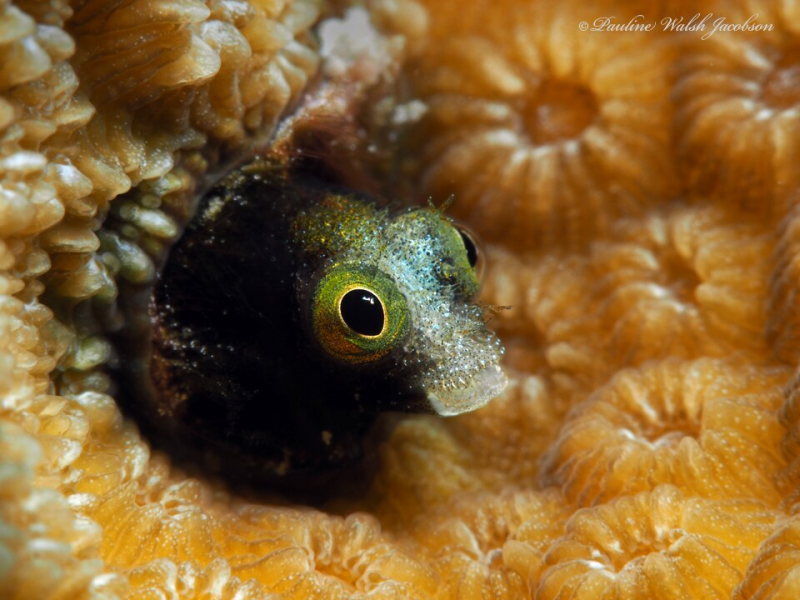
🏠 Tiny homes: Many species live in small holes, empty worm tubes or narrow crevices, often showing little more than their heads
👀 Behavior: Curious and alert, quickly retreating into their hiding place when danger approaches, then cautiously peeking out again
🐟 Swimming: Most blennies are not strong long distance swimmers and stay close to the reef or their shelter
🥚 Reproduction: Males of many species guard eggs laid inside holes or crevices until they hatch
🎭 Displays: Some males use bright colors, head movements or spectacular fins to attract females and warn rivals
♻️ Ecological role: Depending on the species, blennies graze algae, eat tiny animals and plankton, and provide food for larger reef predators
🏝️ Curaçao, Bonaire & Aruba: Many different blenny species occur around all three ABC islands, particularly on shallow reefs and rocky coastlines
What Makes them Special?
Tiny Faces in Tiny Houses
Many blennies spend much of their lives in small holes, crevices or abandoned worm tubes. Often only the head is visible. Once you know where to look, you suddenly start noticing tiny blenny faces peeking out all over the reef.
Full of Personality
Blennies may be small, but they are remarkably expressive. Their large eyes, fleshy projections above the head and habit of cautiously peeking from their homes give them an almost comical appearance.
Home Is Worth Defending
For many blennies, a good hole is valuable property. Males may defend their tiny territories against rivals and use the same shelter for courtship and reproduction. Females lay their eggs inside, and in many species the male remains behind to guard them.
Masters of the Quick Escape
Most blennies do not rely on long distance swimming. Instead, they stay close to shelter and can disappear into a tiny hole almost instantly when danger approaches. A few moments later, a curious little head often appears again.
Small Fish, Big Displays
Male blennies can become surprisingly flamboyant when courting females or confronting rivals. Depending on the species, they may change color, perform movements or raise elaborate fins that make them appear much larger than they really are.
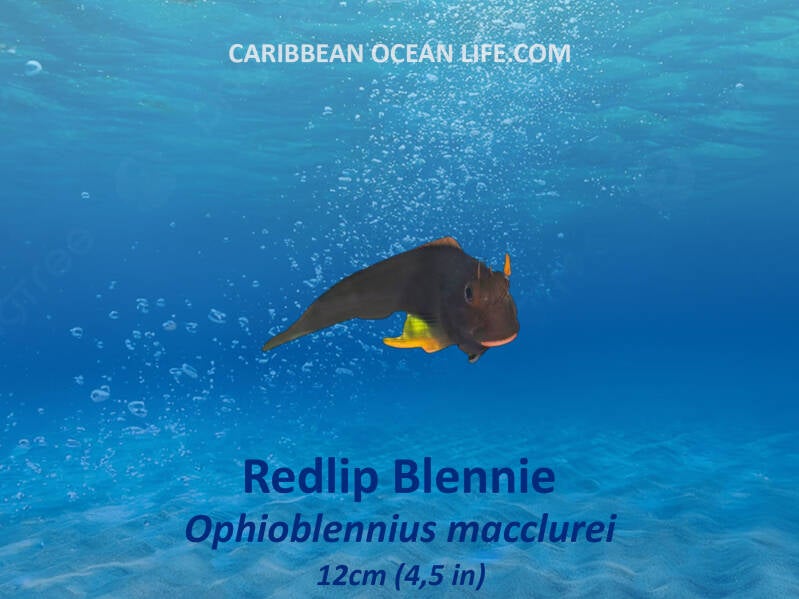
Redlip Blenny
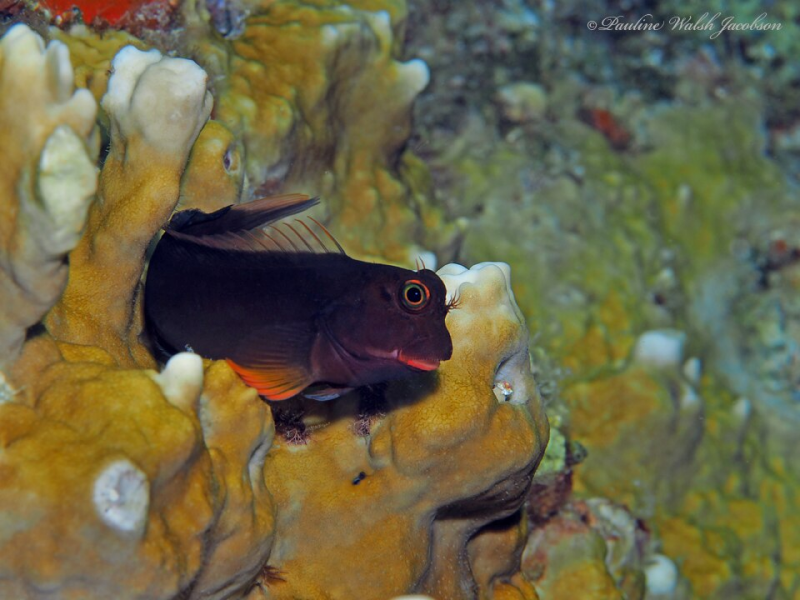
Photo: Pauline Walsh Jacobson
Those Unmistakable Lips
The Redlip Blenny is much larger and more robust than many other Caribbean blennies. Its thick reddish lips and permanently grumpy looking expression make it one of the easiest blennies to recognize.
Sailfin Blenny
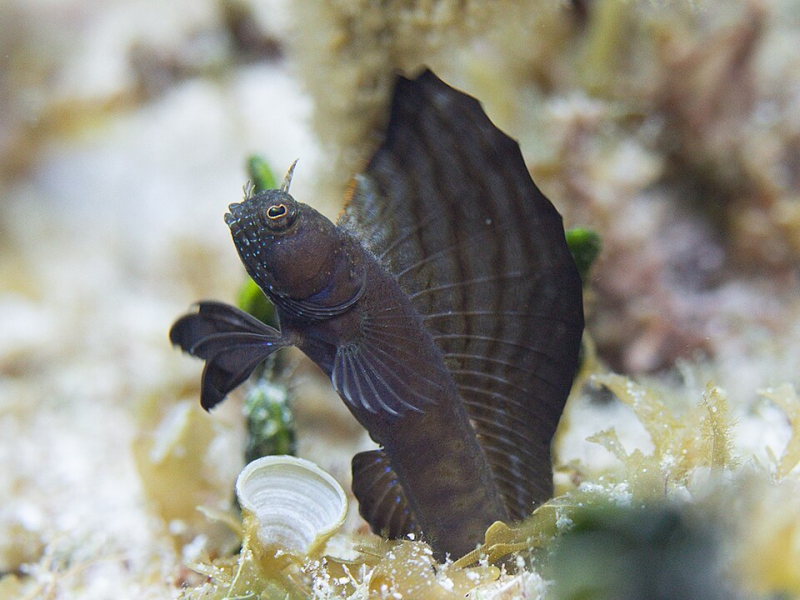
A Tiny Fish With a Huge Sail
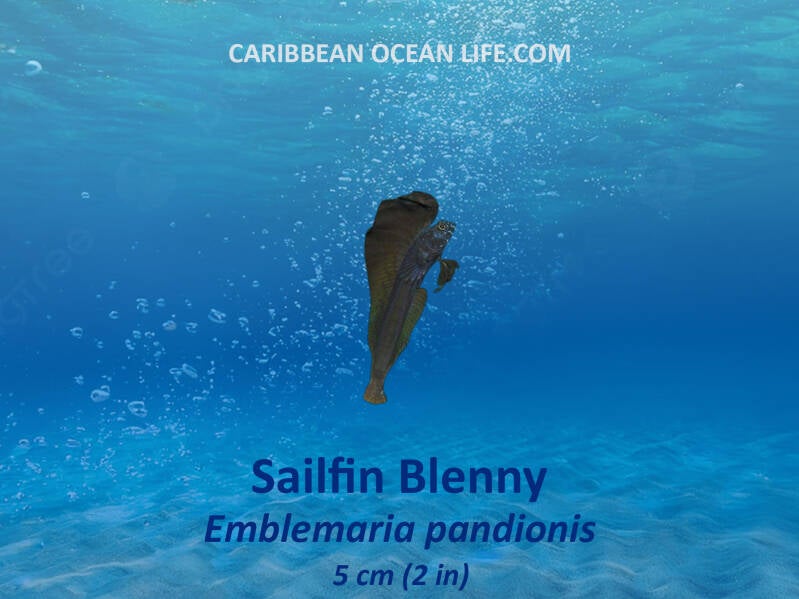
Male Sailfin Blennies can raise an extraordinarily tall dorsal fin during courtship and territorial displays. For a fish only a few centimetres long, the transformation is spectacular, one moment there is just a tiny blenny, the next there is an enormous sail waving above it.
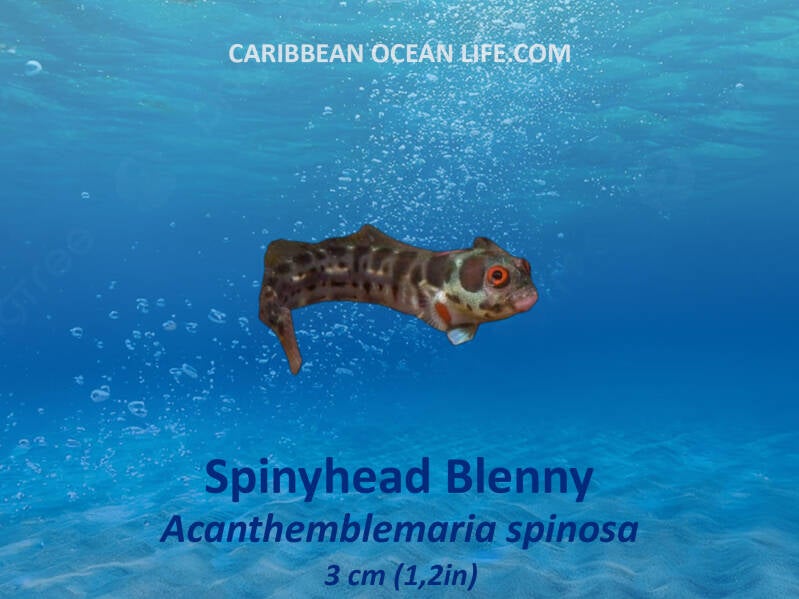
Spinyhead Blenny

A Crown of Spines
The Spinyhead Blenny gets its name from the conspicuous branched projections and spines on its head. On such a tiny fish, they create a surprisingly elaborate appearance.
Secretary Blenny
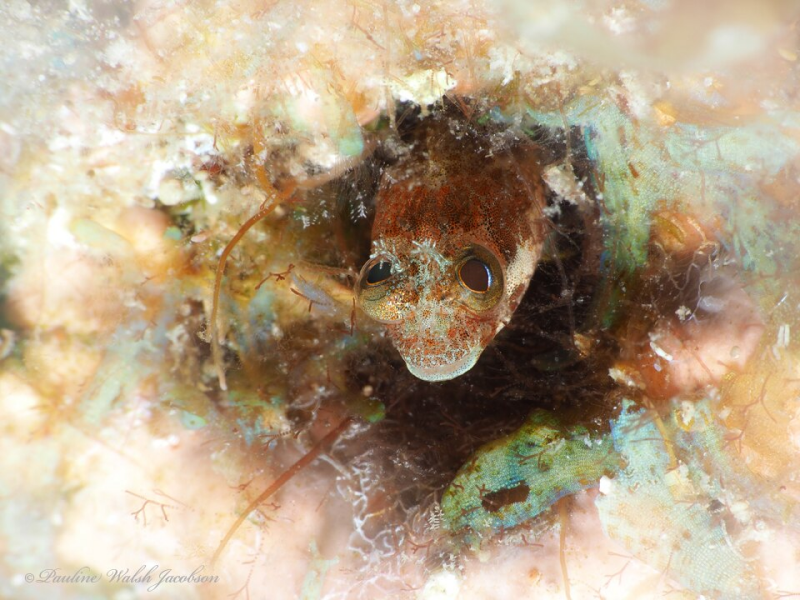
A Tiny Head in a Hole
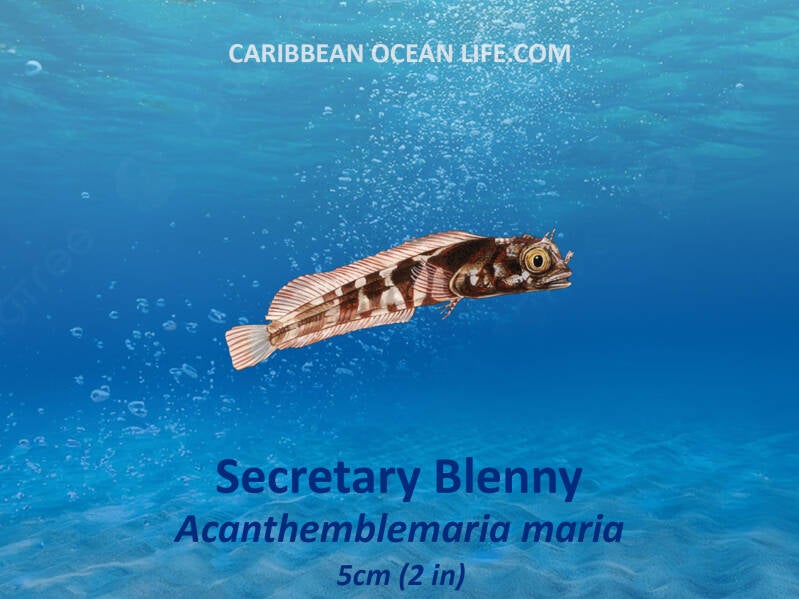
Secretary Blennies spend much of their time inside tiny holes in the reef, often abandoned worm tubes. Usually all you see is a colorful little head watching the world go by.
Saddled Blenny
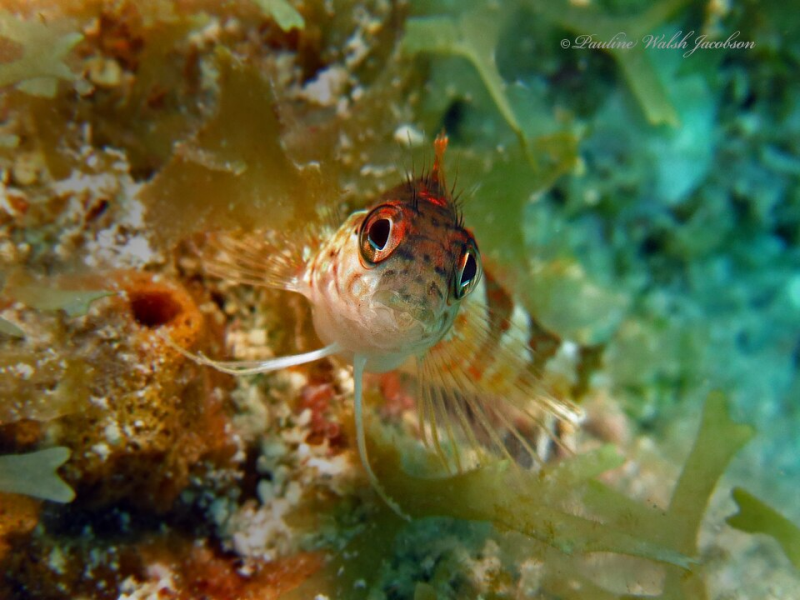
Camouflage Instead of Bright Colors
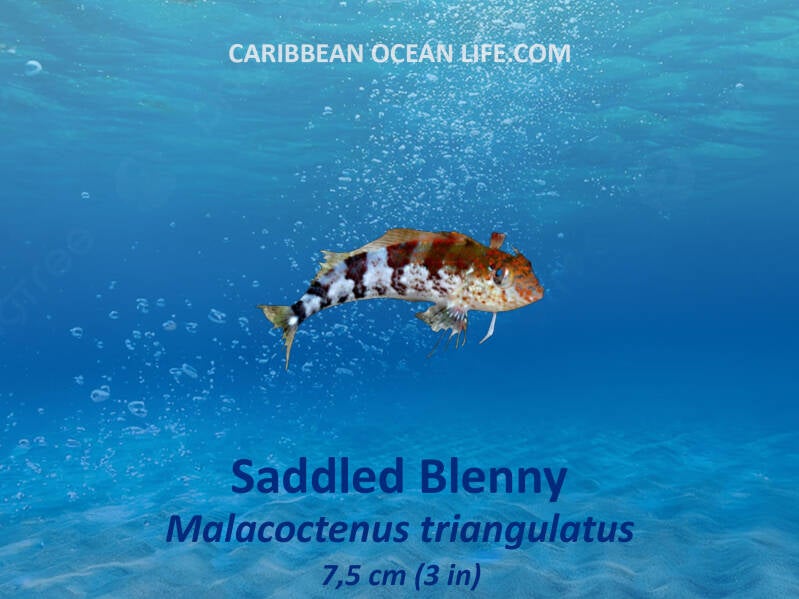
The Saddled Blenny relies on mottled colors and dark saddle shaped markings to blend into rocks, rubble and coral. Remaining unnoticed is one of its best defenses.
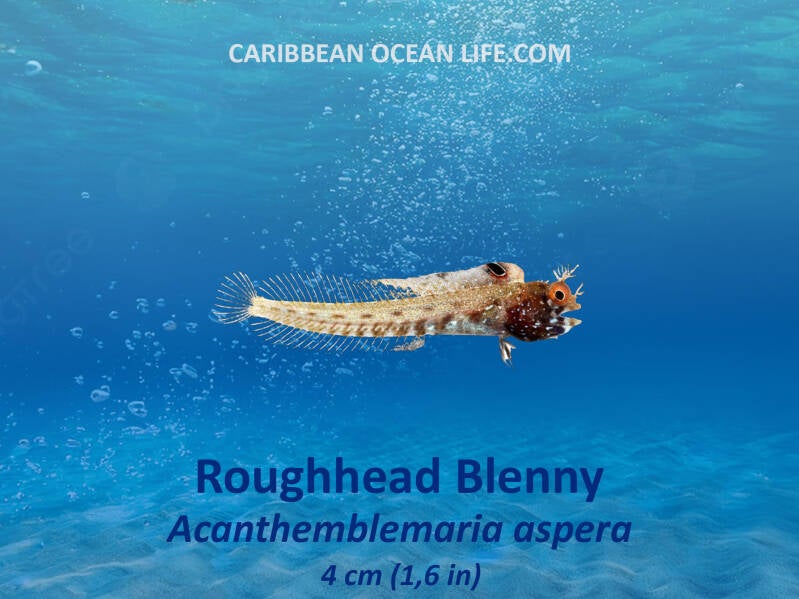
Roughhead Blenny
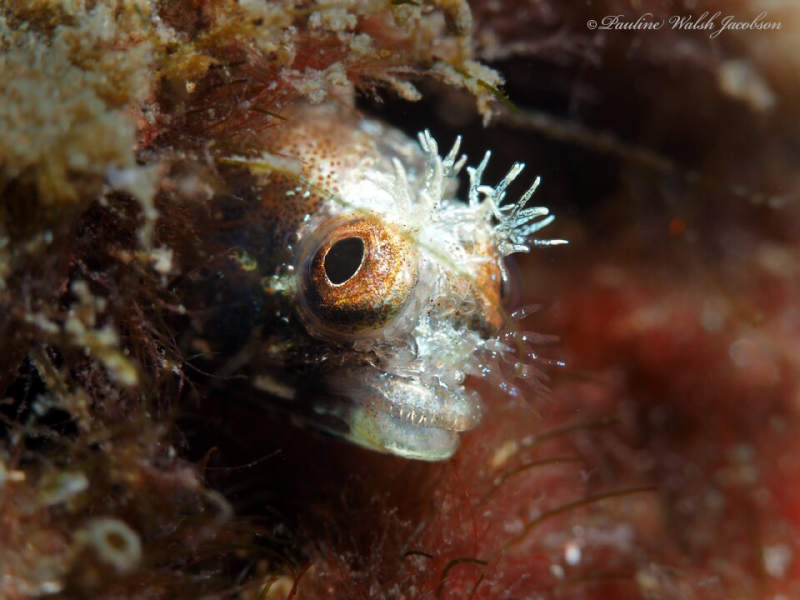
A Textured Disguise
The Roughhead Blenny has small projections and an irregular texture around its head that help break up its outline. Combined with its coloration, this makes it blend beautifully into the reef around its little hiding place.