FLYING GURNARD

Flying Gurnard at a Glance
👀 How common: Fairly common — found around Curaçao, Bonaire & Aruba, especially on sandy bottoms near reefs, but easily overlooked when its large fins are folded
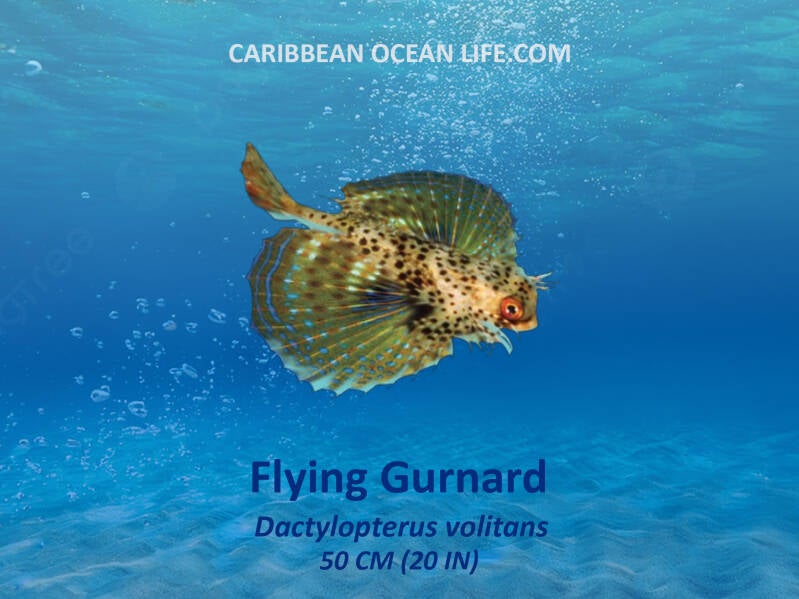
🔬 Scientific name: Dactylopterus volitans
🔬 Family: Dactylopteridae
📏 Size: Usually 20–40 cm (8–16 in), up to about 50 cm (20 in)
🌊 Habitat: Sandy and rubble bottoms, seagrass areas and open patches near coral and rocky reefs
⬇️ Depth: From very shallow water to around 80 m (260 ft), occasionally deeper
🦀 Diet: Small crustaceans, molluscs, worms and other bottom-dwelling invertebrates
🌎 Distribution: Tropical and warm-temperate Atlantic, including the Caribbean
🐠 Behaviour: Usually solitary or in pairs, spending most of its time slowly searching the seabed for food
🥚 Reproduction: Eggs and sperm are released into open water
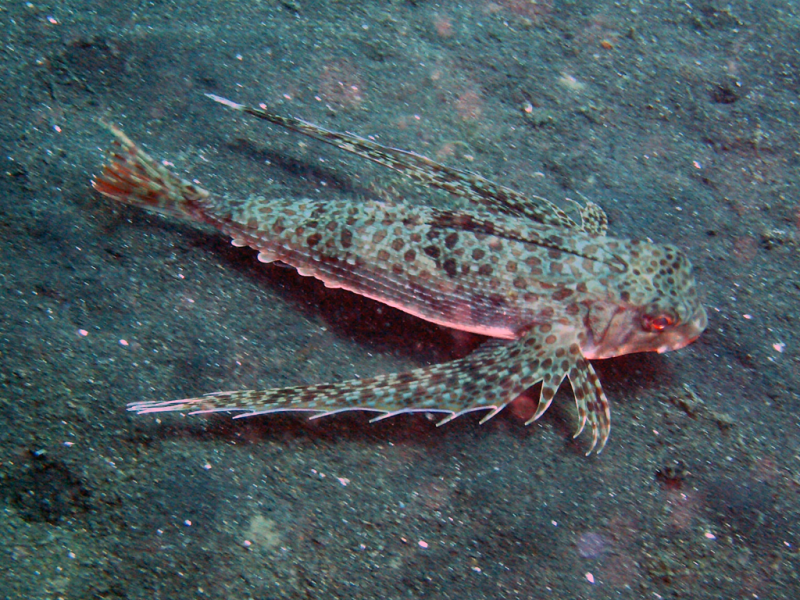
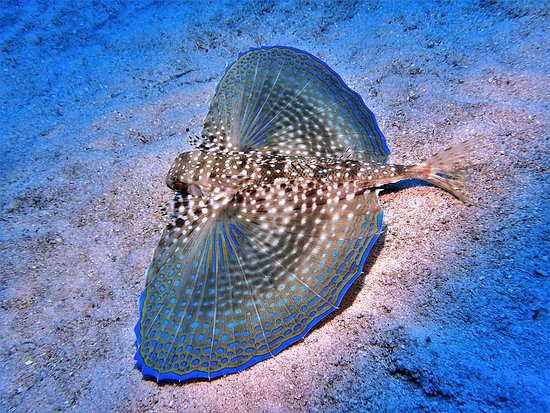
🪽 Special feature: Enormous, wing-like pectoral fins with spectacular blue markings that are normally kept folded against the body
🛡️ Defence: When startled, it suddenly spreads its fins, making itself appear much larger and potentially confusing predators
🐾 Movement: Uses specialised free rays of its pectoral fins to probe and move along the seabed — giving the impression that it is “walking”
🐣 Juveniles: Young Flying Gurnards have proportionally large pectoral fins and may occur in very shallow coastal waters
♻️ Ecological role: A bottom-feeding predator that searches through sediment for small invertebrates
🏝️ Curaçao, Bonaire & Aruba: The Flying Gurnard (Dactylopterus volitans) can be encountered around all three islands, particularly over sandy areas adjacent to the reef.
What Makes Flying Gurnards Special?
Wait Until It Spreads Its Wings
The Flying Gurnard's most spectacular feature is hidden until it feels threatened. Normally its enormous pectoral fins are folded neatly against its body, but when startled it suddenly spreads them like a pair of colourful wings, revealing brilliant blue markings and making itself appear much larger.
Does It Really Walk?
It spends most of its time close to the seabed, using specialised finger-like fin rays to probe the sand for small crustaceans and other prey. These rays also help it move along the bottom, making it look as though it is walking across the seabed.