


Cardinalfish at a Glance
👀 How common: Common on Caribbean reefs, although they often remain hidden during the day
🔬 Family: Apogonidae
📏 Size: Most Caribbean cardinalfish are small, usually around 5–12 cm (2–5 in)
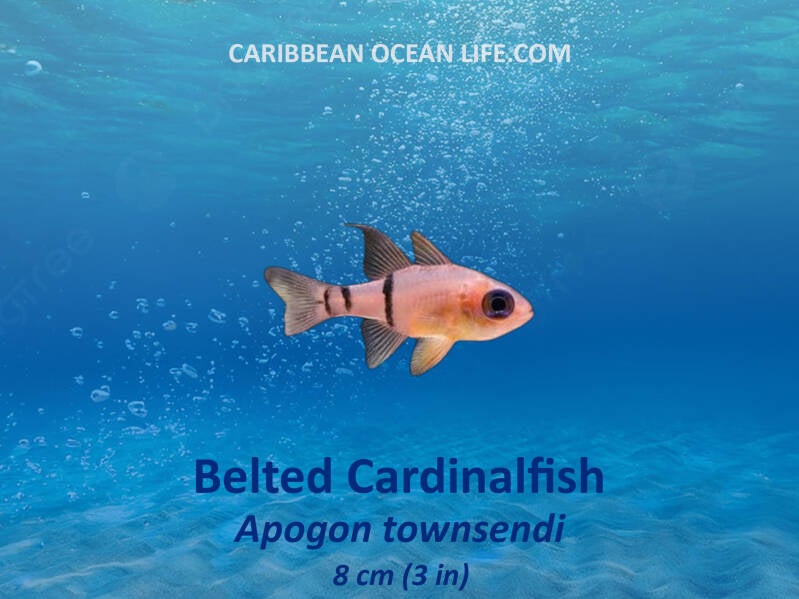
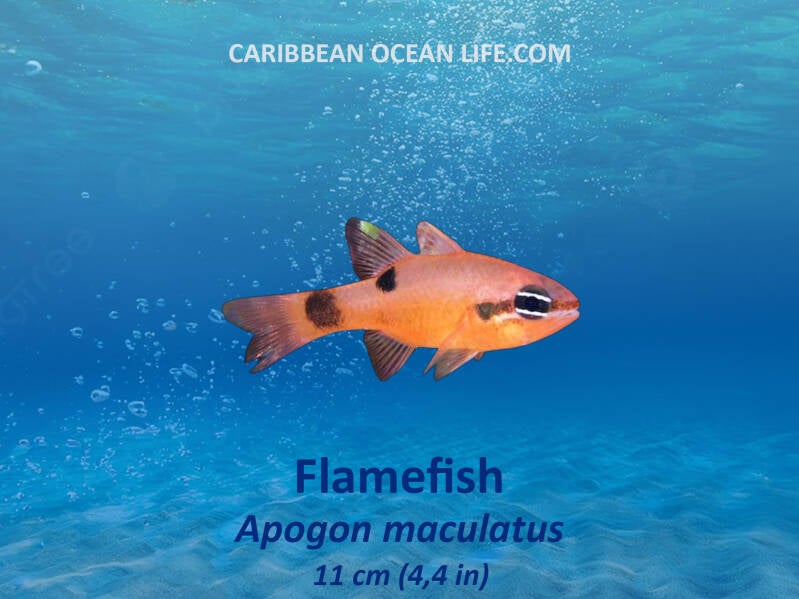
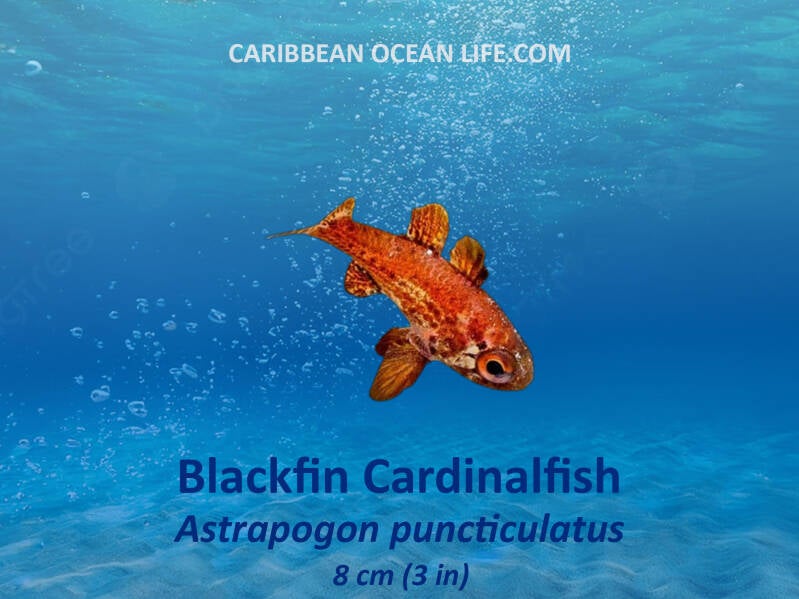
👁️ Appearance: Small fish with relatively large eyes and large mouths, often reddish, silvery or patterned with dark markings
🪸 Habitat: Coral and rocky reefs, caves, crevices, ledges and other sheltered areas
🌙 Activity: Mainly nocturnal, hiding in dark places during the day and becoming much more active after sunset
🍴 Diet: Small crustaceans, zooplankton and other tiny marine animals
👥 Social life: Many species gather in groups in sheltered areas during the day
👀 Large eyes: Their unusually large eyes are well adapted for finding food in low light conditions
🥚 Reproduction: After spawning, the male takes the fertilized eggs into his mouth and protects them until they are ready to hatch
👨👧 Parental care: While mouthbrooding, the male eats very little or may stop feeding altogether
🛡️ Defense: Relies mainly on hiding in caves, crevices, beneath ledges or among other protective reef structures
🌙 Night shift: After dark they leave their daytime shelters to search for food, making night dives a good time to see them in action
🏝️ Curaçao, Bonaire & Aruba: Several species occur on reefs around the ABC islands
What Makes them Special?
Safety in the Shadows
Many cardinalfish gather together in dark, sheltered places during daylight hours. Their reddish coloration can also be useful at depth or in dim light, where red wavelengths disappear quickly and a bright red fish can appear surprisingly dark.

Photo: Clyde S. Tamaru
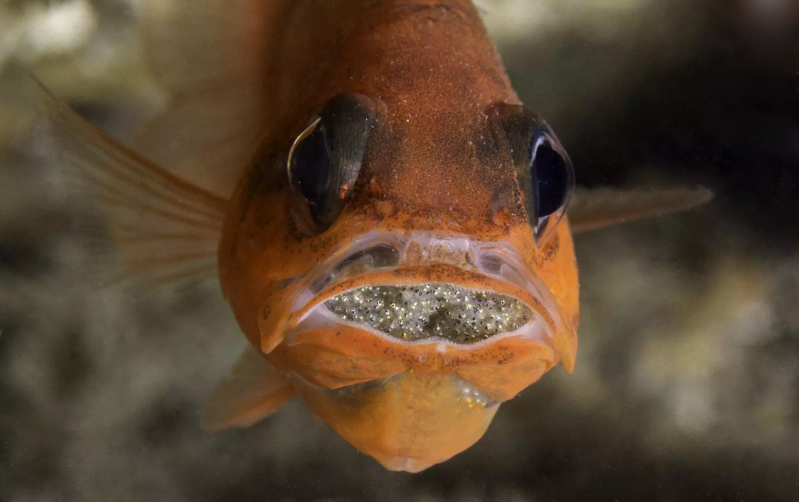
Egg mass from Cardinalfish.
Dad Does the Babysitting
One of the most remarkable things about cardinalfish is their unusual parental care. After spawning, the male takes the fertilized eggs into his mouth and carries them there until they are ready to hatch.
A Mouth Full of Eggs
The eggs form a surprisingly large mass inside the male’s mouth. While brooding, he periodically moves them around to keep them well oxygenated. With his mouth occupied, feeding becomes difficult, so he may eat very little during this period. When the eggs will hatch he will let them shelter in his mouth for an additional 6-10 days ,until they are ready to stand for their survival.
Flamefish

Creatures of the Night
Cardinalfish have exceptionally large eyes, an adaptation for life in low light. During the day many species hide beneath ledges, inside caves and in reef crevices. After sunset they emerge to hunt small crustaceans and plankton.
Belted Cardinalfish

Small Fish With a Big Mouth
Their large mouth is not just useful for carrying eggs. Cardinalfish are predators, using it to quickly suck in tiny crustaceans and other small prey from the surrounding water
Blackfin Cardinalfish

The Reef Has a Night Shift
Their daily routine is almost the opposite of that of many familiar reef fish. As daytime species retreat to their sleeping places, cardinalfish become active. A night dive therefore reveals a very different side of these otherwise secretive little fish.