

PEACOCK FLOUNDER

Peacock Flounder at a Glance
👀 How common: Common — regularly seen around Curaçao, Bonaire & Aruba, especially on sandy bottoms near reefs; its excellent camouflage makes it very easy to overlook
🔬 Scientific name: Bothus lunatus
🔬 Family: Bothidae
📏 Size: Usually 20–35 cm (8–14 in), up to about 45 cm (18 in)
🌊 Habitat: Sandy bottoms, rubble areas, seagrass beds and open patches between coral reefs
⬇️ Depth: From very shallow water to around 100 m (330 ft)
🦐 Diet: Small fish, shrimp, crabs and other bottom-dwelling animals
🌎 Distribution: Tropical western Atlantic, including the Caribbean
🐠 Behaviour: Usually solitary; spends much of its time lying flat and almost invisible on the seabed
🥚 Reproduction: Eggs and sperm are released into the water column
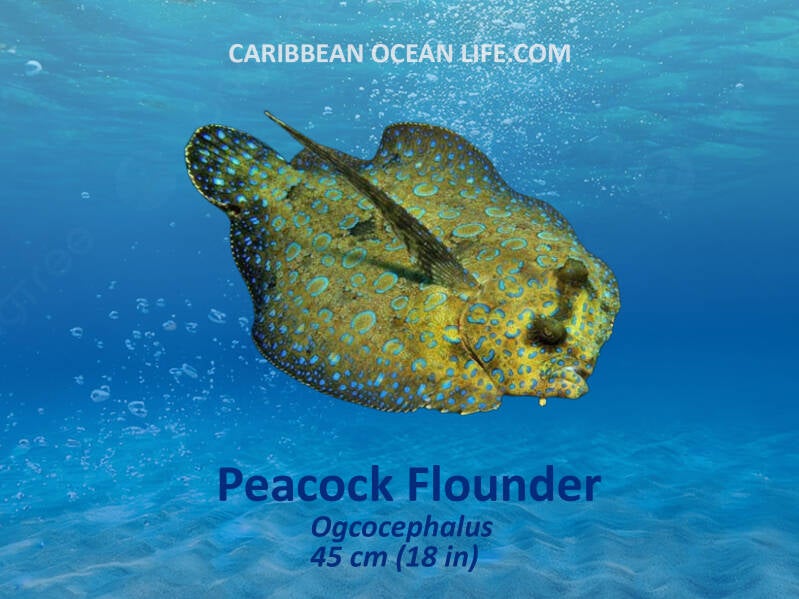
👀 Special feature: Both eyes are located on the same side of the head, allowing the fish to watch its surroundings while lying flat on the bottom
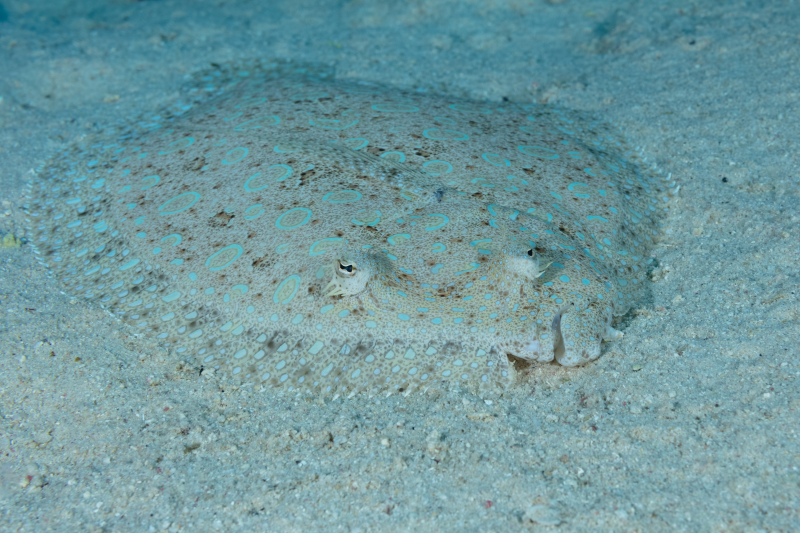
🎨 Colour: Can rapidly change colour and pattern to closely match sand, rubble or other surroundings
🔵 Markings: Named for the beautiful blue, peacock-like spots scattered across its upper surface
🐣 Juveniles: Start life looking like ordinary fish, with one eye on each side of the head; during development, one eye migrates to the other side as the body becomes flattened
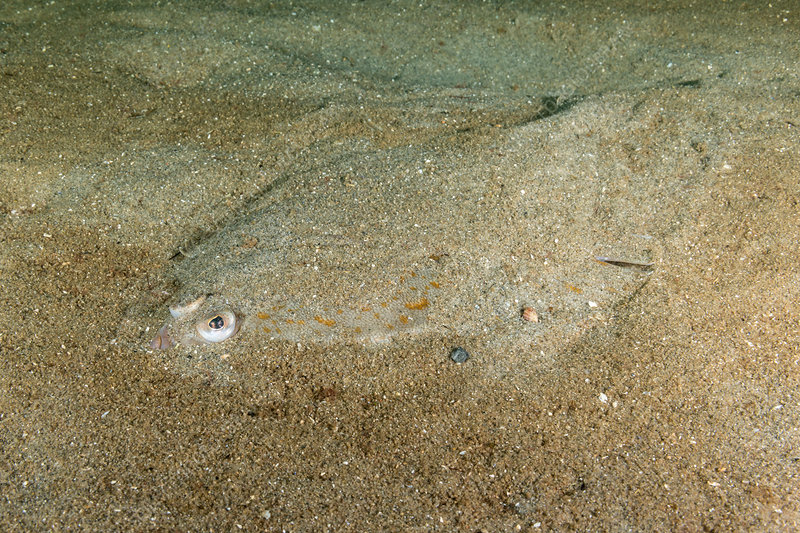
🥷 Camouflage: Can partially bury itself in sand, leaving little more than its eyes visible
♻️ Ecological role: An ambush predator of small fish and crustaceans living on or near the seabed
🏝️ Curaçao, Bonaire & Aruba: The Peacock Flounder (Bothus lunatus) is found around all three islands and can be spotted by both snorkellers and divers — once you learn how to see a fish that is doing its very best not to be seen. 😉
What Makes Peacock Flounders Special?
Wait... Then Strike!
The flounder is a patient ambush predator. It can lie completely motionless on the seabed, perfectly camouflaged while waiting for prey to come close. Then, in the blink of an eye, it suddenly strikes and grabs its unsuspecting meal.

How Did Both Eyes Get There?
When born they have the normal fish structure with one eye at each side of the haed. During growth however,one of the eyes will gradually travel upwarths while the body gets laterally flattened out.
A Master of Colour and Camouflage
Special pigment cells in their skin allow them to rapidly change their colour and pattern to match sand, rocks and rubble. They can even produce surprisingly detailed patterns that mimic their surroundings.
One More Way to Disappear
And when camouflage isn't enough, it has another trick: it can partially bury itself in the sand, leaving little more than its two eyes watching the world above.