

DAMSELFISH

Damselfish at a Glance
👀 How common: Very common – among the easiest reef fish to spot around Curaçao, Bonaire & Aruba
📏 Size: Usually 5–15 cm (2–6 in), depending on the species
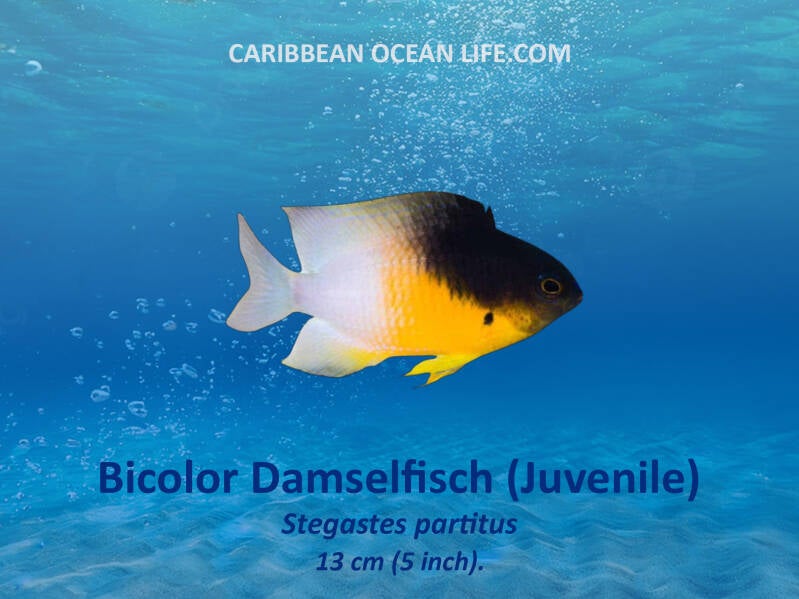
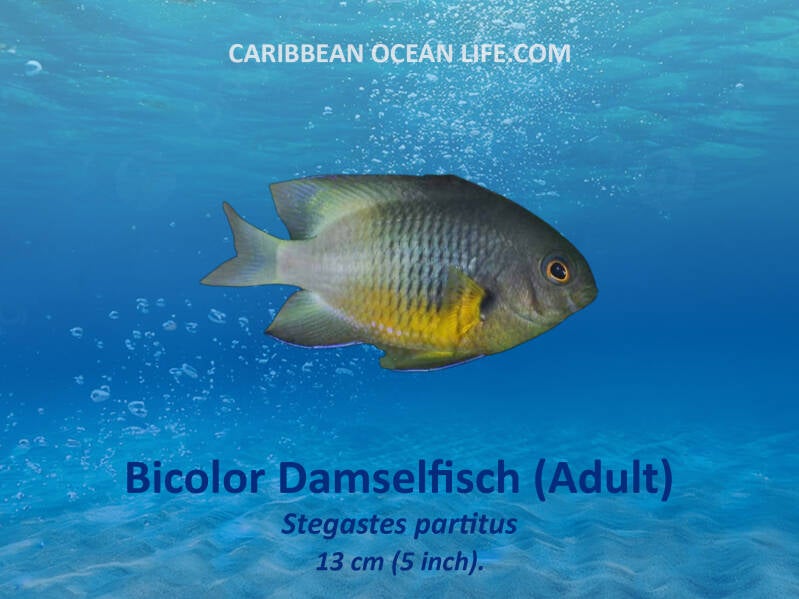
🎨 Color: Highly variable, from yellow, blue and purple to brown or almost black; juveniles are often much brighter
🌊 Habitat: Shallow coral reefs, rocky areas and around coral heads
🌿 Diet: Mostly algae, plankton and tiny invertebrates
☀️ Active: During the day
😠 Behavior: Small but surprisingly feisty – many fiercely defend their little patch of reef, even against much larger fish
🥚 Reproduction: Males guard and fan the eggs until they hatch
🤿 Best chance to spot one: Almost anywhere on a shallow reef, especially around corals and rocky areas


What makes them special?
From Juvenile to Adult
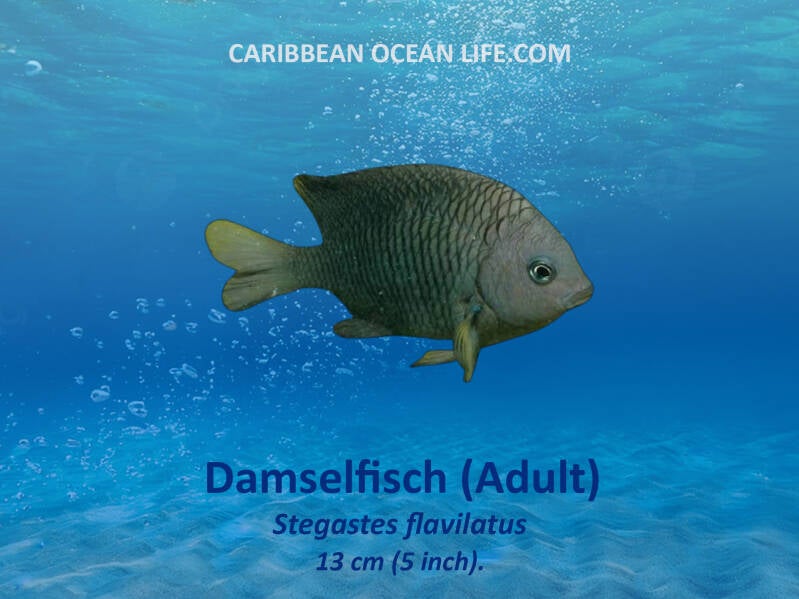
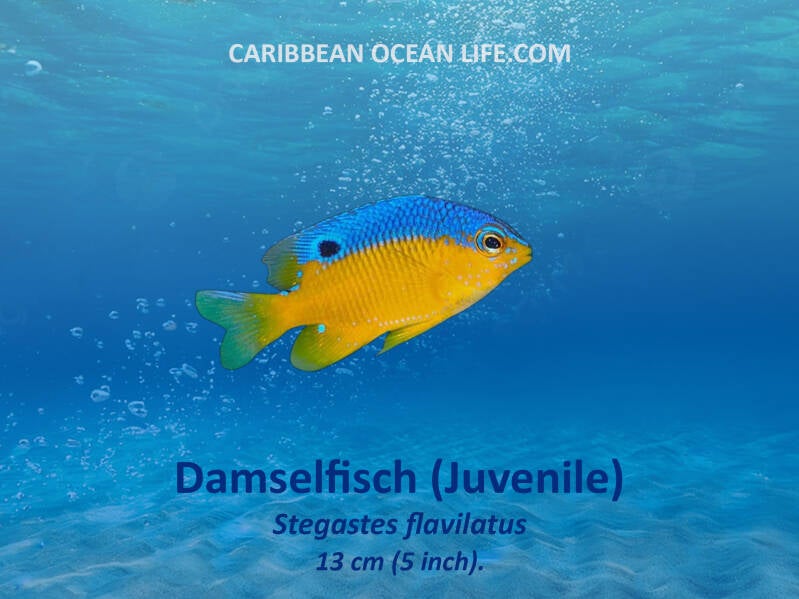
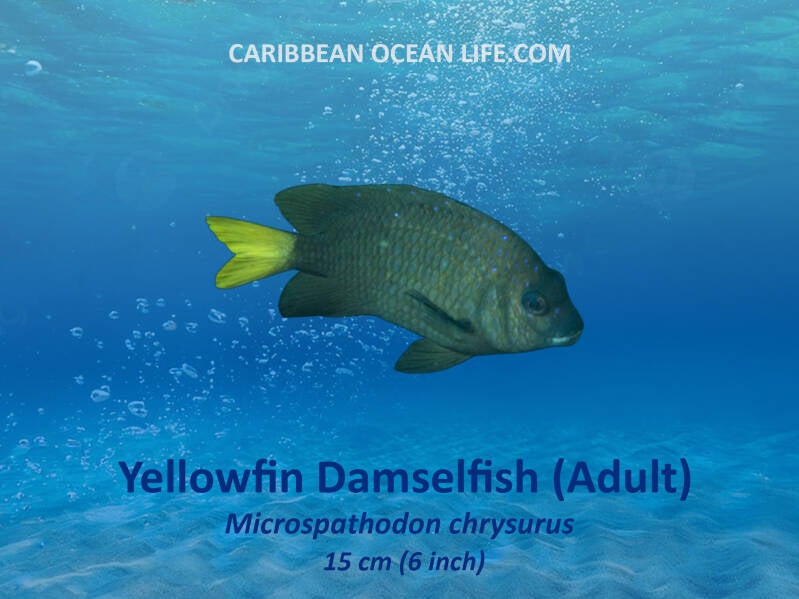
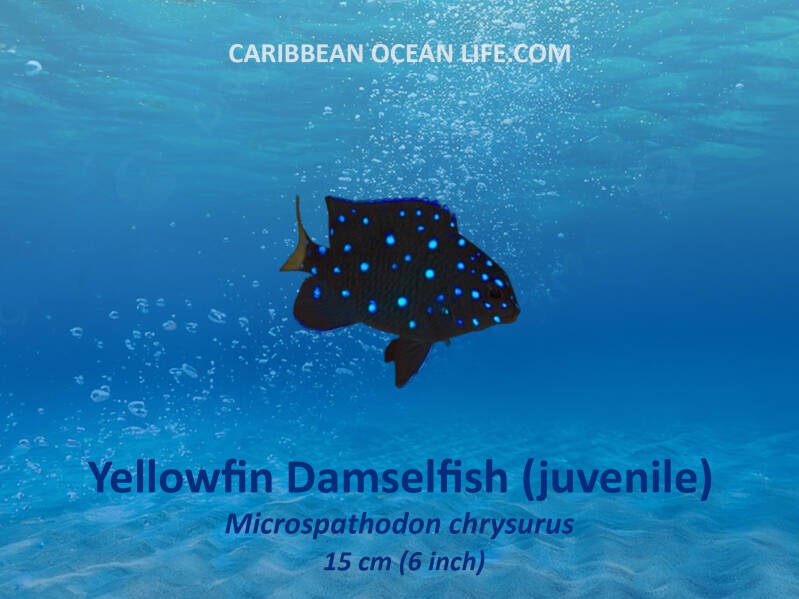
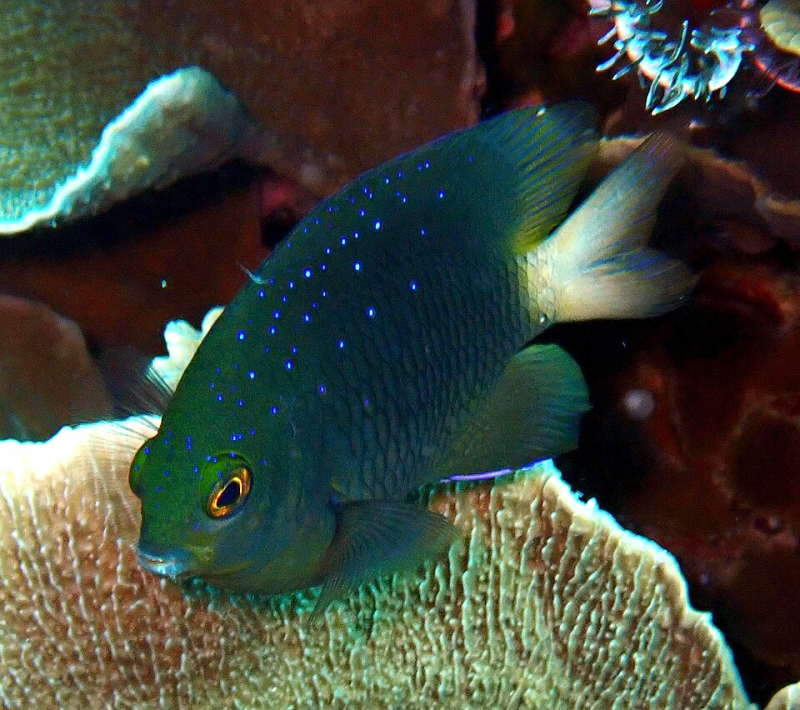
Young Yellowtail Damselfish look surprisingly different from the adults. Juveniles are bright blue with numerous tiny electric blue spots, making them one of the most colourful little fish on the reef.
As they grow, the yellow colour gradually appears, starting around the tail and spreading over the rear part of the body. At the same time, the brilliant blue spots begin to fade. By adulthood, the transformation is complete, leaving a fish with a blue front and a striking yellow rear and tail.
Small but fiercely territorial
Damselfishes may be small, but they are definitely not shy. Spend a little time watching a reef and you will often see these tiny fish darting out from the coral, chasing away anything that gets too close. Some species defend a territory many times their own body length, including against fish considerably larger than themselves.
Many damselfishes are surprisingly bold. They choose a small patch of reef or algae as their territory and defend it vigorously. If another fish enters, the damselfish may rush out to chase it away, sometimes repeatedly attacking an intruder much larger than itself.
Some actually “farm” their own food
One of the most fascinating behaviours is seen in farmer damselfishes. Instead of simply eating the algae growing on the reef, they actively cultivate particular algae within their territory and protect it from other herbivores. In a sense, they have their own tiny underwater vegetable garden.
The male takes care of the eggs
In many damselfish species, the male guards the eggs after they have been laid. He carefully fans them with his fins to keep water flowing over them and removes damaged or unfertilised eggs.

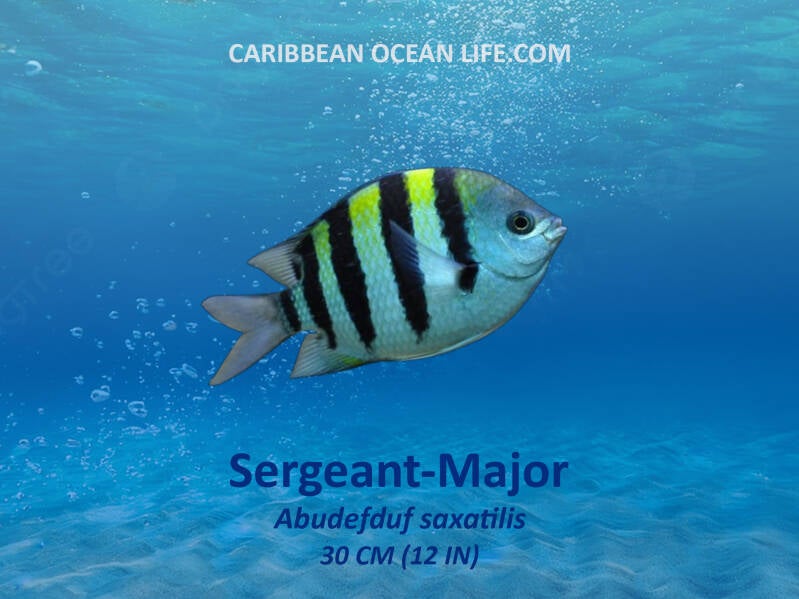
School of Sergant Majors