

TRIGGERFISH

Triggerfishes
at a Glance
👀 How common: Fairly common — several triggerfish species can be seen around Curaçao, Bonaire & Aruba, although some are encountered much more often than others
🔬 Scientific family: Balistidae
📏 Size: Approximately 20–60 cm (8–24 in), depending on the species
🌊 Habitat: Coral reefs, rocky reefs, reef slopes and sandy areas near reefs
⬇️ Depth: From shallow coastal waters to deeper reefs
🦀 Diet: Crabs, molluscs, sea urchins, worms, small fish and other invertebrates; diet varies by species
🌎 Distribution: Tropical and subtropical waters of the Atlantic, Indian and Pacific Oceans
🐠 Behaviour: Usually solitary or in pairs; curious, strong swimmers and sometimes territorial
🥚 Reproduction: Eggs are laid in nests on the bottom and are guarded by one or both parents
🔒 Special feature: The first dorsal spine can be locked upright and released by a smaller second spine — the mechanism that gives triggerfishes their name
🦷 Teeth: Strong jaws and powerful teeth allow them to crush shells and other hard-bodied prey
🐣 Juveniles: Young triggerfishes may differ considerably from adults in colour, pattern and habitat
♻️ Ecological role: Predators of many reef invertebrates and an important part of the reef food web
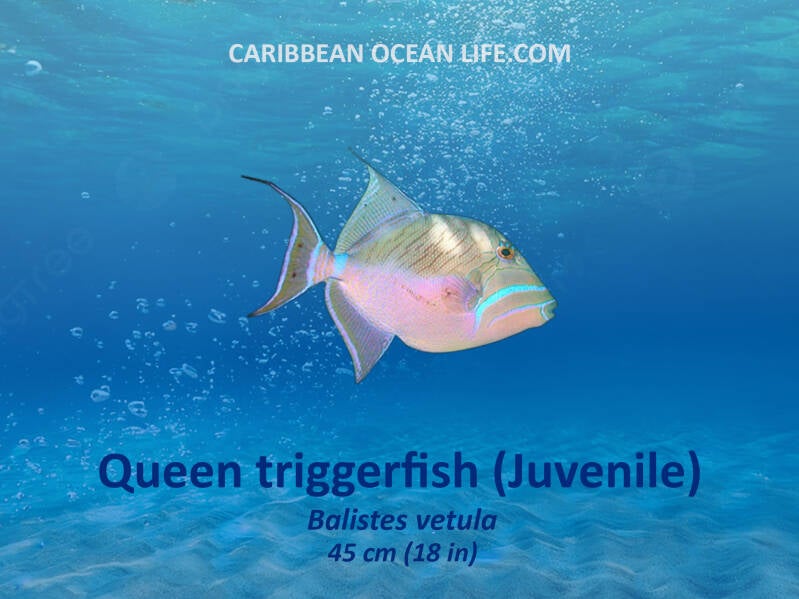
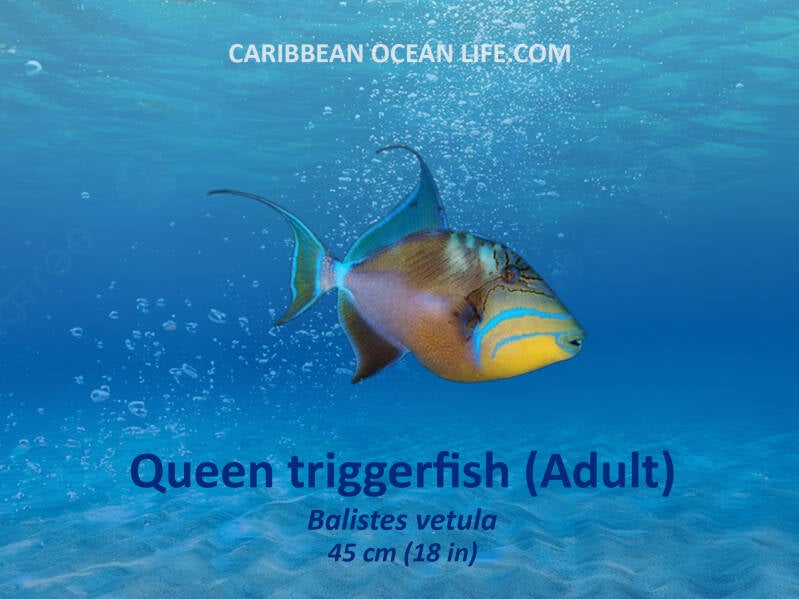
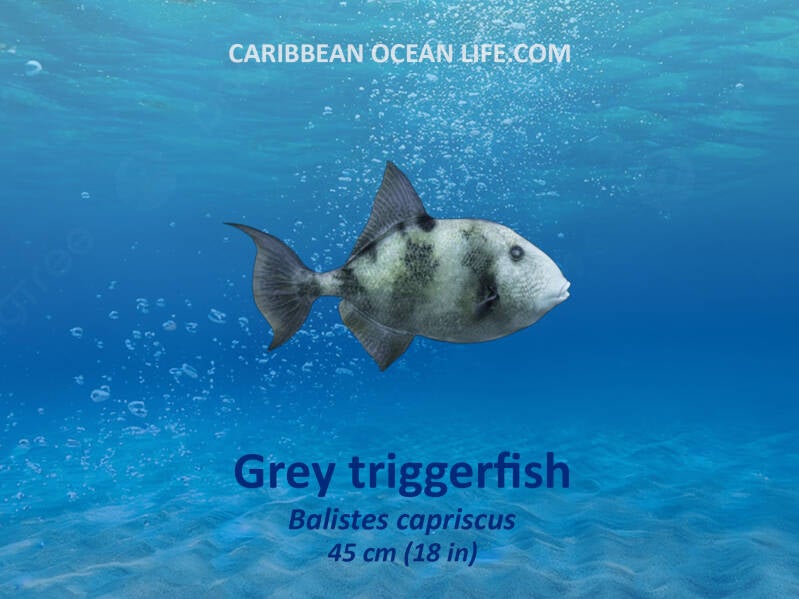
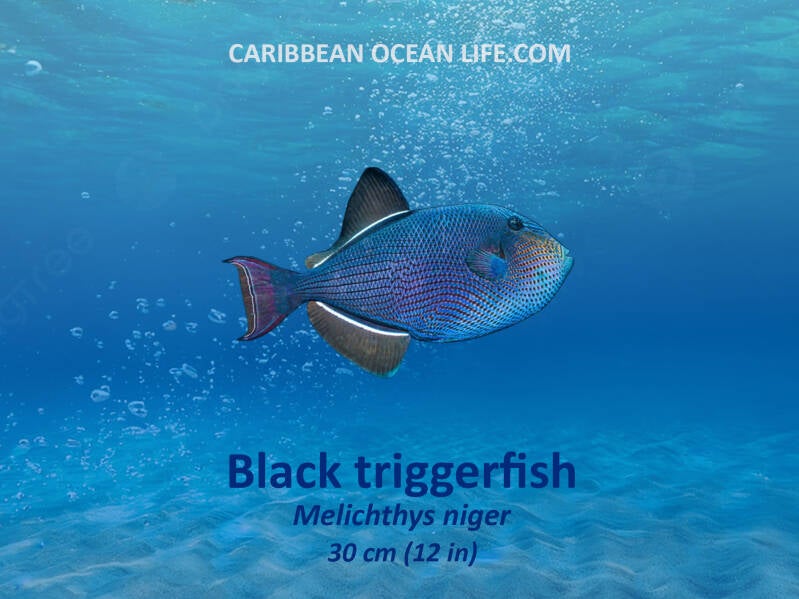
🏝️ Curaçao, Bonaire & Aruba: Species include the Queen Triggerfish, Grey Triggerfish and Black Triggerfish Triggerfish.
What Makes Them Special?
Triggerfishes are built for life around the reef. Their powerful jaws and strong teeth can crush shells, bite into hard-bodied prey and even tackle spiny sea urchins. Their most unusual feature is the locking dorsal spine: when raised, it can wedge the fish securely into a reef crevice, making it difficult for predators to pull it out.
They are also surprisingly intelligent and curious. Triggerfishes often investigate their surroundings closely, and some species can be quite bold and territorial.

Why the name Triggerfish?
Triggerfishes can raise and lock their large first dorsal spine in place with a smaller second spine. This helps them wedge themselves securely into reef crevices, making them difficult for predators to pull out. The second spine acts like a “trigger” that releases the larger one, giving the triggerfish its name.

Triggerfish can us water as a tool!
They blast jets from their mouths to uncover prey buried in the sand or even flip an urchin to reach the softer parts underneath.