

BIGEYES

👀 How common: Common to fairly common — frequently seen around Curaçao, Bonaire & Aruba, particularly around caves, overhangs and deeper reef areas
🔬 Scientific families: Mainly Priacanthidae (bigeyes) and Holocentridae (squirrelfishes & soldierfishes)
📏 Size: Usually about 15–35 cm (6–14 in), depending on the species
🌊 Habitat: Coral and rocky reefs, caves, crevices and overhangs
⬇️ Depth: From shallow reefs to well over 100 m (330 ft), depending on the species
🦐 Diet: Mainly small crustaceans, zooplankton and small fish
🌎 Distribution: Tropical and subtropical seas; several species occur throughout the Caribbean
🌙 Behaviour: Mostly nocturnal — during the day they often shelter beneath ledges or inside caves and become more active after dark
🥚 Reproduction: Generally broadcast spawners, releasing eggs and sperm into open water
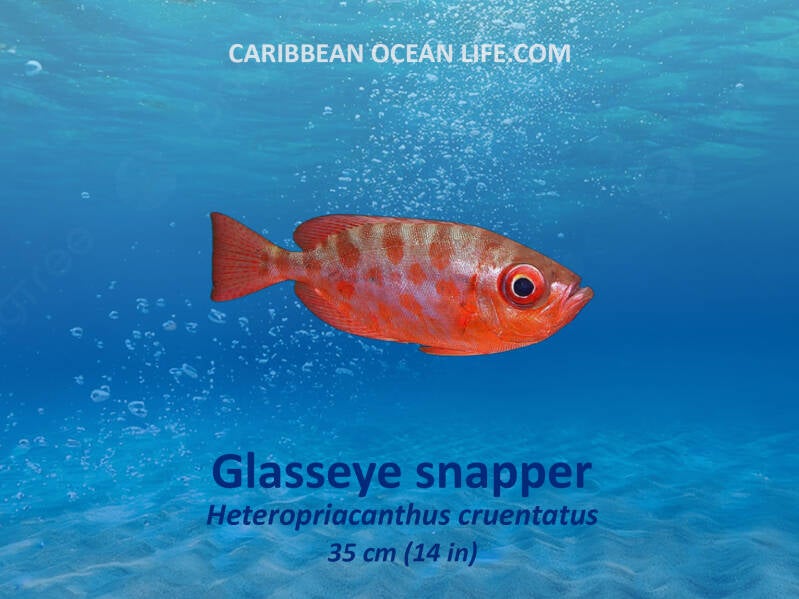
👁️ Special feature: Their unusually large eyes are an adaptation to seeing in dim light and hunting at night
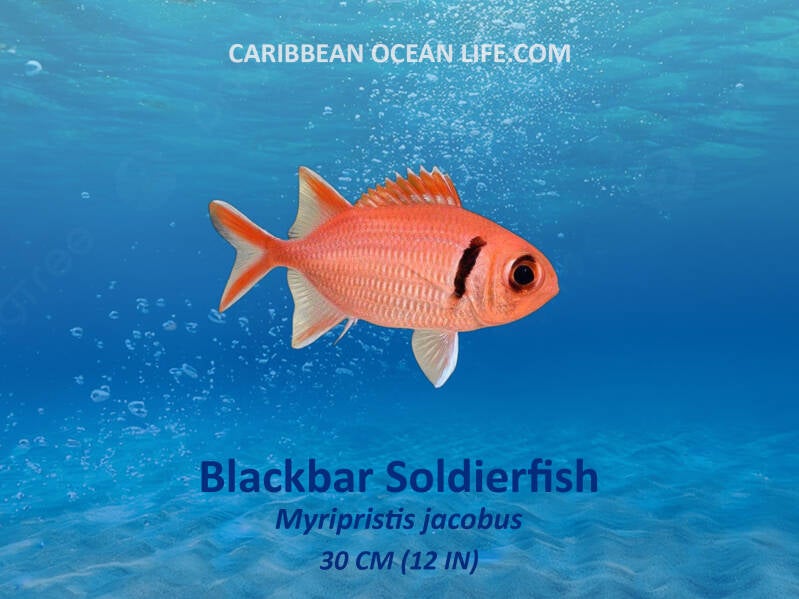
🎨 Colour: Many are reddish or orange, colours that become much less conspicuous as light decreases with depth
🐣 Juveniles: Young fish may differ in proportions and markings and often remain close to protected reef habitats
♻️ Ecological role: Nocturnal predators and planktivores that help connect nighttime and daytime reef food webs
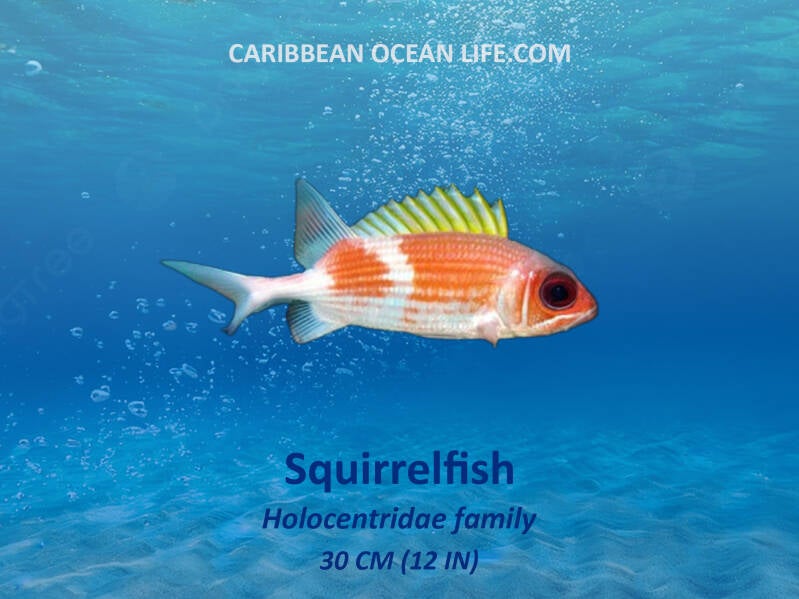
🏝️ Curaçao, Bonaire & Aruba: Common representatives include the Glasseye Snapper/Bigeye (Heteropriacanthus cruentatus), Squirrelfish (Holocentrus adscensionis) and Banded Soldierfish (Myripristis jacobus).
What Makes them Special?
Their red and orange colours makes them surprisingly difficult to see
Their red and orange colours provide another advantage. Red light disappears quickly underwater, so at greater depths their bright colours become dark and surprisingly difficult to see, a clever form of camouflage.
Squirrelfishes also have another hidden talent: they can produce sounds using their swim bladder. So while the reef may seem quiet to us, these fish are communicating in an underwater world full of sound.

Creatures of the night
Their unusually large eyes are specially adapted to low light, allowing them to find food after sunset. During the day, you will often find them hiding together beneath overhangs, inside caves or in dark reef crevices.