

JAWFISH

Yellowhead Jawfish at a Glance
👀 How common: Fairly common on suitable sandy bottoms, but easily overlooked unless you know where to look
🔬 Scientific name: Opistognathus aurifrons
📏 Size: Usually around 8–10 cm (3–4 in), maximum about 10 cm (4 in)
🎨 Appearance: Pale bluish to whitish body with a distinctive bright yellow head
🏝️ Habitat: Sandy and rubble areas close to coral reefs, usually where there are small stones and shell fragments available
🏠 Home: Lives in a vertical burrow that it digs and maintains itself
🪨 Building skills: Uses its large mouth to pick up sand, shells and small stones, carrying them away or arranging them around the entrance of its burrow
🍴 Diet: Feeds mainly on zooplankton and tiny drifting animals
🐟 Feeding: Hovers above its burrow to catch passing food, quickly retreating inside when danger approaches
🥚 Reproduction: The male carries the fertilized eggs inside his mouth until they are ready to hatch
👨👧 Parental care: While brooding, the male periodically moves and aerates the egg mass in his mouth to help keep the developing embryos healthy
🛡️ Defense: At the first sign of danger, it dives tail first into its burrow, often leaving only its head visible at the entrance
♻️ Ecological role: A small plankton predator that also constantly moves and rearranges sand and rubble around its burrow
🏝️ Curaçao, Bonaire & Aruba: Found in suitable sandy reef habitats around the ABC islands
What Makes the them Special?
Home Is Never Far Away
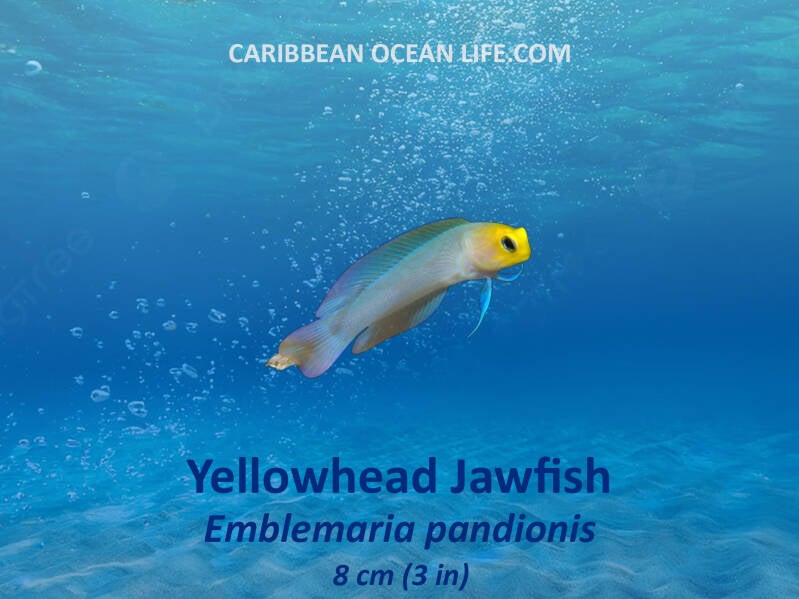
A Yellowhead Jawfish usually hovers vertically just above its burrow while searching for plankton. At the slightest sign of danger, it shoots backwards into its home, tail first. After a few moments, the yellow head cautiously appears again.
Neighbors With Boundaries
Where the habitat is suitable, many jawfish may build burrows relatively close together, creating something resembling a small underwater neighborhood. But they still defend the immediate area around their own front door against intrusive neighbors.
A Surprisingly Expressive Little Fish
With its large eyes, oversized mouth and habit of cautiously peeking from its burrow, the Yellowhead Jawfish is wonderfully expressive. Once you know what to look for, a seemingly empty sandy bottom can suddenly reveal an entire community of little yellow heads watching you.
An Underground Architect
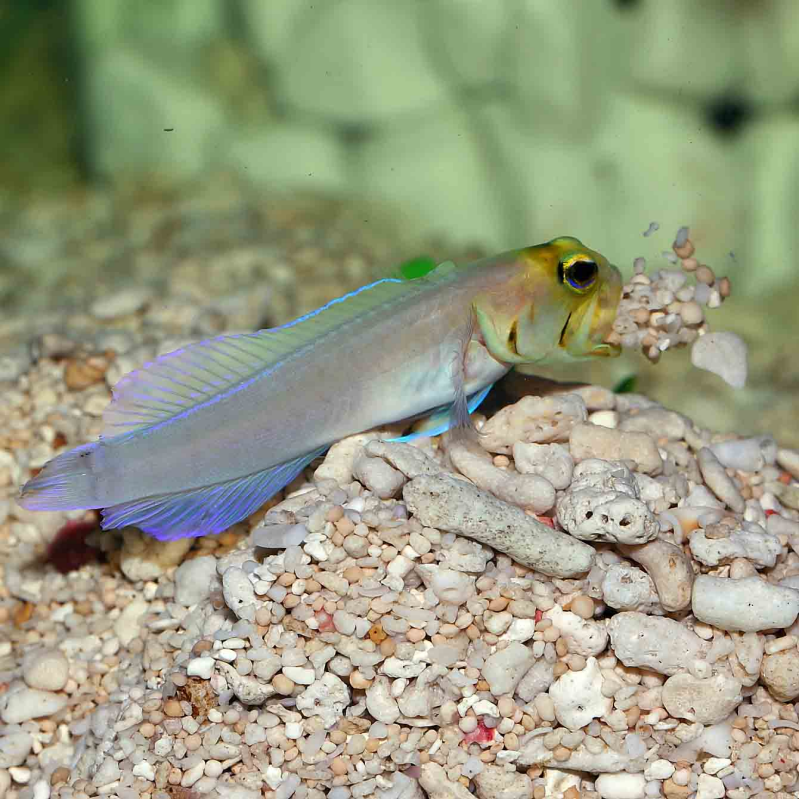
Yellowhead Jawfish do not simply find a hole, they build one. Using their large mouths like buckets, they carry away sand and collect small stones, pieces of shell and coral rubble to strengthen the walls and entrance of their burrow. They regularly perform maintenance when sand shifts or part of the structure collapses.
Dad Carries the Babies
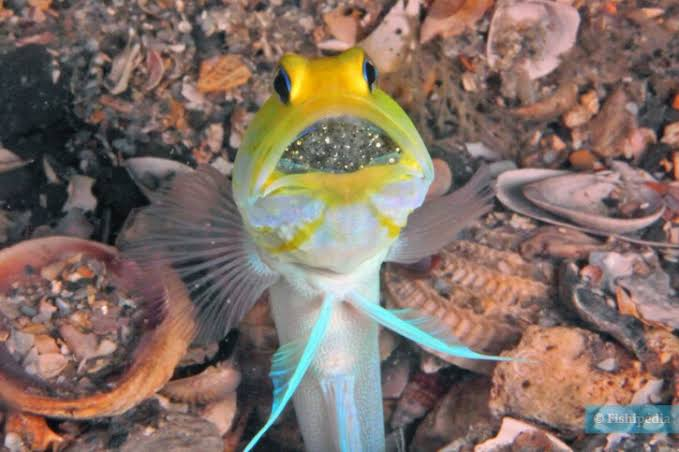
One of their most remarkable behaviors is mouthbrooding. After the female lays her eggs, the male takes the entire egg mass into his mouth and protects it while the embryos develop.
During this period he periodically rearranges and aerates the eggs. Carrying a mouthful of babies also makes eating rather inconvenient, so devoted fatherhood comes at a price.