

DRUMFISH

Drumfish at a Glance
👀 How common: Fairly common – but easy to miss because they often stay beneath ledges and close to the reef
📏 Size: Usually 15–30 cm (6–12 in), depending on the species
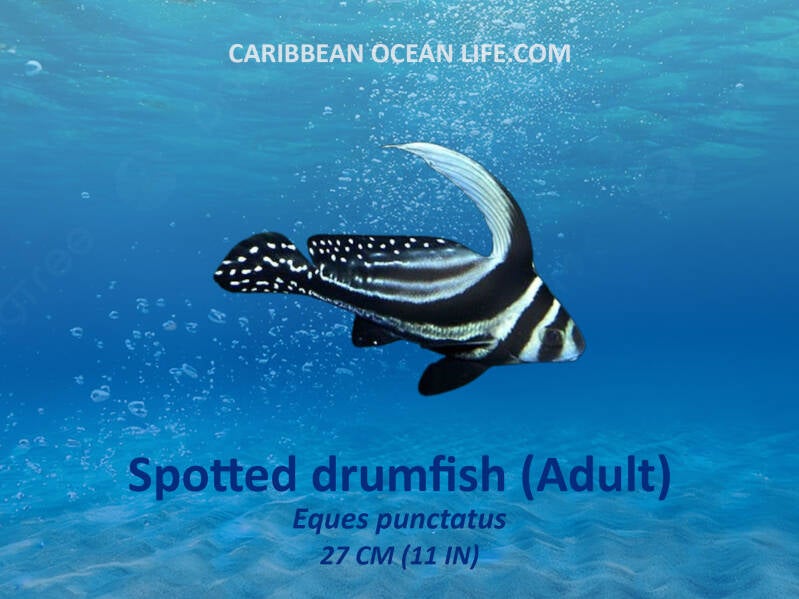
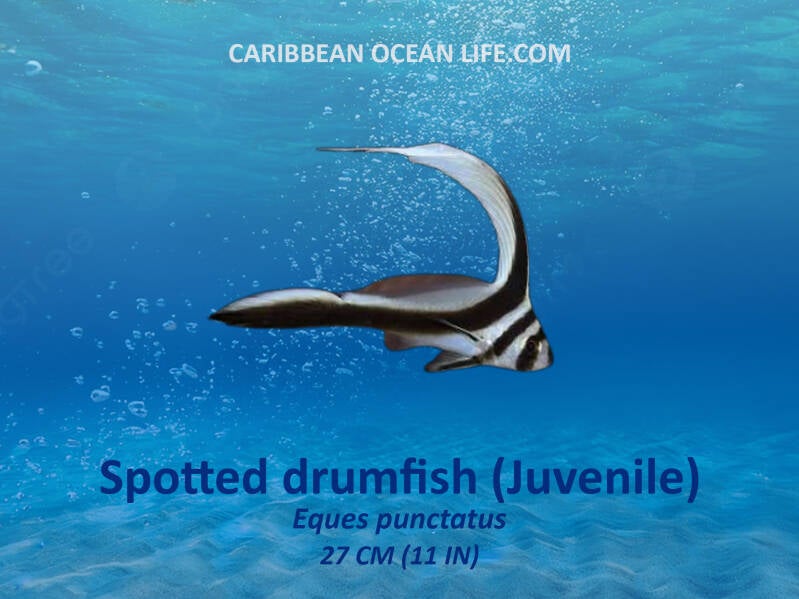
🎨 Color: Striking black-and-white patterns, often with long, flowing fins; juveniles look especially dramatic
🌊 Habitat: Coral reefs, rocky areas, caves, crevices and beneath overhangs
🦐 Diet: Small crustaceans, worms and other tiny bottom-dwelling animals
🌙 Active: Mostly at dusk and at night; during the day they often shelter in darker places
🥁 Special feature: Named for the low drumming or croaking sounds they can produce using muscles around their swim bladder
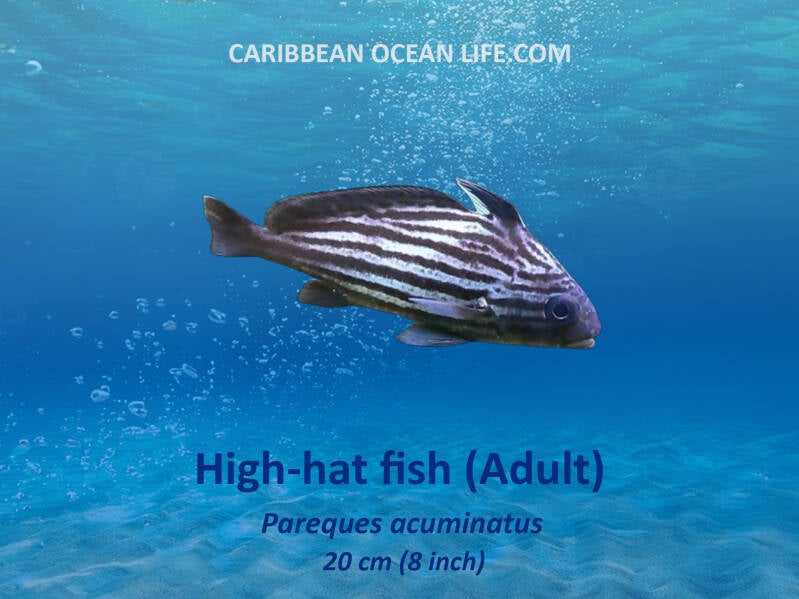
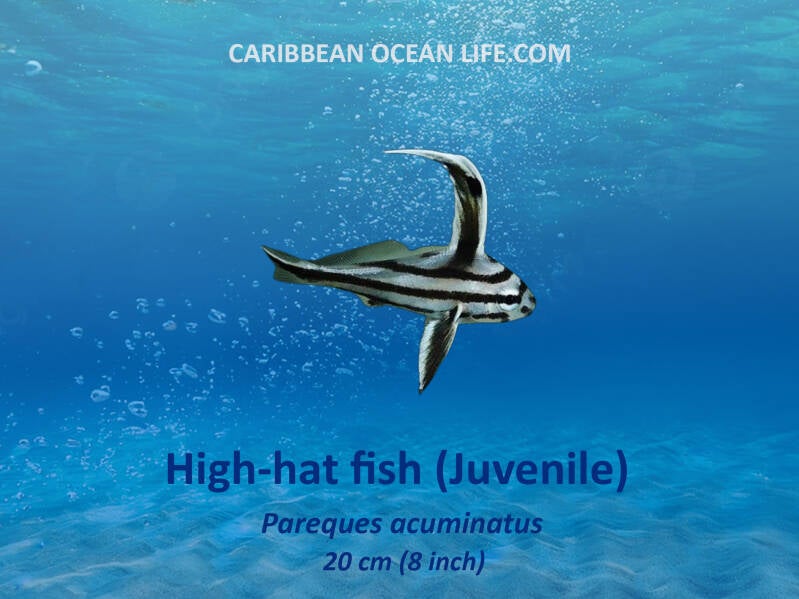
🐣 Juveniles: Very different from adults, with extremely long, ribbon-like fins and an elegant swimming style
🤿 Best chance to spot one: Look carefully under ledges and in shaded reef areas – juveniles are often easier to notice because of their spectacular fins
Why are they special?
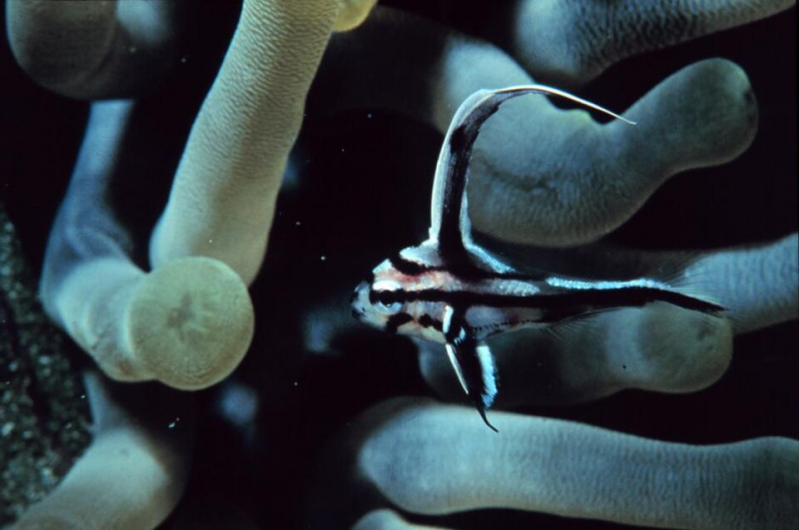
The name comes from their ability to produce low-frequency sounds by vibrating muscles against their swim bladder. These sounds are not usually audible to humans underwater, but they are thought to play a role in communication.
Young and curious
Juvenile drumfishes are often found close to the reef, moving slowly and deliberately around corals and rocks. Their long fins and striking patterns may make them look rather conspicuous, but they can actually make identification much easier once you know what to look for.

A very different fish as it grows
One of the most interesting things about drumfishes is their transformation during their lives. A juvenile may have bold stripes, spots and long trailing fins, while the adult develops a much more streamlined body and completely different colouring.