

MARINE WORMS
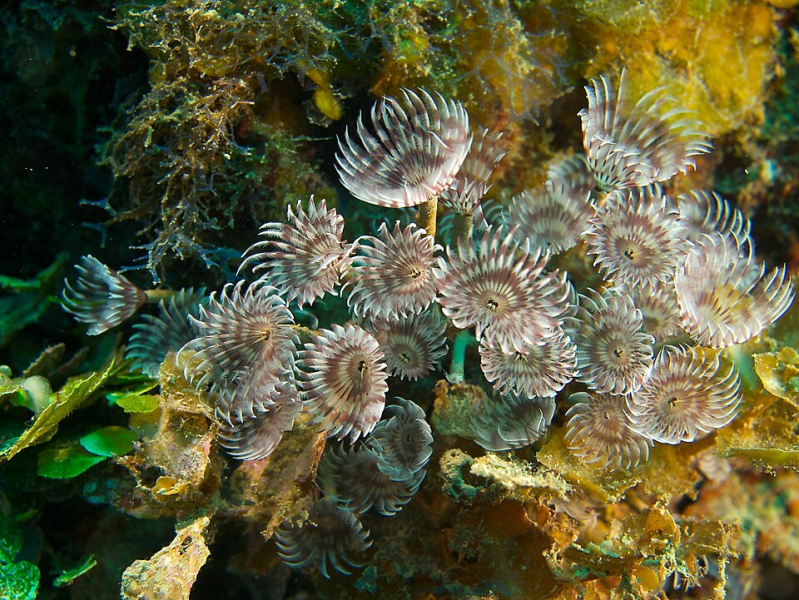
Social Feather Duster Worm
Marine Worms at a Glance
👀 How common: Very common on Caribbean reefs, although much of the animal is often hidden from view
🔬 Scientific group: Mostly Polychaeta, a diverse group of segmented marine worms
📏 Size: From just a few millimeters to more than 30 cm (12 in), depending on the species
🌈 Appearance: Extremely varied, from colorful feathery crowns to long, bristly or almost invisible bodies
🪸 Habitat: Coral reefs, rocky areas, sand, seagrass beds, reef crevices and inside corals
🍴 Diet: Varies by species, including plankton, organic particles, algae, carrion and small animals
🌸 Feathered crowns: Many tube worms use beautiful tentacle crowns to collect food from the water and to breathe
🏠 Hidden bodies: What you see is often only a small part of the animal, much of its body may remain hidden inside a tube, burrow or reef crevice
⚡ Quick retreat: Tube dwelling species can withdraw their crowns almost instantly when they sense danger
🛡️ Defense: Some hide inside protective tubes, while Fireworms use irritating, venomous bristles for protection
♻️ Ecological role: Filter water, recycle nutrients, process organic material and help keep reef sediments healthy
🏝️ Curaçao, Bonaire & Aruba: Many different species occur around all three ABC islands
Christmas Tree Worm
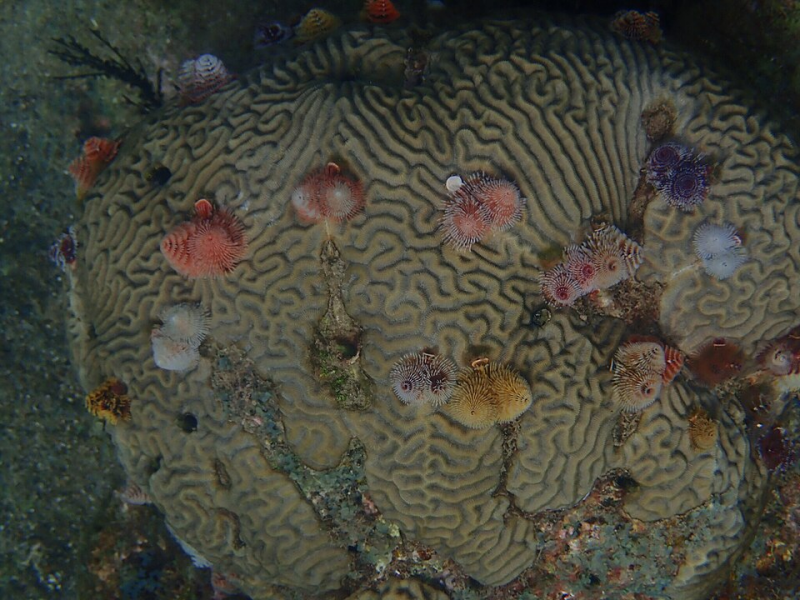
The “Flowers” Are Actually Animals
Christmas Tree Worms and Feather Duster Worms can easily be mistaken for colorful underwater flowers. Their beautiful feathery crowns are actually specialized tentacles used for both feeding and breathing.
Bearded Fireworm
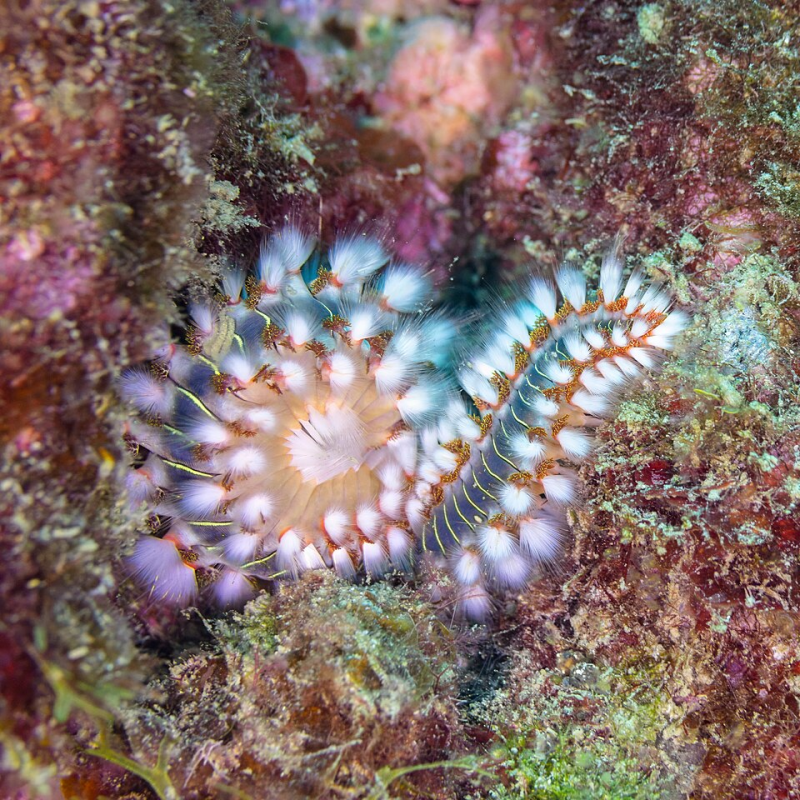
Some Have Surprising Defenses
Not all marine worms hide when threatened. Fireworms are covered with brittle, venomous bristles that can break off in the skin of a predator, or an unfortunate human, causing a painful burning sensation.
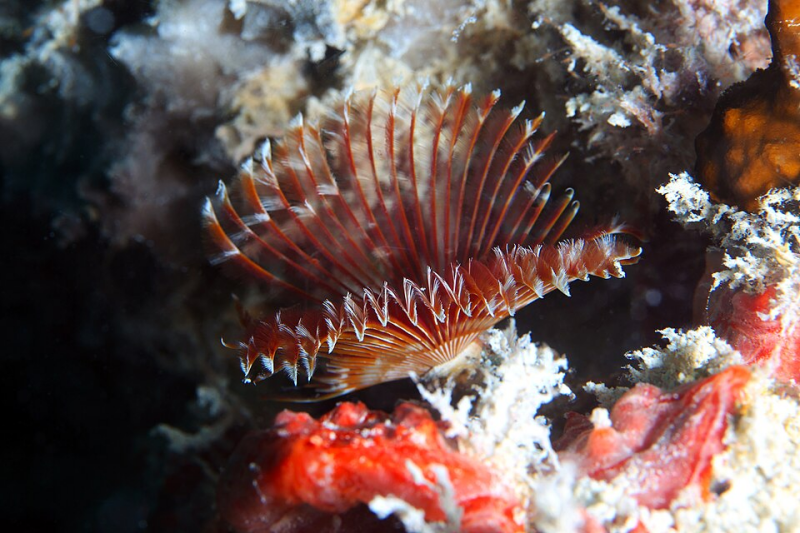
Magnificent Feather Duster Worm

Split Crown Feather Duster
Spaghetti Worm
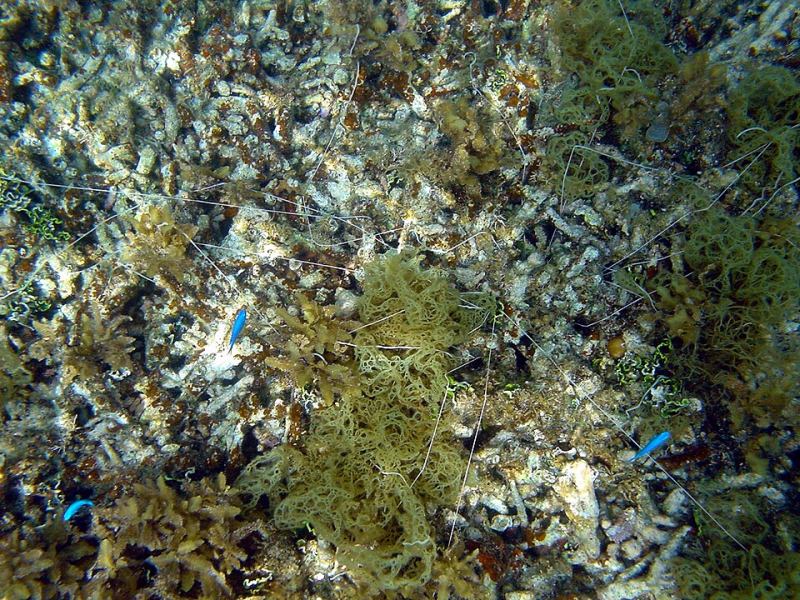
Spaghetti Worms Fish Without Leaving Home
Spaghetti Worms remain hidden in a burrow or tube while sending numerous long, thin feeding tentacles across the seafloor. These collect tiny pieces of organic material and transport them back towards the hidden worm. What looks like a tangle of spaghetti on the bottom may therefore belong to just one animal.

Much Bigger Than They Look
With many tube dwelling worms, the colorful crown is only a small part of the animal. Most of the long, soft body remains hidden safely inside a tube or buried in the reef. A worm that looks tiny from the outside can therefore be surprisingly large.