

SEA TURTLES

Green Sea turtle
Sea Turtles at a Glance
👀 How common: Common to uncommon, Green and Hawksbill Turtles are regularly seen around the ABC islands, while Loggerhead and Leatherback Turtles are less frequently encountered
🔬 Scientific order: Testudines
📏 Size: About 60–180 cm (24–71 in) shell length, depending on the species
🌊 Habitat: Coral reefs, seagrass beds, sandy areas and open ocean
⬇️ Depth: From the surface to several hundred metres, depending on species and activity
🌿 Diet: Varies by species, including seagrass, algae, sponges, jellyfish, molluscs and crustaceans
🌎 Distribution: Tropical and subtropical oceans worldwide
🌬️ Breathing: Sea turtles have lungs and must return to the surface to breathe
🥚 Reproduction: Females come ashore to dig nests and lay their eggs in the sand
🧭 Special feature: Excellent navigators, females can return to the same region where they hatched to lay their own eggs
🐣 Young: Hatchlings head for the ocean soon after emerging from their nests and spend their early years largely at sea
♻️ Ecological role: Help maintain healthy seagrass beds, coral reefs and marine food webs
⚠️ Conservation: All sea turtle species face threats including fishing gear, plastic pollution, habitat loss and disturbance of nesting beaches
🏝️ Curaçao, Bonaire & Aruba: Four species occur around the islands, the Green Turtle, Hawksbill Turtle, Loggerhead Turtle and Leatherback Turtle.
What makes them special?
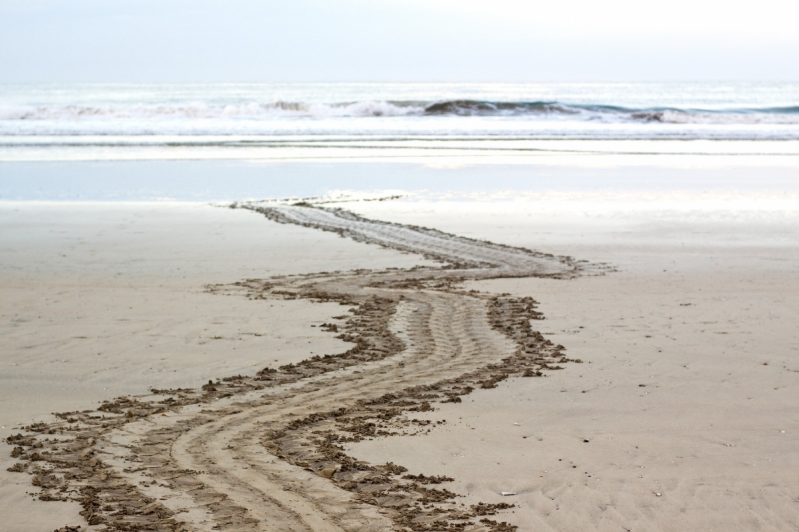
Tracks in the Sand
After a female sea turtle has nested, she often leaves a distinctive trail in the sand. Her flippers create broad tracks leading from the sea to the nesting site and back again. If you spot fresh turtle tracks early in the morning, there may be a newly laid nest nearby, even though the eggs themselves are carefully hidden beneath the sand.

Returning to Where Their Story Began
Sea turtles are true world travelers, but when it comes to reproduction, they faithfully return to the beach where they hatched. Females usually come ashore at night, dig a hole in the sand using their hind flippers, and lay about 50 to 150 eggs per nest. After that, she neatly covers the nest back up and returns to the sea.

Hatching Is a Team Effort
After about two months, the tiny turtles are ready to hatch, and they often emerge from their eggs at almost the same time. Inside the nest, all that movement can make the sand look almost like a pot of boiling water.
Each hatchling uses a temporary sharp bump on its snout, called a caruncle, to break through its leathery shell. But getting out of the egg is only the beginning. The baby turtles then work together for several days, slowly digging their way upward through the sand towards the surface.

.jpg)
The Race to the Ocean
Hatchlings usually emerge from the nest after dark, often in large groups, an event sometimes called a “turtle boil.” Emerging at night helps them avoid the heat and many daytime predators.
Once on the surface, they instinctively head towards the brightest, lowest horizon, which under natural conditions is usually the open ocean. This first journey across the beach also plays an important role in helping them orient and begin imprinting on their natal area.

Danger from the Very Beginning
For a baby sea turtle, life is a race from the very beginning. Before it has even left the nest, eggs and tiny hatchlings can fall victim to crabs, ants, lizards and other predators.
The Most Dangerous Journey
Once the hatchlings emerge, they face a dangerous journey across the beach. Seabirds may patrol the shoreline, ready to snatch the tiny turtles, while ghost crabs wait in the sand and cats and dogs can also pose a threat.
Reaching the Ocean Is Only the Beginning
Even in the water, the danger is far from over. Young turtles can become prey for barracudas, groupers, snappers and other predatory fish. Seabirds may continue to hunt them near the surface, while larger marine predators, including sharks, can target them as they grow. Only a small proportion of hatchlings survive to adulthood.
The Survivors
Those that make it through their vulnerable early years become surprisingly tough animals. Fully grown sea turtles have relatively few natural predators, although large sharks can prey on them, and human activities remain a major threat.
Some sea turtles can live for many decades, travelling thousands of kilometres across the oceans before eventually returning to the same region where their own remarkable journey began.

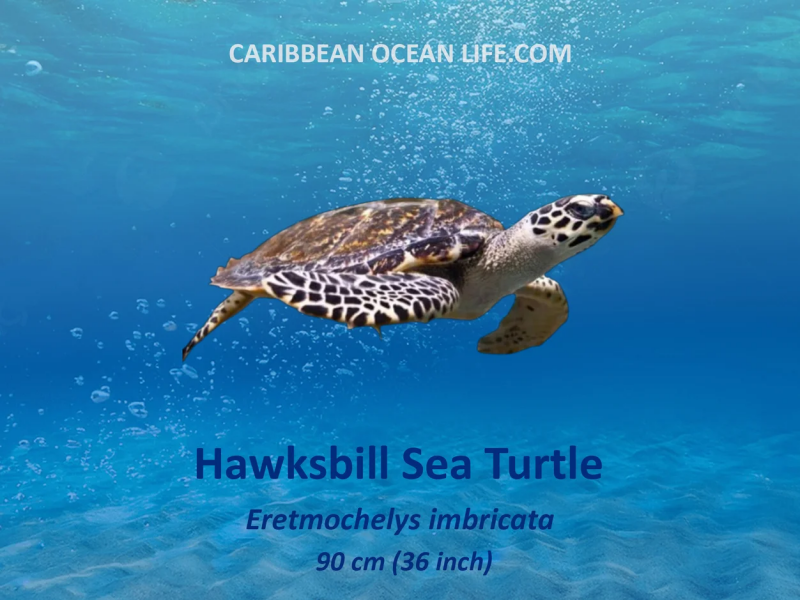
The hawksbill sea turtle can be recognized by the overlapping scutes on its carapace and its distinct hooked, parrot-like beak. This turtle is found worldwide in tropical and subtropical waters around the equator and is a typical inhabitant of rocky coasts and shallow waters. Adult females come ashore only to lay eggs. Its diet consists mainly of sponges, though it also eats other marine animals and sea plants.
Males can be distinguished from females because they are slightly smaller and have a thicker, longer tail. Females lay their eggs on sandy beaches, often returning to the same beaches where they were born.
At Bonaire, they primarily nest on Klein Bonaire, on Curaçao: Mainly uses sheltered beaches in Christoffel National Park.
In Aruba they Nests in smaller numbers on quieter north and east coast beaches, including Arikok National Park and Boca Grandi.

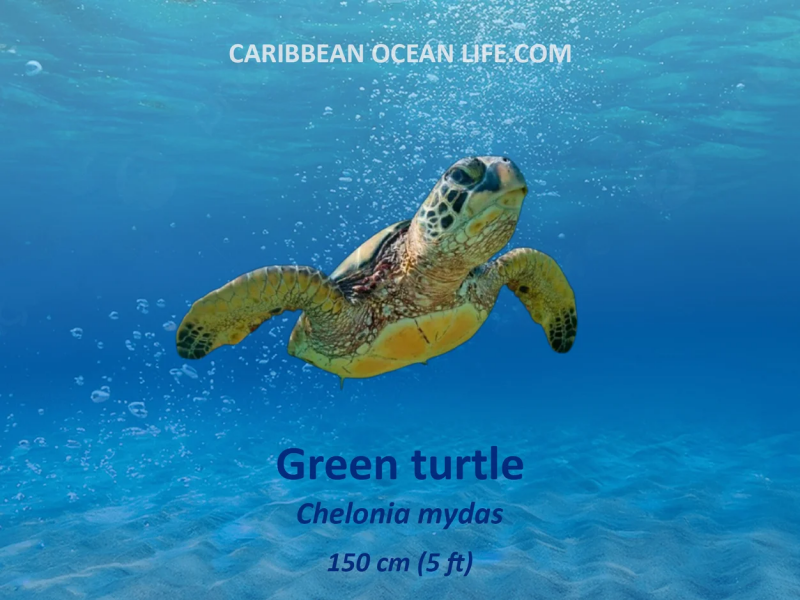
The green sea turtle is a large, mainly herbivorous turtle found in tropical and subtropical seas around the world. The name refers to the greenish colour of the layer of fat beneath the shell, which is linked to its diet of mainly seagrass and algae. Young green sea turtles also eat small marine animals, before gradually switching to a mostly plant-based diet as adults.
They can grow up to around 1.5 metres long and weigh more than 150 kilograms. During one nesting season, a female may come ashore several times and lay anywhere from dozens to more than a hundred eggs in each nest. After around two months, the tiny hatchlings emerge and make their way as quickly as possible towards the sea.
Klein Curaçao in particular is an important nesting area for green sea turtles and is known for its many nests. The females prefer quiet, dark beaches with little disturbance. Unfortunately, the species still faces many threats, including pollution, plastic in the ocean, fishing and disturbance of nesting beaches, and therefore remains in need of protection.

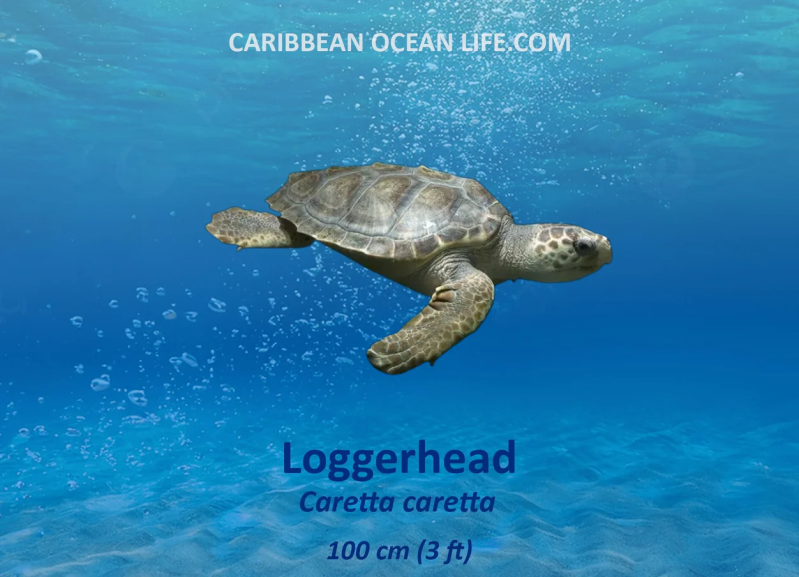
The loggerhead sea turtle is a sea turtle with a remarkably large head and powerful jaws. It can grow up to one meter long and weigh more than 100 kilograms. Unlike the green sea turtle, it is mainly carnivorous, feeding on crabs, shellfish, sea urchins and jellyfish. Its strong jaws can easily crush the hard shells of its prey. Caretta caretta is found in warm and temperate seas around the world. Females lay their eggs on sandy beaches, often returning to the same beaches where they were born.
On Curaçao, loggerhead turtles nest on a few beaches along the southern coast. The females usually come ashore at night, when the beach is cooler and quieter. They dig deep nests in the sand and can return several times during a nesting season to lay additional clutches of eggs. After around two months, the tiny hatchlings emerge and instinctively make their way towards the sea. Unfortunately, artificial lights and human activity near nesting beaches can disorient the hatchlings and make their journey to the ocean much more difficult.

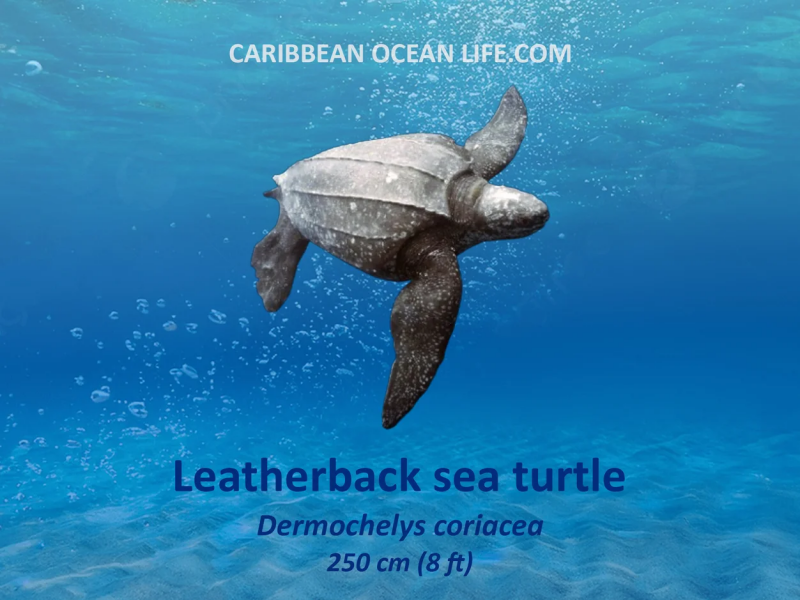
The leatherback turtle is the largest sea turtle in the world and stands out for both its enormous size and the absence of the hard scutes found on the shells of other sea turtles. Instead, it has a smooth, leathery shell with distinctive longitudinal ridges. This species spends most of its life in the open ocean and is rarely seen close to shore. It feeds almost exclusively on jellyfish, which are low in nutritional value, so it needs to consume large quantities to meet its energy requirements. The leatherback is a true long-distance traveller, migrating between warm tropical nesting beaches and much colder waters, even as far north as Norway, where jellyfish are more abundant. It can travel enormous distances and spends most of its life alone.
Although leatherback turtles have not yet been observed nesting on Bonaire or Curaçao, the beautiful sandy beaches of Aruba are part of their nesting range. During the nesting season, females return to land to lay their eggs, usually at night. After laying their eggs, they return to the sea, leaving the tiny hatchlings to make their own perilous journey toward the water.
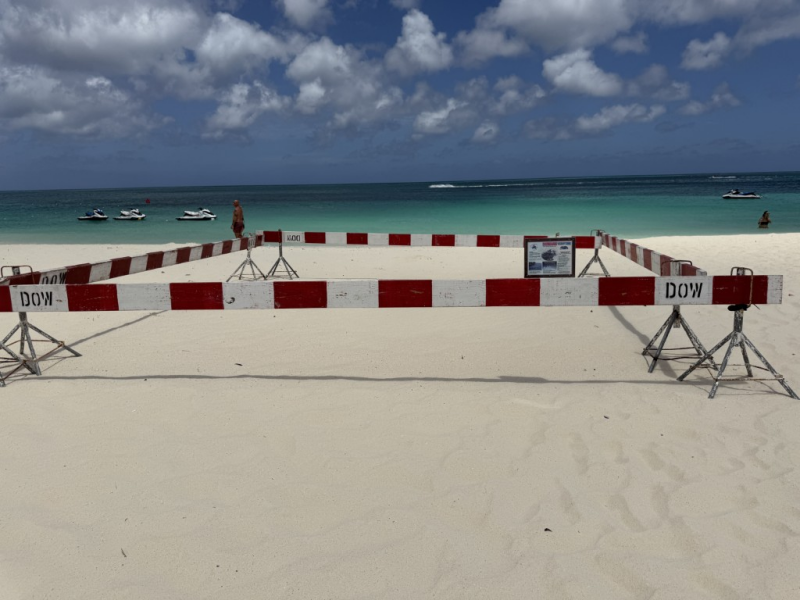

Where Can You See Sea Turtle Nests?
Sea turtles nest on beaches across Aruba, Bonaire and Curaçao, but actually seeing a nest or hatchlings is a matter of being in the right place at the right time.
Aruba offers the best chance for visitors. Most nests are found on Eagle Beach, where protected nests are clearly marked. When a nest is close to hatching, additional barriers are placed around it. Walking along Eagle Beach around sunset during turtle season, March to December, may reward you with an unforgettable sight, but hatching can never be predicted.
On Bonaire and Klein Bonaire, several nesting beaches are monitored, with No Name Beach on Klein Bonaire being particularly important. You may come across signs of nesting activity, although there is no guarantee of seeing a turtle or hatchlings.
On Curaçao, turtles also nest, but there is currently no regular visitor programme or specific public location where you can go to watch nests hatch.
Remember: Never touch a turtle, hatchling or nest. Keep your distance and avoid flash photography or bright lights.