

SCRAWLED FILEFISH

Scrawled Filefish at a Glance
👀 How common: Fairly common — regularly seen around Curaçao, Bonaire & Aruba, although they are easy to overlook because of their excellent camouflage
🔬 Scientific name: Aluterus scriptus
🔬 Family: Monacanthidae
📏 Size: Up to about 110 cm (43 in), although most individuals seen are considerably smaller
🌊 Habitat: Coral and rocky reefs, seagrass beds and areas with algae or other marine vegetation
⬇️ Depth: From shallow water to around 120 m (394 ft)
🌿 Diet: Mainly algae, seagrass, sponges, corals and other small reef organisms
🌎 Distribution: Tropical and subtropical waters worldwide, including the Caribbean
🐠 Behaviour: Usually solitary or in pairs; often swims slowly and deliberately around the reef
🥚 Reproduction: Eggs are laid on or near the bottom
🎨 Colour: Highly variable; can change colour and pattern to better match its surroundings or in response to its mood
🦄 Special feature: A prominent first dorsal spine that can be raised for defence; its skin has a rough, file-like texture, giving filefishes their name
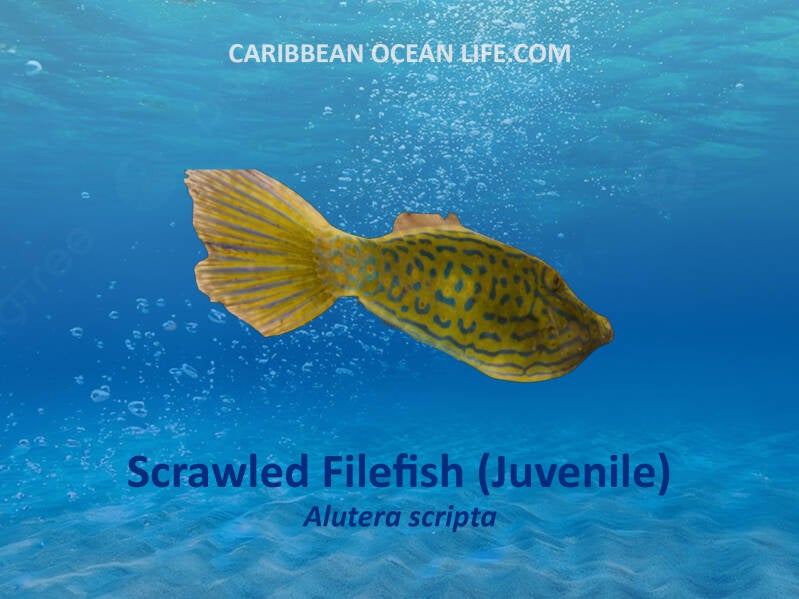
🐣 Juveniles: Young Scrawled Filefish are often yellowish and can look strikingly different from adults
♻️ Ecological role: Omnivorous reef feeders that consume both plant material and small reef organisms
🏝️ Curaçao, Bonaire & Aruba: The Scrawled Filefish occurs around all three islands and can be encountered by both snorkellers and divers.
Why are they special?

Scrawled Filefish Juvenile
Why the name?
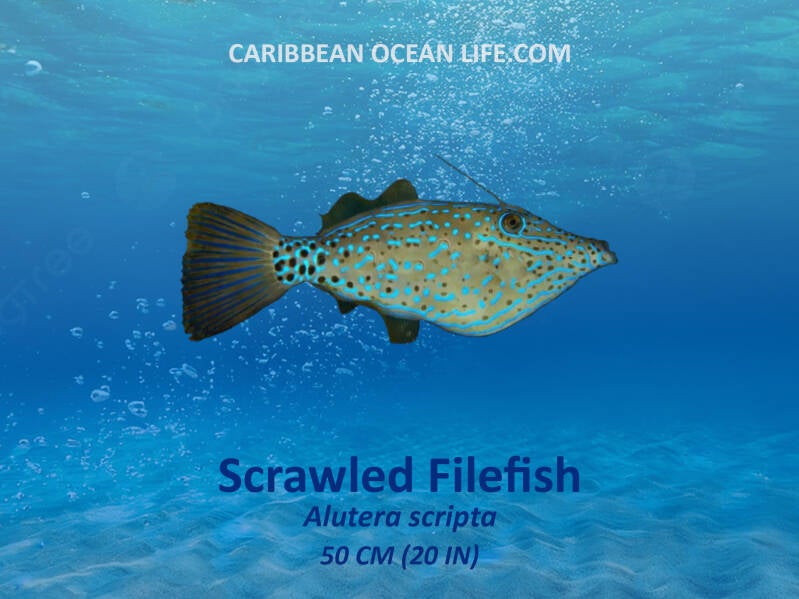
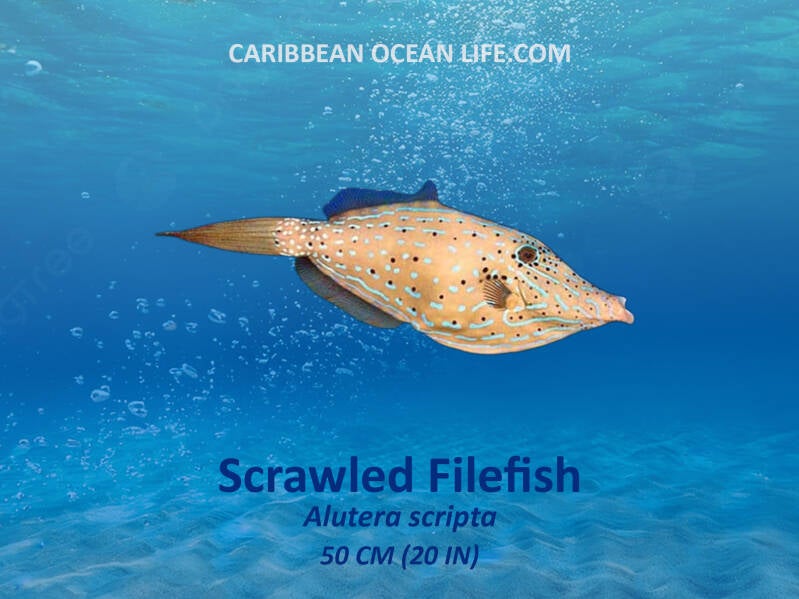
Its laterally compressed body is covered in an intricate network of lines and markings, giving it a wonderfully “scribbled” appearance,which explains its name.
They also have a remarkable first dorsal spine. When threatened, the fish can raise this spine and lock it upright, making itself much more difficult for a predator to swallow.
A rather specialised diet
Their small mouths are adapted for picking food from the reef. They feed on algae, small invertebrates, sponges and other organisms, depending on what s available.
A little more to know
Filefishes are related to triggerfishes, and you can see the family resemblance in their body shape and defensive dorsal spine. But unlike their more robust cousins, filefishes generally have a slimmer, more delicate appearance.
The Scrawled Filefish is a good example of a fish that rewards a closer look. At first glance it may seem rather plain, but when you look closely, its body is covered in an intricate pattern of lines and subtle colours.

Different colors same fish
Color: These are all the same species. Juveniles are bright yellow, while adults develop mottled colours and patterns that help them blend into reefs, rocks and seaweed. They can even change their colour and pattern to match their surroundings or mood.