

LIONFISH
Lionfish at a Glance
👀 How common: Common, regularly seen by divers and snorkelers around Curaçao, Bonaire & Aruba
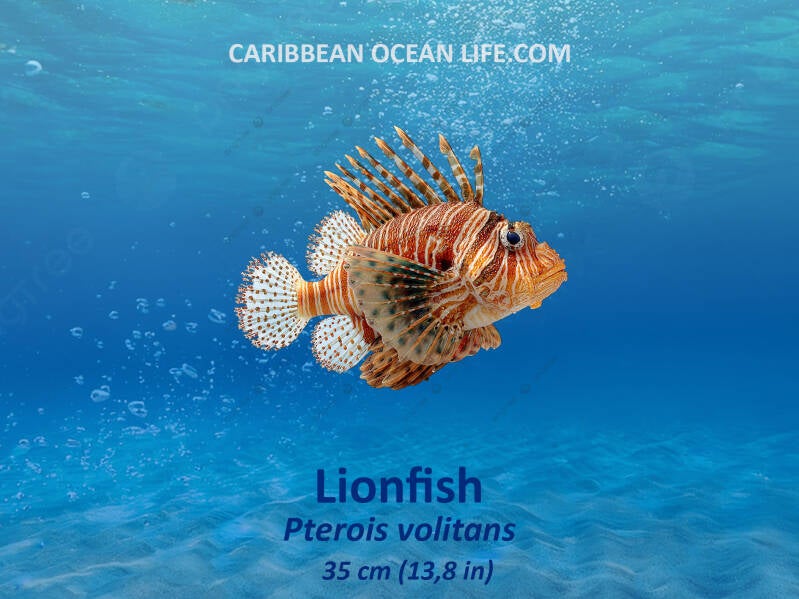
📏 Size: Usually 20–35 cm (8–14 in), up to about 45 cm (18 in)
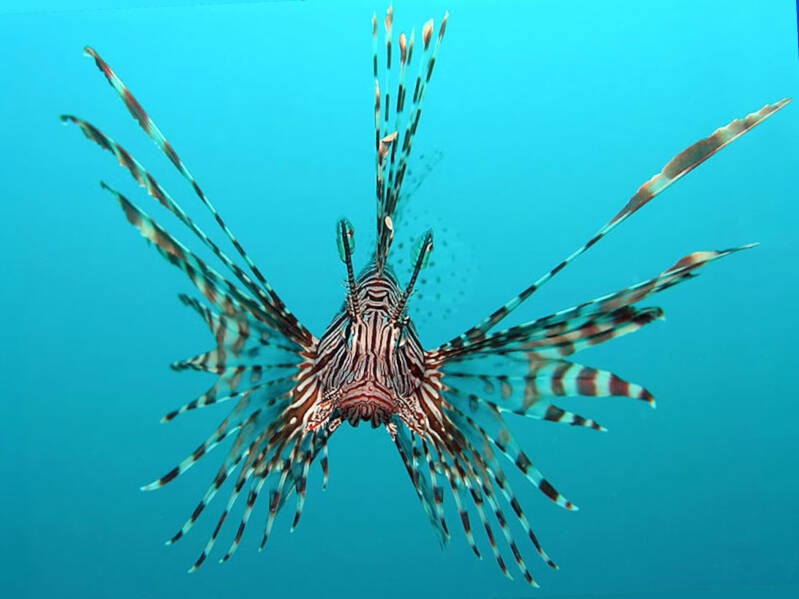
🎨 Color: Red-brown, orange and white stripes with striking fan-like fins
🌊 Habitat: Coral reefs, rocky areas, wrecks and crevices; from shallow water to deep reefs
🍤 Diet: Small fish, shrimp and other crustaceans
🌙 Active: Mostly at dusk and at night, but often visible during the day
⚠️ Watch out: Venomous spines can cause an extremely painful sting
🌎 Around the ABC Islands: An invasive species, lionfish are not naturally found in the Caribbean
🤿 Best chance to spot one: Look beneath overhangs, inside crevices and around reef structures, where they often hover almost motionless
Why are they special?
The Lionfish is one of the most spectacular fish you can encounter on a Caribbean reef. With its flowing fins, bold stripes and fan-like appearance, it almost looks as if it is floating rather than swimming. But beneath that beautiful exterior is a highly effective predator.
Those impressive fins are not just for show
The long, delicate-looking fins make the Lionfish appear much larger than it really is. Hidden among them are venomous spines that provide excellent protection from predators. The venom is not usually life-threatening to healthy adults, but a sting can be extremely painful. The colourful fins are therefore a very effective warning: look, but don't touch.
They are not originally Caribbean
Lionfish are native to the Indo-Pacific, but they are now widespread throughout the Caribbean. Their arrival here is considered one of the most successful marine invasions ever recorded.
Because Caribbean reef fish have had little evolutionary experience with this predator, Lionfish can consume large numbers of small native fish and crustaceans.
Despite their reputation as invaders, Lionfish are fascinating animals in their own right. They are highly adaptable, reproduce frequently and are remarkably successful hunters.
And yes... they are edible
Once the venomous spines have been carefully removed, Lionfish are perfectly edible and are considered good eating. In Aruba, Curaçao and Bonaire, divers and fishermen actively catch them as part of efforts to reduce their numbers.
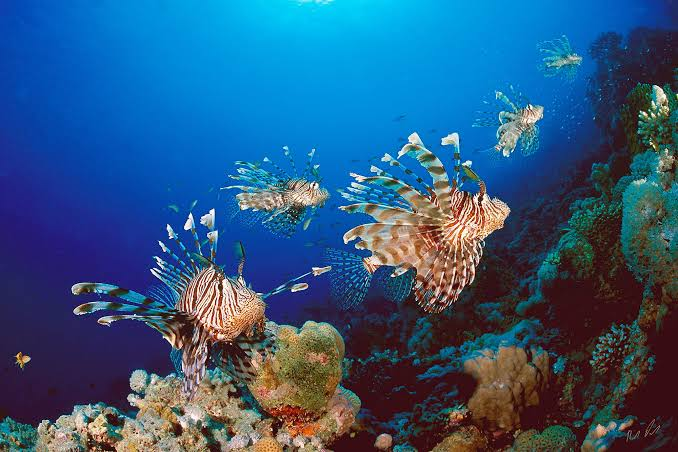
Lionfish often hunt in a group.
They often move slowly and deliberately over the reef, using their large pectoral fins to corner their prey. They can gradually herd small fish and shrimp into a confined space before suddenly striking.
They are capable of swallowing surprisingly large prey relative to their own body size, and they can expand their stomach considerably to accommodate it.