

BARRACUDAS

Great Barracuda at a Glance
👀 How common: Very common, regularly seen by snorkelers and divers around the ABC islands
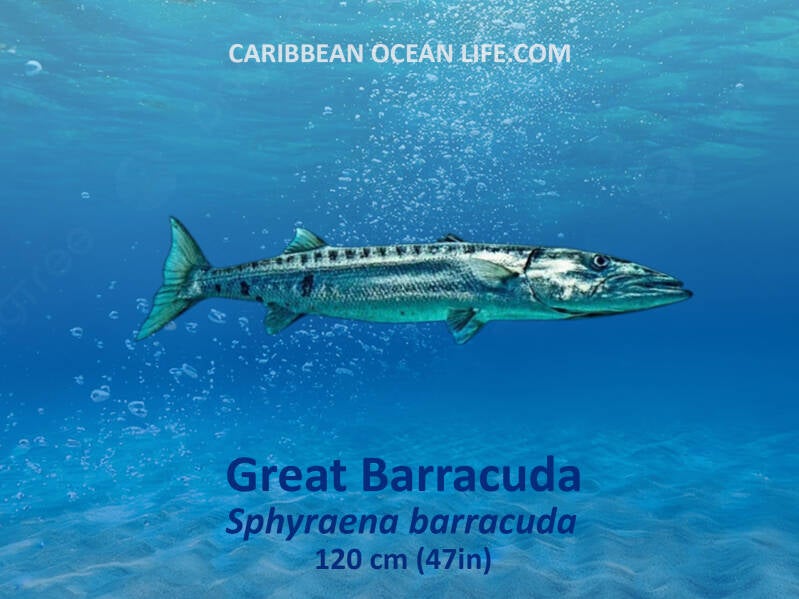
🔬 Scientific name: Sphyraena barracuda
📏 Size: Usually 60–120 cm (24–47 in), exceptionally up to about 200 cm (79 in)
🌊 Habitat: Coral reefs, rocky coasts, seagrass beds, mangroves and open coastal water
⬇️ Depth: From very shallow water to around 100 m (330 ft)
🐟 Diet: Mainly fish, occasionally squid and crustaceans
🌎 Distribution: Tropical and subtropical waters worldwide
🐠 Behaviour: Adults are often solitary, calmly hovering or cruising near reefs, while juveniles may gather in groups
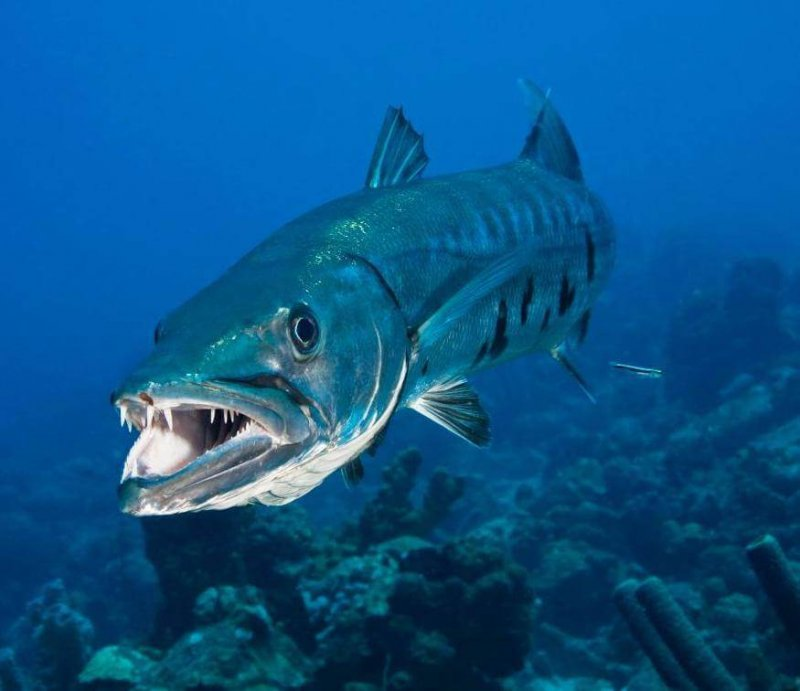
🦷 Special feature: Large mouth with extremely sharp, fang-like teeth
⚡ Hunting: An ambush predator capable of explosive bursts of speed when attacking prey
🎨 Colour: Silver-grey with dark bars or blotches along the sides, which often become more visible when resting or hunting
🐣 Juveniles: Often grow up in shallow, protected habitats such as mangroves and seagrass beds
♻️ Ecological role: An important large predator that helps maintain balance in coastal and reef ecosystems
🏝️ Curaçao, Bonaire & Aruba: The Great Barracuda (Sphyraena barracuda) is the barracuda most commonly encountered by snorkelers and divers around all three islands.
What Makes them Special?
Masters of the Surprise Attack
Great Barracudas are masters of the surprise attack. Instead of chasing prey over long distances, they often remain almost motionless in the water, watching and waiting. Then they accelerate suddenly and strike with remarkable speed.
A Mouth Full of Teeth
Their mouth is perfectly designed for hunting. Barracudas have two rows of extremely sharp teeth, including large fang-like teeth that fit into gaps in the opposite jaw when the mouth closes.
Curious, Not Aggressive
They are also very curious. A barracuda may quietly follow a snorkeler or diver for a while, which can feel intimidating, but this behaviour is usually curiosity rather than aggression.
Are Barracudas Dangerous?
Despite their intimidating teeth, Great Barracudas are generally not dangerous to snorkelers or divers. They are naturally curious and may follow people for a while, but attacks are very rare.
Barracudas are attracted to small, shiny or flashing objects, which can resemble the silvery fish they hunt. It is therefore sensible to avoid wearing shiny jewellery when swimming or snorkelling around them.
Never try to feed, touch or chase a barracuda. Give it space and enjoy the encounter, a large barracuda quietly hovering nearby is an impressive sight, not usually a reason to leave the water.