

MAHI MAHI
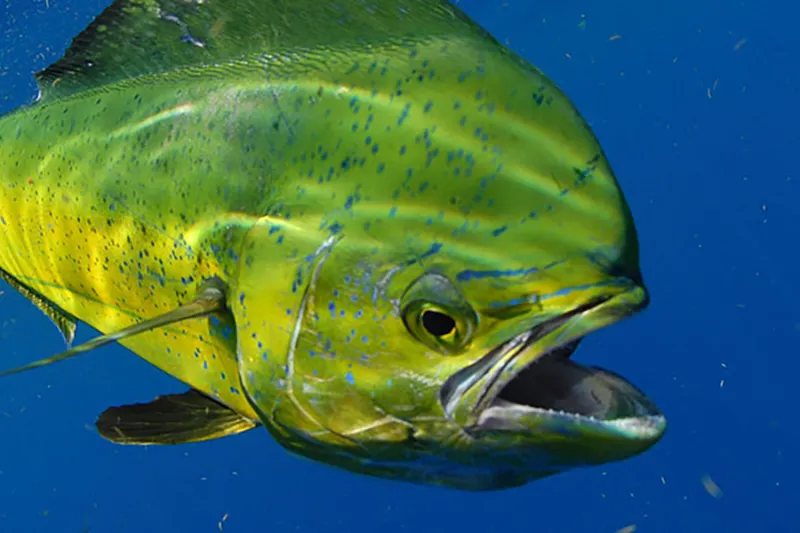
Mahi-Mahi also called Dolphinfish or Dorado at a Glance
👀 How common: Fairly common offshore, but rarely encountered by snorkelers and only occasionally by divers
🔬 Scientific name: Coryphaena hippurus
📏 Size: Usually 70–130 cm (28–51 in), up to about 200 cm (79 in)
🌊 Habitat: Open ocean, often around floating debris, seaweed and other floating objects
⬇️ Depth: Mainly near the surface, generally in the upper 85 m (280 ft)
🐟 Diet: Fish, squid and crustaceans, especially flying fish and other fast-moving prey
🌎 Distribution: Tropical and subtropical oceans worldwide
💨 Behaviour: Extremely fast, active swimmers, often travelling and hunting in groups
🥚 Reproduction: Fast-growing and highly reproductive, females can spawn repeatedly during the breeding season
⚡ Special feature: One of the fastest-growing fish in the ocean, capable of reaching a large size in a remarkably short time
🎨 Colour: Brilliant electric blue, green, turquoise and gold, colours can change rapidly depending on excitement and activity
♂️ Male & female: Adult males develop a distinctive high, almost square forehead, while females have a more rounded head
🐣 Juveniles: Grow extremely quickly and spend much of their early life near floating vegetation and objects
♻️ Ecological role: Fast open-ocean predators that feed on smaller fish and squid
🏝️ Curaçao, Bonaire & Aruba: Found in the deeper offshore waters surrounding all three islands, but not a typical reef fish.
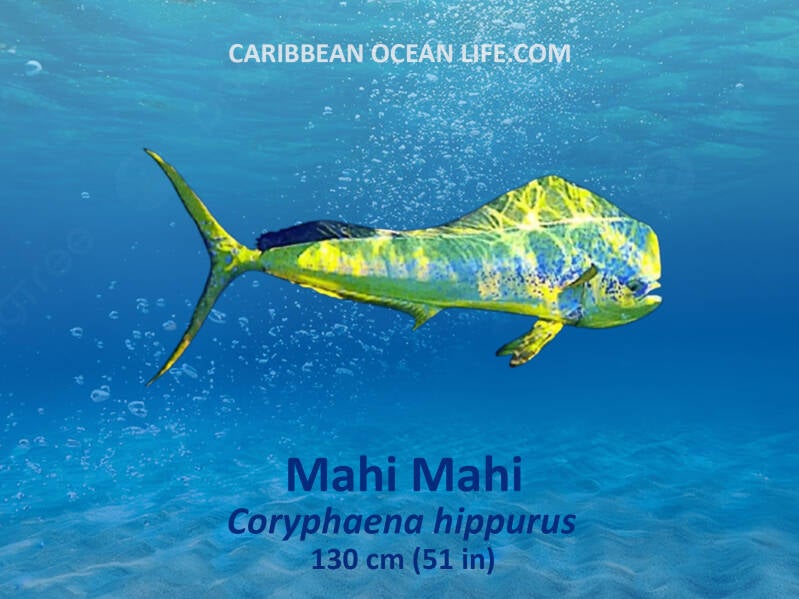
What Makes them Special?
A Living Rainbow
Mahi-mahi are among the most colourful fish in the open ocean. Their bodies can flash brilliant shades of electric blue, turquoise, green and gold, and the colours can change rapidly when the fish is excited or hunting.
Incredibly Fast Growers
Mahi-mahi grow at an astonishing rate. They can reach around one metre (39 in) in their first year, making them one of the fastest-growing large fish in the ocean.
Built for Speed
Their long, streamlined bodies and powerful tails make them extremely fast and agile predators. They hunt fish and squid in open water and are particularly fond of chasing flying fish.
Life Around Floating Objects
Mahi-mahi are often found around floating seaweed, driftwood and other objects. These floating mini-habitats attract small fish and other marine life, creating a convenient floating buffet for a hungry Mahi-mahi.
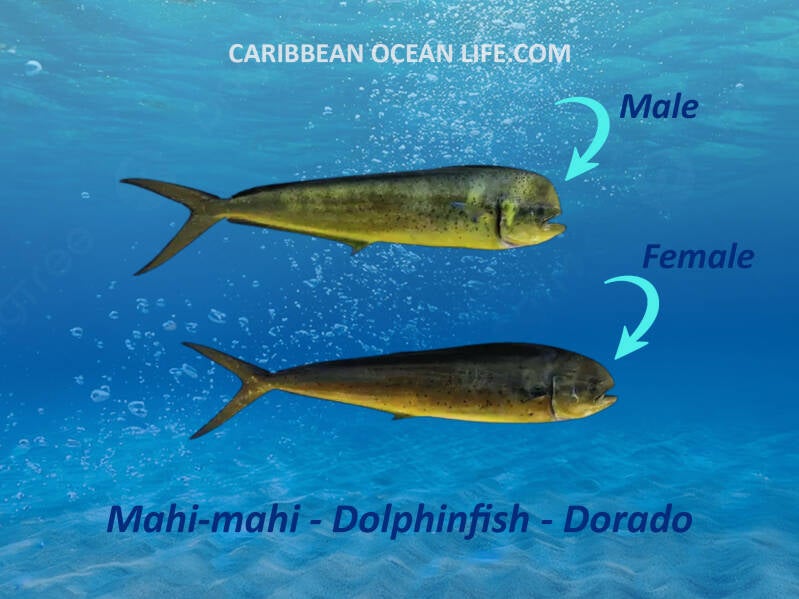
Male or Female? Look at the Head
Adult males are surprisingly easy to recognise. They develop a large, high, almost square forehead, while females keep a more rounded head.