

TARPONS
Tarpon at a Glance
👀 How common: Fairly common, often seen around harbours, bays and coastal waters, sometimes in impressive groups
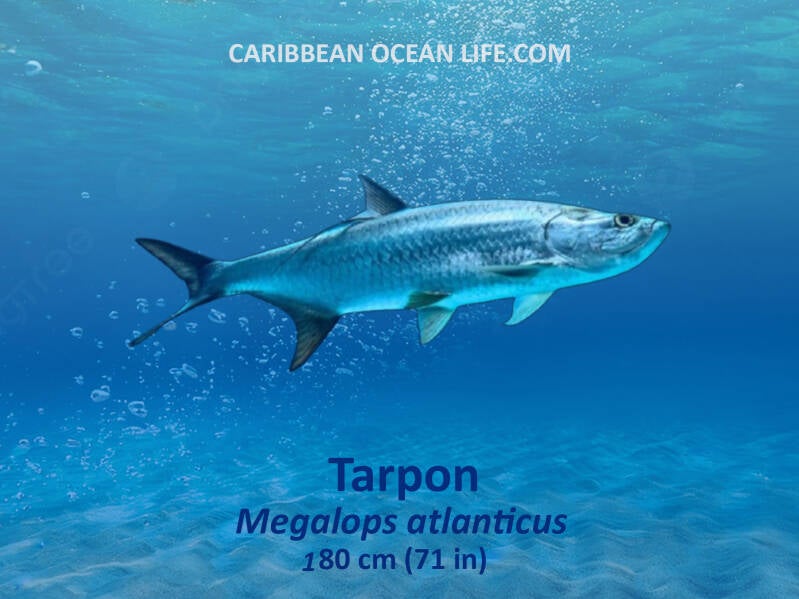
🔬 Scientific name: Megalops atlanticus
📏 Size: Usually 100–180 cm (39–71 in), exceptionally up to about 250 cm (98 in)
🌊 Habitat: Coastal waters, bays, lagoons, mangroves and around reefs
⬇️ Depth: Usually in shallow coastal waters, but also found considerably deeper
🐟 Diet: Mainly fish, shrimp and crabs
🌎 Distribution: Tropical and subtropical Atlantic Ocean and Caribbean
🐠 Behaviour: Often solitary or in groups, slow cruising but capable of sudden bursts of speed
🌬️ Breathing: Can gulp air at the surface and absorb oxygen using its swim bladder, allowing it to survive in oxygen-poor water
🥚 Reproduction: Spawn offshore, their transparent larvae later drift towards shallow coastal nursery areas
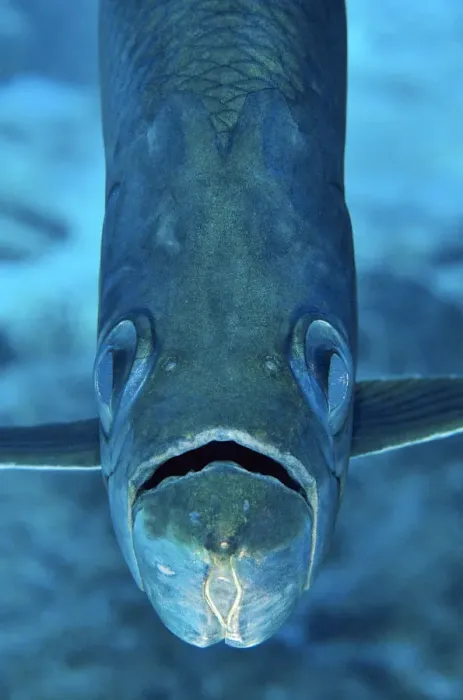
✨ Special feature: Huge, highly reflective silver scales and a distinctive upturned mouth
🐣 Juveniles: Grow up in sheltered, shallow habitats such as mangroves and lagoons
♻️ Ecological role: Large coastal predators that feed on fish and crustaceans
🏝️ Curaçao, Bonaire & Aruba: Atlantic Tarpon occur around all three islands and can sometimes be seen surprisingly close to shore.
What Makes them Special?
Tarpon are often called “silver kings”, and it is easy to see why. Their huge, mirror-like scales flash brilliantly when they turn in the sunlight, making them one of the most impressive fish to encounter underwater.
Living fossils
Tarpon belong to an ancient lineage of fishes that has existed for millions of years, long before most modern reef fish appeared.
Juvenile tarpon eat anything and everything
Juvenile tarpon are primarily opportunistic feeders. Studies show that the only limiting factor for the tarpon is the size of its mouth. As a result, the larger the tarpon grows, the more prey it is able to eat, regardless of species.
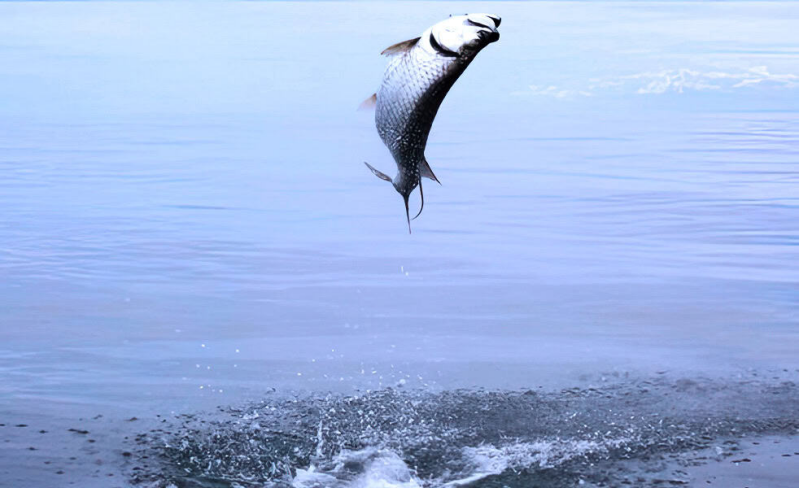
They are also surprisingly athletic for such large fish. Tarpon are famous for their spectacular leaps out of the water, especially when hooked or chasing prey.
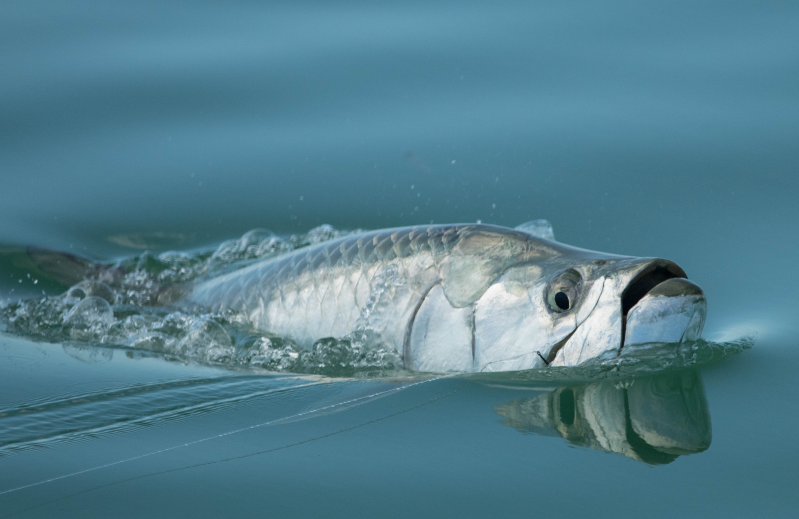
One of their strangest abilities is that they can breathe air. Tarpon regularly swim to the surface and gulp air, using their specialised swim bladder almost like a lung. This allows them to survive in warm, shallow water where oxygen levels may be very low.