

PARROTFISH

Parrotfish at a Glance
👁️ How common: Common
🔬 Scientific family: Scaridae
📏 Size: Approximately 15–120 cm (6–47 in), depending on the species
🌊 Habitat: Coral reefs, rocky reefs, seagrass beds and shallow coastal waters
⬇️ Depth: From shallow reef flats to deeper reef slopes
🌿 Diet: Mainly algae scraped from rocks and dead coral
🌎 Distribution: Tropical and subtropical seas worldwide, including the Caribbean
🐠 Behaviour: Solitary, in pairs or in groups, depending on the species
🥚 Reproduction: Most species release eggs and sperm into the water column
🦷 Special feature: Fused teeth form a strong, beak-like mouth used to scrape food from the reef
🎨 Colour: Colours and patterns can change dramatically with age, sex and life stage
🐣 Juveniles: Often look very different from adults
♻️ Ecological role: Important reef grazers that help keep algae under control
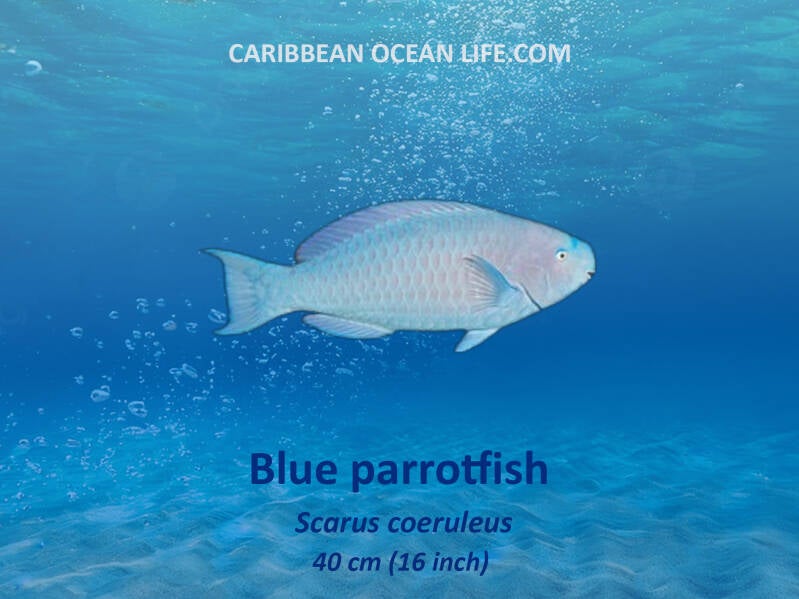
🏝️ Curaçao, Bonaire & Aruba: Common species include the Stoplight Parrotfish, Queen Parrotfish, Princess Parrotfish, Rainbow Parrotfish and Striped Parrotfish.


What Makes Them Special?
Gardeners of the reef.
Parrotfishes are the gardeners of the reef. With their powerful, beak-like teeth, they scrape algae from rocks and dead coral, helping prevent algae from taking over the reef.
While feeding, some species also bite off tiny pieces of the reef and grind them down with special teeth in their throat. The indigestible material eventually leaves the fish as fine coral sand, meaning parrotfishes actually help create some of the beautiful white sand found on Caribbean beaches.
Masters of Change
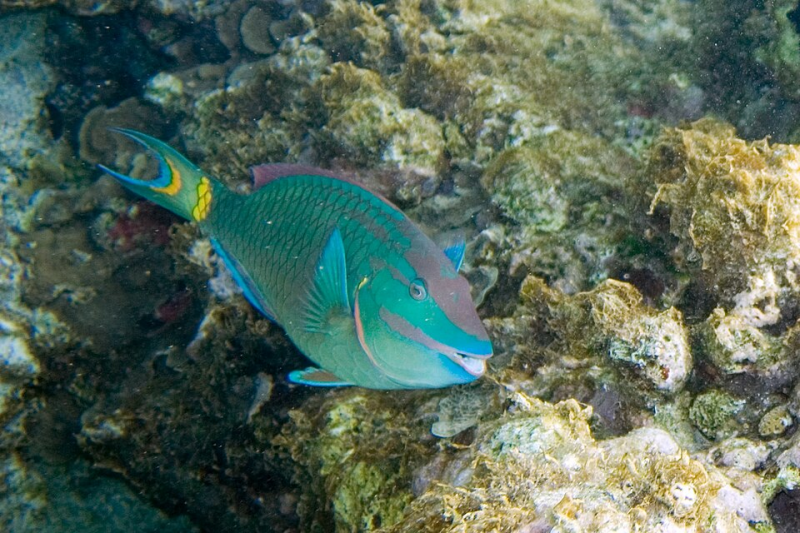
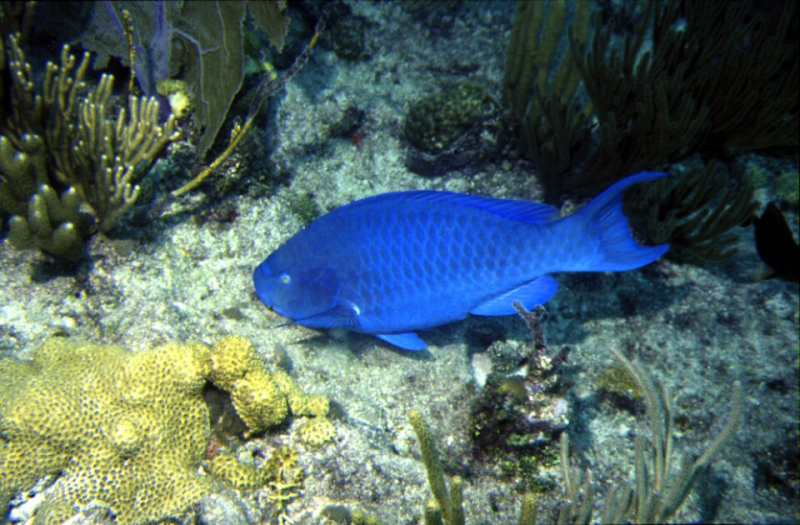
One of the most fascinating things about parrotfishes is that the same species can look completely different during its lifetime. Juveniles often have different colours and patterns from adults, and adult males and females may also look so different that you could easily mistake them for separate species.
Many parrotfish species are sequential hermaphrodites. In these species, individuals may begin adult life as females and later change into males. During this transformation, their colours can change dramatically too. These different appearances are often called initial phase and terminal phase.
The change is linked to their social life. If a dominant male disappears, a female may change sex and take over his role. This is why identifying parrotfishes by colour alone can sometimes be surprisingly tricky!

Parrotfish are fascinating at night too.
Some species sleep inside a transparent cocoon of mucus, which helps protect them from parasites and may also make it harder for predators to detect them. Young fish and females are particularly known for this behaviour.