

SNAPPERS

Snappers in a Glance
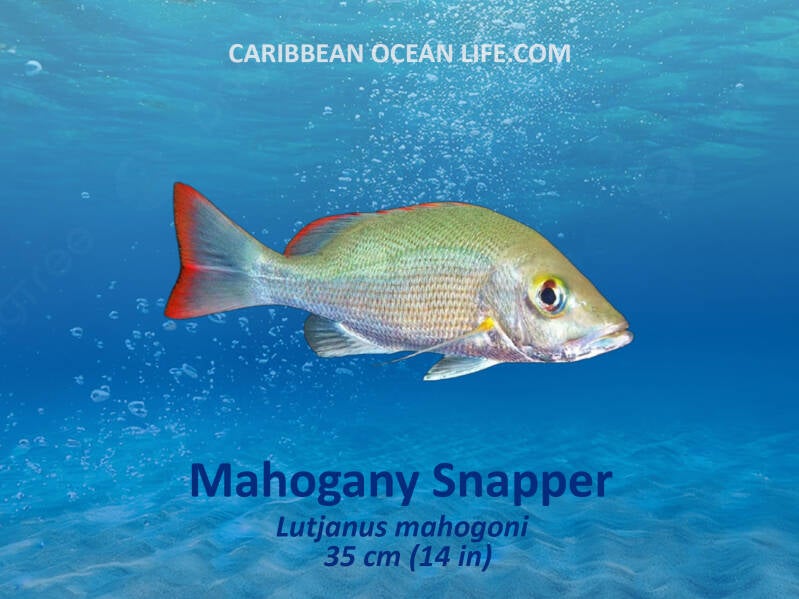
👀 How common: Very common to uncommon — Yellowtail, Schoolmaster and Mahogany Snappers are regularly seen around Curaçao, Bonaire & Aruba, while some larger and deeper-water species are much harder to encounter
🔬 Scientific family: Lutjanidae
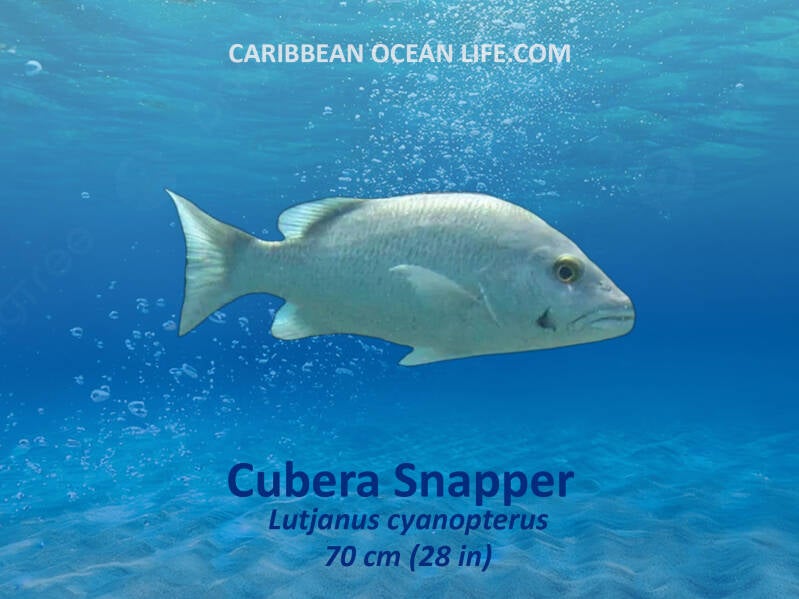
📏 Size: Most Caribbean species are about 20–100 cm (8–39 in), although the Cubera Snapper can reach around 160 cm (63 in)
🌊 Habitat: Coral and rocky reefs, reef slopes, mangroves, seagrass beds and sandy areas
⬇️ Depth: From very shallow coastal waters to several hundred metres, depending on the species
🦐 Diet: Mainly fish, shrimp, crabs and other crustaceans
🌎 Distribution: Tropical and subtropical waters worldwide, with many species occurring throughout the Caribbean
🐠 Behaviour: Often solitary or in schools; some species gather in large groups around reefs during the day
🥚 Reproduction: Mostly broadcast spawners, releasing eggs and sperm into open water
🦷 Special feature: Strong jaws and sharp canine teeth help them capture fish and crustaceans
🌙 Activity: Many species are most active around dusk and at night, although they can also be seen during the day
🐣 Juveniles: Often live in shallow nursery habitats such as mangroves and seagrass beds before moving to reefs as they grow
♻️ Ecological role: Important reef predators that also help transfer nutrients between mangroves, seagrass beds and coral reefs
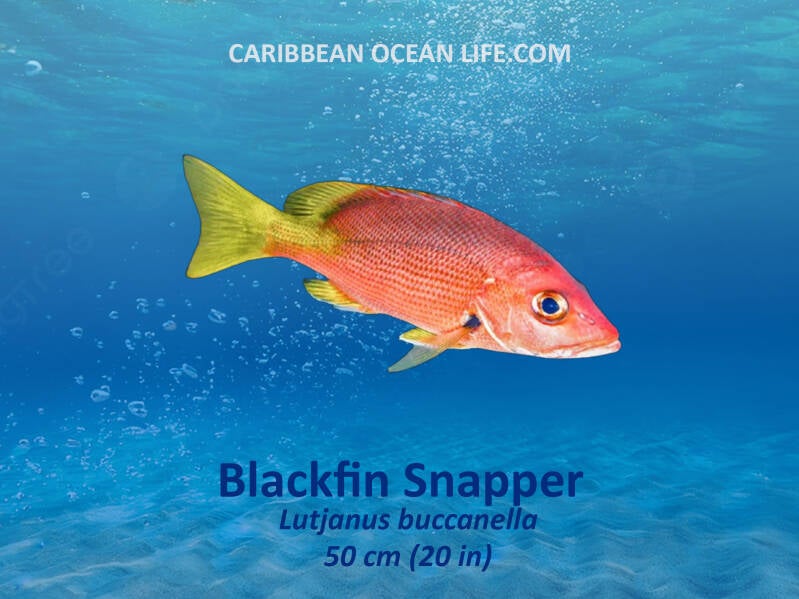
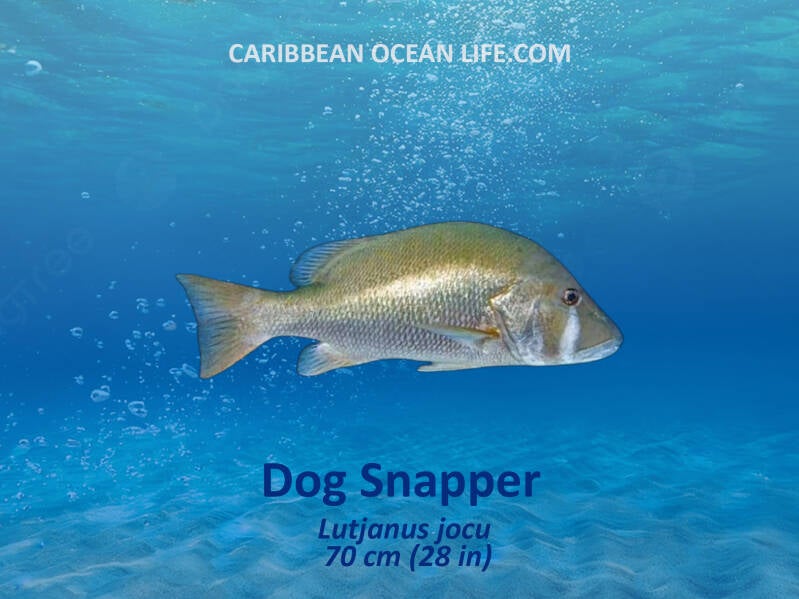
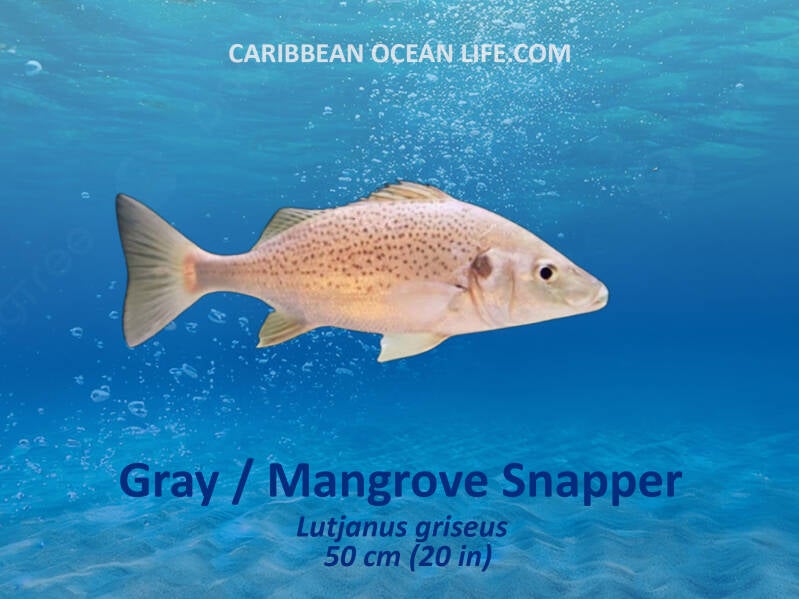
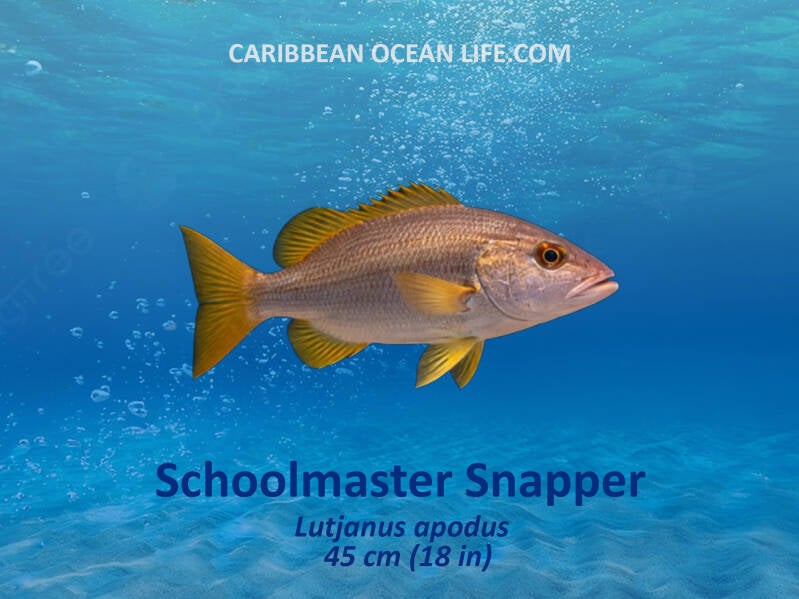
🏝️ Curaçao, Bonaire & Aruba: Common species include the Yellowtail Snapper, Schoolmaster Snapper, Mahogany Snapper, Gray Snapper, Lane Snapper and Mutton Snapper. Larger or deeper-water species include the Dog Snapper, Cubera Snapper and Blackfin Snapper.


What Makes them Special?
Snappers are fast, powerful reef predators. Their name comes from their strong jaws and sharp canine teeth, which allow them to quickly grab fish, shrimp and other prey, almost as if they “snap” at their food.
Many snappers live a kind of double life. During the day, species such as Yellowtail and Schoolmaster Snappers may gather peacefully in schools around the reef. As evening approaches, they become more active and spread out to hunt.
Is “Red Snapper” really one species?
The name “red snapper” is often used loosely in fish markets and restaurants for several reddish snapper species. The true Northern Red Snapper (Lutjanus campechanus) is mainly found in the Gulf of Mexico and along the southeastern United States and is not a typical reef fish of Aruba, Bonaire or Curaçao.
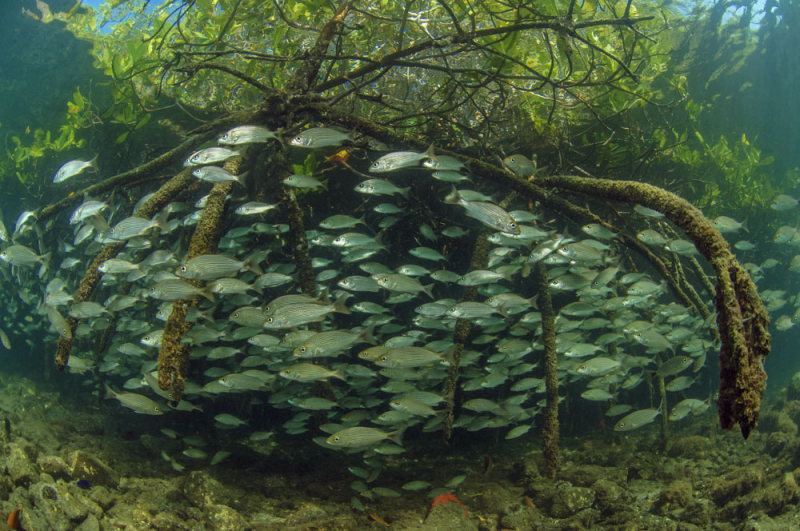
Their life can also connect several different habitats. Young snappers often grow up in mangroves and seagrass beds, where they find food and protection from predators. As they mature, many move onto coral reefs.