

GOATFISH

Goatfishes at a Glance
👀 How common: Very common: goatfishes are frequently seen by snorkellers and divers around Curaçao, Bonaire & Aruba, especially over sandy bottoms and near reefs
🔬 Scientific family: Mullidae
📏 Size: Most Caribbean species are about 15–40 cm (6–16 in), depending on the species
🌊 Habitat: Sandy bottoms, seagrass beds, coral reefs and rocky areas
⬇️ Depth: From very shallow coastal waters to deeper reefs, depending on the species
🦐 Diet: Small crustaceans, worms, molluscs and other invertebrates hidden in the seabed
🌎 Distribution: Tropical and subtropical oceans worldwide
🐠 Behaviour: Often seen alone or in groups, actively searching the bottom for food
🥚 Reproduction: Most are broadcast spawners, releasing eggs and sperm into the water column
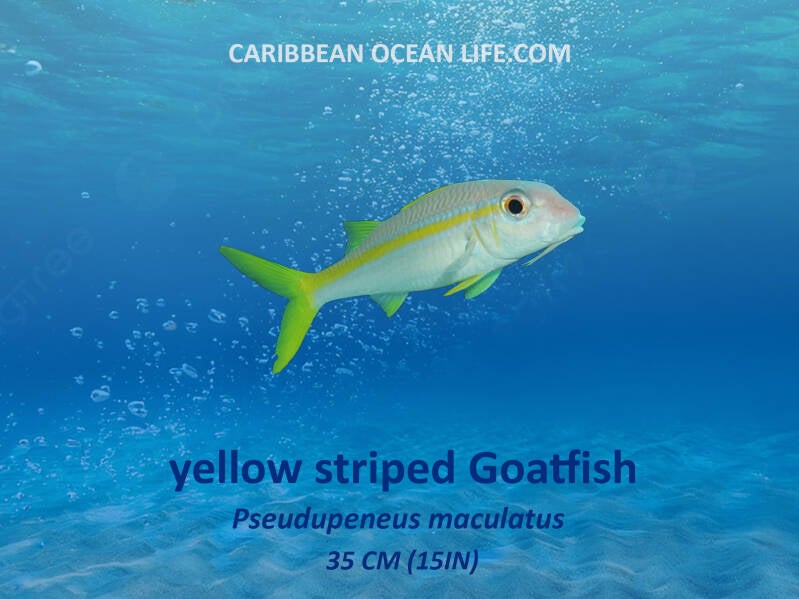
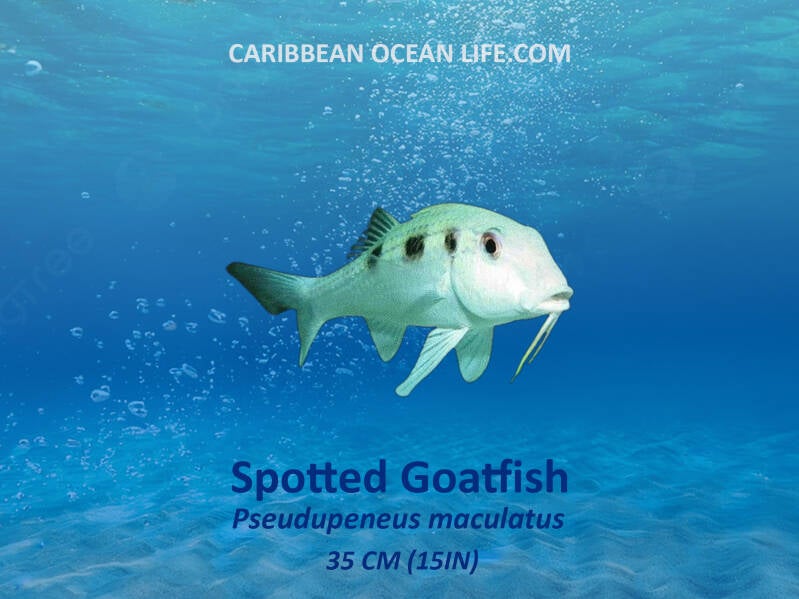
〰️ Special feature: Two sensitive, whisker-like barbels under the chin are used to detect hidden prey in sand and sediment
🎨 Colour: Some species can change colour noticeably, particularly when resting or feeding
🐣 Juveniles: Often occur in shallow water and seagrass beds and may differ somewhat in colour from adults
♻️ Ecological role: Their constant digging and sifting turns over the sediment and exposes small organisms that other reef fish often take advantage of
🏝️ Curaçao, Bonaire & Aruba: Common species include the Spotted Goatfish and Yellow striped Goatfish.
What makes them special
Dinner Attracts a Crowd
A feeding goatfish rarely goes unnoticed. Wrasses and other reef fish often follow them, waiting to snatch up tiny crustaceans and worms uncovered from the sand.
A Quick Colour Change
Goatfishes can also be surprisingly good at changing colour. Some species look quite different when resting, feeding or swimming, making identification trickier than you might expect.


Why the Name Goatfish?
Goatfishes have their own built-in underwater detection system. The two whisker-like barbels beneath their chin are covered with sensory organs that help them detect small animals hidden beneath the sand. While feeding, they constantly probe and stir the bottom with these barbels.
Those same barbels also explain their unusual name. Hanging beneath the chin, they look a little like a goat’s beard, which is why these fish became known as goatfishes.