

PORCUPINE FISH
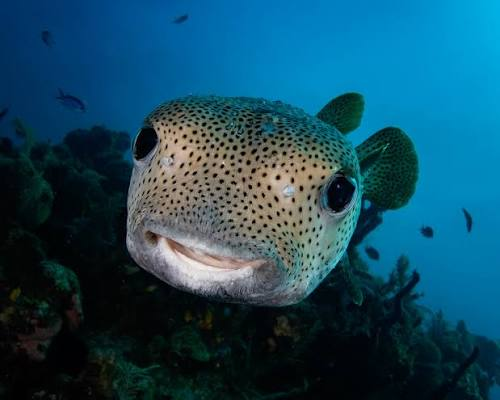
Porcupine fishes at a Glance
👀 How common: Common to fairly common — regularly seen around Curaçao, Bonaire & Aruba, although they often hide in caves and under reef ledges during the day
🔬 Scientific family: Diodontidae
📏 Size: Most species seen around the ABC islands are about 20–50 cm (8–20 in); some can grow larger
🌊 Habitat: Coral and rocky reefs, caves, ledges, seagrass beds and sandy areas
⬇️ Depth: From shallow coastal waters to deeper reefs, depending on the species
🦀 Diet: Mainly crabs, molluscs, sea urchins and other hard-shelled invertebrates
🌎 Distribution: Tropical and subtropical oceans worldwide
🐠 Behaviour: Usually solitary; many species hide during the day and become more active at night
🥚 Reproduction: Eggs and sperm are released into open water
🎈 Special feature: When threatened, they can swallow water and inflate their body like a balloon, making themselves much larger
🦔 Defence: Their body is covered with spines that stand outward when the fish inflates, making it extremely difficult for a predator to swallow
🦷 Teeth: Strong teeth are fused into a powerful beak used to crack shells and crush hard-bodied prey
☠️ Toxin: Some porcupinefishes may contain tetrodotoxin in their internal organs, making them dangerous to eat
🌙 Nightlife: Often more active after sunset, when they leave their daytime shelters to search for food
🐣 Juveniles: Young fish already have the characteristic spines and ability to inflate
♻️ Ecological role: Predators of hard-shelled invertebrates, helping influence populations of crabs, molluscs and sea urchins
🏝️ Curaçao, Bonaire & Aruba: Species include the Longspine Porcupinefish (Diodon holocanthus), Spot-fin Porcupinefish (Diodon hystrix) and Balloonfish (Diodon holocanthus).
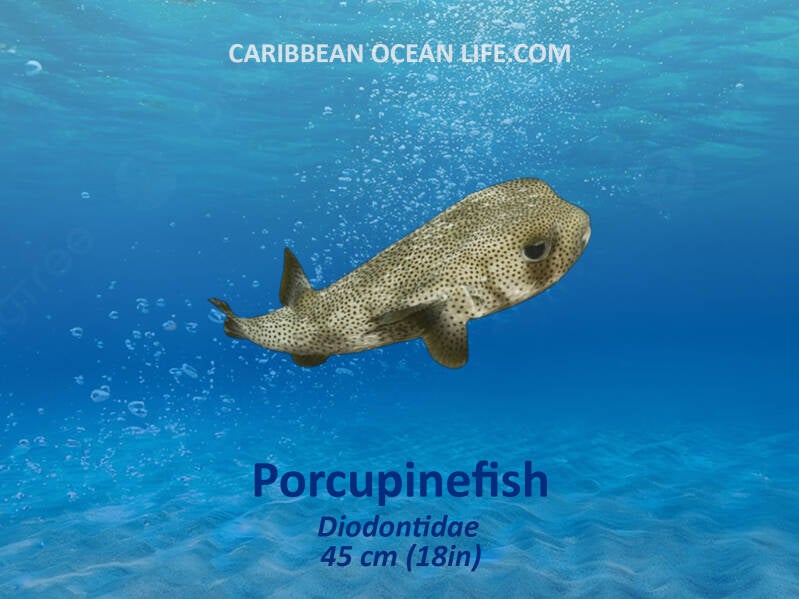
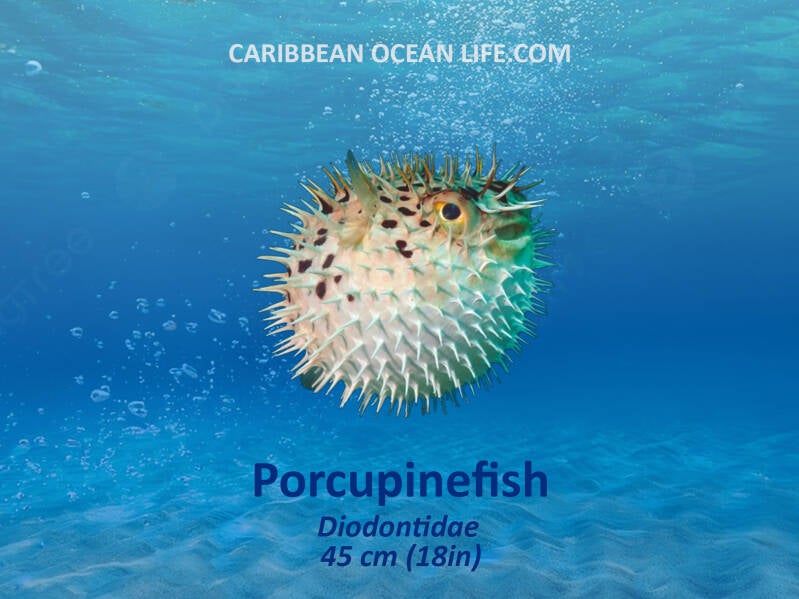
What Makes them Special?
From Fish to Prickly Balloon
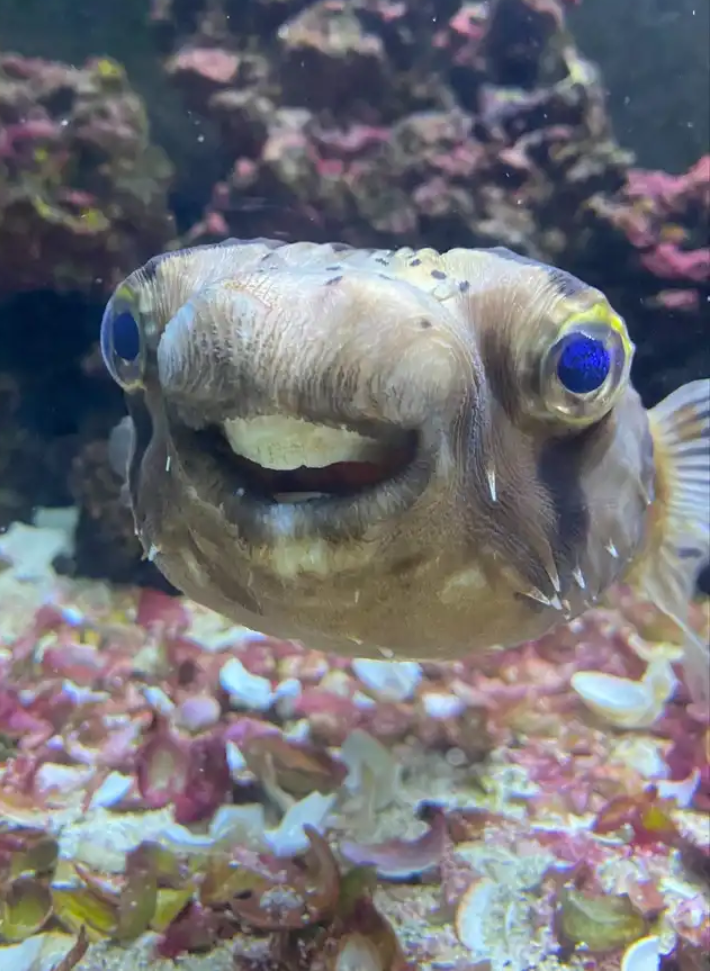
Porcupinefishes have one of the most spectacular defence systems on the reef. When threatened, they can swallow large amounts of water and inflate their bodies like a balloon. As they expand, their spines stand outward, turning an easy-looking meal into a large, prickly ball that is extremely difficult to swallow.
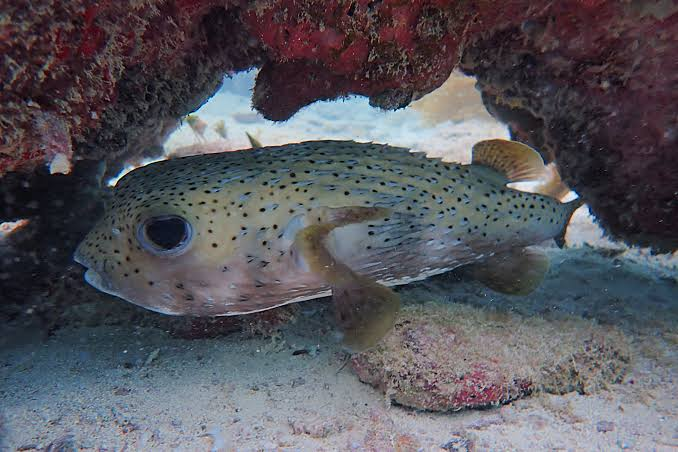
After Dark, They Come to Life
They are also mainly night-time hunters. During the day, you may find one quietly hiding beneath a ledge or inside a reef crevice. After dark, they become much more active and head out in search of food.
Why Does Their Name Mean “Four Teeth”?
They also have four fused tooth plates that form a powerful beak, strong enough to crush shells and other hard food. In fact, their scientific family name Tetraodontidae means “four teeth.”
PUFFERFISH
Pufferfishes at a Glance
👀 How common: Common to fairly common — several species are regularly seen by snorkellers and divers around Curaçao, Bonaire & Aruba
🔬 Scientific family: Tetraodontidae
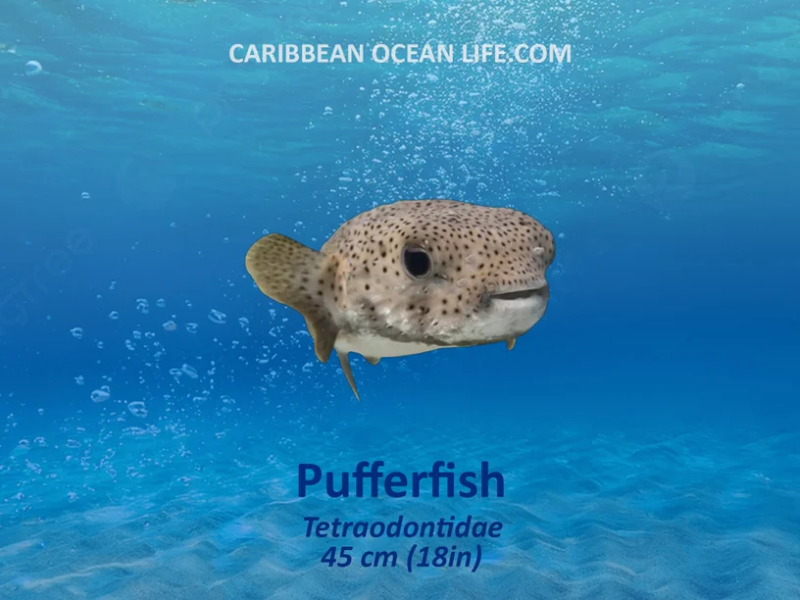
📏 Size: Most Caribbean species are about 10–40 cm (4–16 in), depending on the species
🌊 Habitat: Coral and rocky reefs, seagrass beds, sandy areas and shallow coastal waters
⬇️ Depth: From very shallow water to deeper reef slopes, depending on the species
🦀 Diet: Molluscs, crustaceans, worms, algae and other small reef organisms
🌎 Distribution: Tropical and subtropical waters worldwide
🐠 Behaviour: Usually solitary, slow-moving and curious; many species are active during the day
🥚 Reproduction: Eggs are generally laid on or near the bottom; reproductive behaviour varies between species
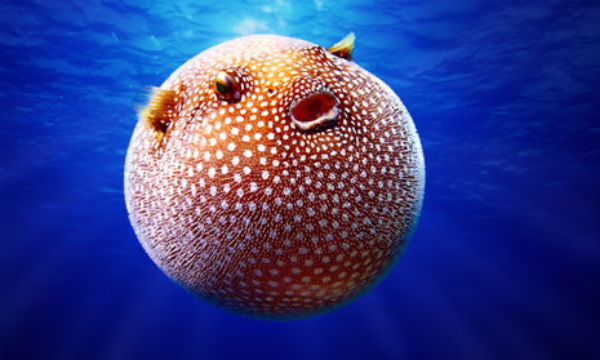
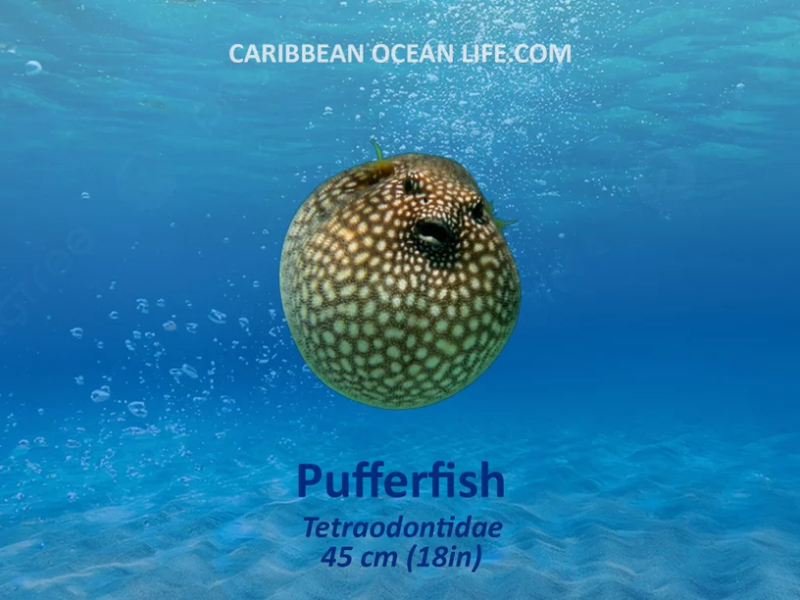
🎈 Special feature: Can rapidly inflate the body by swallowing water when threatened, making themselves much larger and harder to swallow
🦷 Teeth: Four fused tooth plates form a powerful beak, the name Tetraodontidae literally refers to “four teeth”
☠️ Defence: Many species contain tetrodotoxin, a powerful toxin concentrated mainly in certain internal organs and tissues
🐣 Juveniles: Usually resemble small adults, although colours and markings may change as they mature
♻️ Ecological role: Feed on a variety of reef organisms, particularly hard-shelled invertebrates, and form part of the reef's predator-prey system
🏝️ Curaçao, Bonaire & Aruba: Species include the Caribbean Sharpnose Puffer, Bandtail Puffer and Checkered Puffer
What Makes them Special?
Inflating to Survive
Pufferfishes have one of the reef’s most famous defence tricks. When threatened, they can rapidly swallow water and inflate their flexible stomach, turning themselves into a much larger, rounder and far more difficult meal for a predator.
Poisonous, Not Venomous
Many pufferfish species can contain tetrodotoxin, a powerful toxin concentrated mainly in certain internal organs and tissues. They do not inject venom, but can be dangerous if eaten.
Eyes That Look in Different Directions
Despite all these impressive defences, pufferfishes are often rather slow, curious-looking swimmers. Their large eyes can move independently, helping them keep a close watch on what’s happening around them.