

SAND DIVER - LIZZARDFISH
Sand Diver at a Glance
👀 How common: Common — regularly seen by divers and snorkellers around Curaçao, Bonaire & Aruba, but its camouflage makes it surprisingly easy to overlook
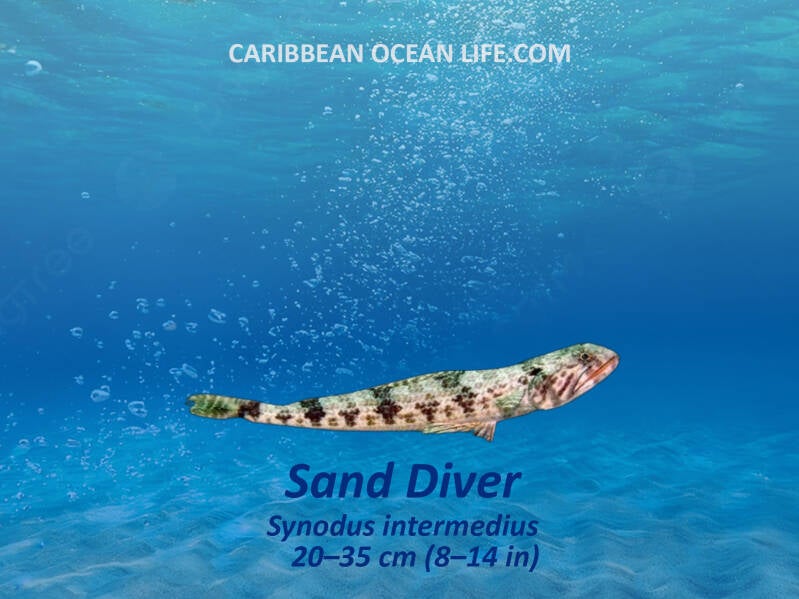
🔬 Scientific name: Synodus intermedius
🔬 Family: Synodontidae (Lizardfishes)
📏 Size: Usually 20–35 cm (8–14 in), up to about 45 cm (18 in)
🌊 Habitat: Sandy and rubble bottoms, often close to coral reefs and rocky areas
⬇️ Depth: From shallow water to around 50 m (165 ft), occasionally deeper
🐟 Diet: Mainly small fish and crustaceans
🌎 Distribution: Western Atlantic, including the Caribbean
🐠 Behaviour: Usually solitary; spends long periods lying motionless on the bottom waiting for prey
🥚 Reproduction: Eggs and sperm are released into the water column
🥷 Special feature: Excellent camouflage allows it to almost disappear against sand, rubble and broken coral
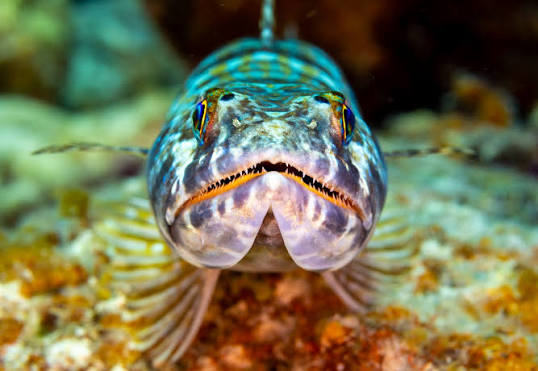
🦷 Teeth: Its mouth is filled with numerous sharp teeth, perfectly adapted for gripping slippery prey
⚡ Hunting: An ambush predator that remains completely still before making an extremely fast attack
🐣 Juveniles: Smaller individuals use the same camouflage and ambush strategy as adults
♻️ Ecological role: Predator of small reef fish and crustaceans
🏝️ Curaçao, Bonaire & Aruba: The Sand Diver (Synodus intermedius) is found around all three islands, particularly on sandy or rubble-covered areas adjacent to the reef.
What Makes them Special?
Masters of Patience
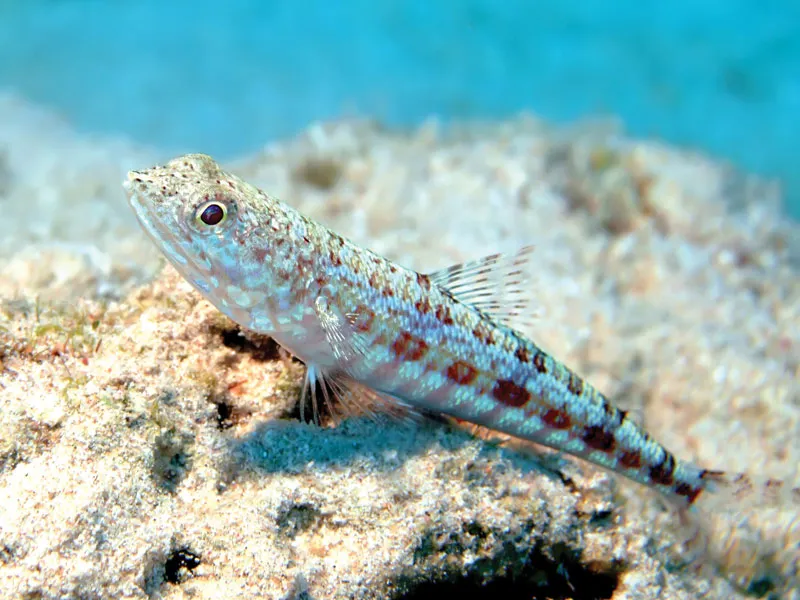
Sand Divers are masters of patience. Instead of chasing their prey, they lie almost perfectly still on the seabed, relying on their mottled colouring to become nearly invisible.
From Still to Lightning Fast
When a small fish comes close enough, everything changes. The Sand Diver launches forward in a lightning-fast burst, grabbing its prey with a mouth full of sharp teeth.
Why Are They Called Lizardfishes?
Their elongated body, reptilian-looking head and habit of resting directly on the seabed explain why Sand Divers belong to a group known as lizardfishes.

Why are they called Sand diver?
The name Sand Diver comes from another fascinating behaviour: it can partially bury itself in sand or sediment, helping it stay hidden while waiting for prey.