

SCORPIONFISH

Spotted Scorpionfish at a Glance
👀 How common: Fairly common but rarely noticed — found around Curaçao, Bonaire & Aruba, but their extraordinary camouflage makes them surprisingly difficult to spot
🔬 Scientific name: Scorpaena plumieri
🔬 Family: Scorpaenidae
📏 Size: Usually 20–35 cm (8–14 in), up to about 45 cm (18 in)
🌊 Habitat: Coral and rocky reefs, rubble, sandy areas and seagrass beds
⬇️ Depth: From very shallow water to around 55 m (180 ft), occasionally deeper
🐟 Diet: Mainly small fish, shrimp, crabs and other crustaceans
🌎 Distribution: Western Atlantic, including the Caribbean
🐠 Behaviour: Usually solitary and remarkably still, relying on camouflage rather than swimming away
🥚 Reproduction: Eggs are released in gelatinous masses into the water
☠️ Defence: Venomous dorsal spines can deliver a very painful sting if touched or stepped on
🥷 Camouflage: Mottled colours, skin flaps and irregular body contours help it blend almost perfectly into rocks, coral and algae
⚡ Hunting: An ambush predator that waits motionless until prey comes close, then strikes extremely quickly
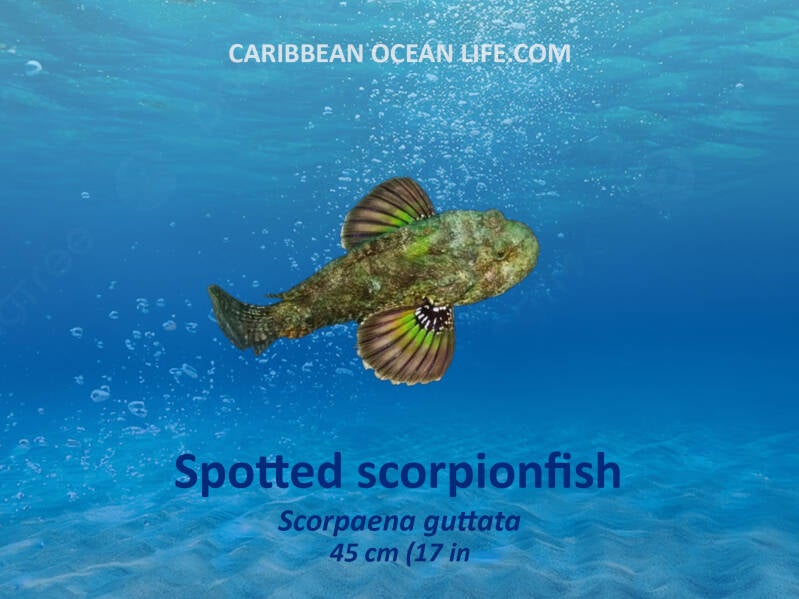
👂 Special feature: The inside of the pectoral fins has distinctive dark markings with pale spots, which can help with identification
🐣 Juveniles: Smaller versions of adults and already well camouflaged
♻️ Ecological role: An important ambush predator of small reef fish and crustaceans
🏝️ Curaçao, Bonaire & Aruba: The Spotted Scorpionfish (Scorpaena plumieri) is one of the scorpionfishes most likely to be encountered around the ABC islands.
What Makes Scorpionfish Special?
Hidden Weapons
Scorpionfish have venomous spines along their back for defence. Unlike Lionfish, they don't advertise these weapons with spectacular fins, they rely on being almost invisible.
Dangerous, but Not Aggressive
Despite their fearsome appearance, Scorpionfish are not aggressive towards people. The danger comes mainly from accidentally touching or stepping on one.
Scorpionfish or Stonefish?
Good to know: Caribbean Scorpionfish are sometimes confused with Stonefish, which are much more venomous, but true stonefish do not naturally occur in the Caribbean.

Can You Spot It?
Camouflage is their greatest weapon. Their mottled colours, irregular shape and small skin flaps make them look remarkably like rocks, coral or algae. They can remain completely motionless for long periods, waiting for an unsuspecting fish or shrimp to come within striking distance.
Gone in a Split Second
When prey gets close, the Scorpionfish suddenly opens its large mouth and creates powerful suction, swallowing its prey in a fraction of a second.

A Hidden Flash of Colour
When resting on the reef, a Spotted Scorpionfish may look like little more than a lumpy rock. But when it starts to move, it reveals a surprise: large, beautifully patterned pectoral fins hidden along the sides of its body.
As it swims, these fins spread out like fans, showing striking dark markings with pale or white spots. Once the fish settles again, the fins fold away and almost completely disappear from view.