

HAMLETS

Hamlets at a Glance
👀 How common: Fairly common — some species are regularly seen on Caribbean reefs, while others are less common
🔬 Scientific genus: Hypoplectrus — Family Serranidae
📏 Size: Usually 8–15 cm (3–6 in)
🌊 Habitat: Coral and rocky reefs, especially areas with plenty of crevices and shelter
⬇️ Depth: Usually shallow reefs to about 30 m (100 ft), although some occur deeper
🦐 Diet: Small fish, shrimp and other small crustaceans
🌎 Distribution: Tropical western Atlantic and Caribbean
🐠 Behaviour: Usually solitary, staying relatively close to the reef
🥚 Reproduction: Pairs spawn in the water, usually around dusk
⚥ Special feature: Hamlets are simultaneous hermaphrodites — each fish has both male and female reproductive organs, and partners can alternate roles during spawning
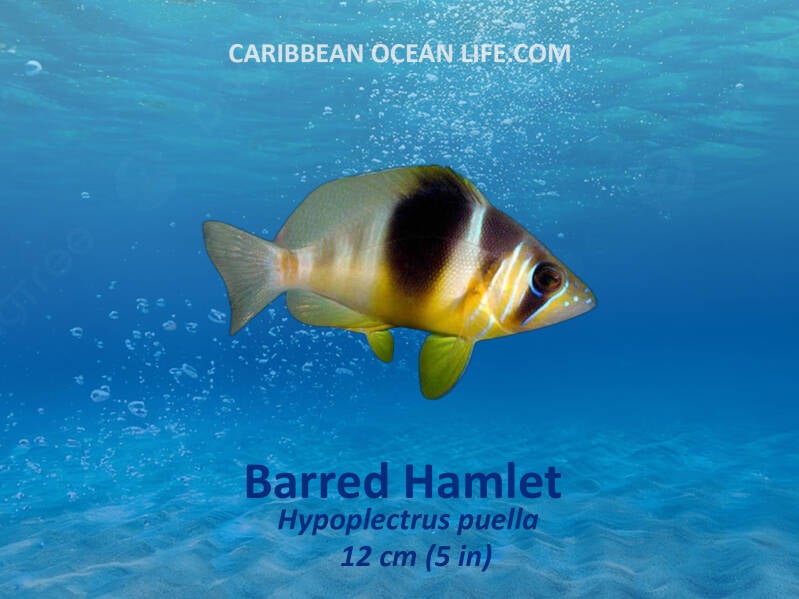
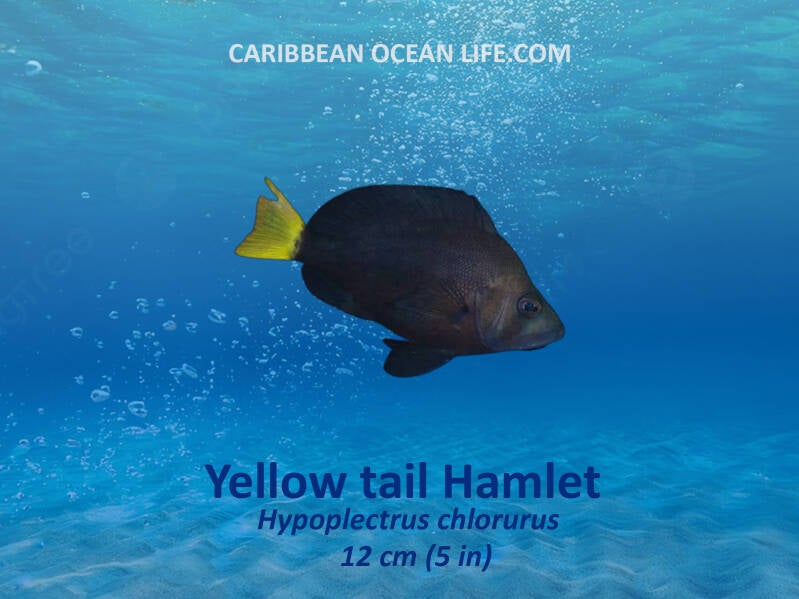
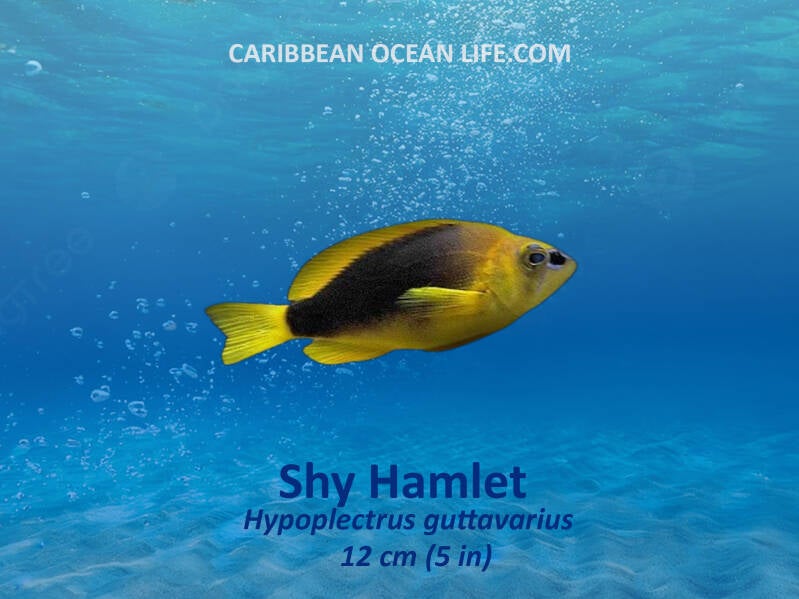
🎨 Colour: Different hamlet species have strikingly different colour patterns, despite having almost identical body shapes
🐣 Juveniles: Look similar in shape to adults but may have less intense colours and markings
♻️ Ecological role: Small reef predators that help control populations of tiny fish and crustaceans
🏝️ Curaçao, Bonaire & Aruba: Species include the Barred Hamlet, Yellowtail Hamlet, Shy Hamlet and Black Hamlet, with occurrence and abundance varying between the islands.

What makes them special?
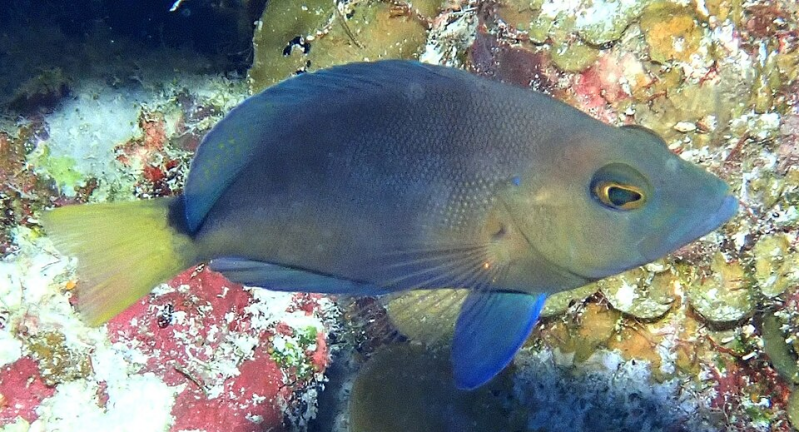

Shy Hamlet - Photo: H. Zell
Taking Turns in Love
Their love life is very unusual. Hamlets are simultaneous hermaphrodites, meaning every adult has both male and female reproductive organs. When two hamlets mate, they can take turns releasing eggs and fertilising each other’s eggs.
Small but Skilled Hunters
Despite their small size, hamlets are surprisingly effective predators. They often remain quietly close to the reef before making a quick attack on small fish and crustaceans.


To Be or Not to Be a Species?
Hamlets have puzzled scientists for more than a century. The different types have almost identical body shapes and very little genetic difference, yet they display remarkably different colour patterns.
Even more confusing, different hamlets can interbreed and produce fertile hybrids. So are they really separate species, or simply different colour forms of the same fish?
Scientists still debate the question, although today at least 18 distinct hamlet forms are generally recognised as separate species. Their striking colours may actually help them recognise and choose partners with the same pattern, keeping the different forms apart.